One tripped breaker, one cold morning
A mini split sitting idle since spring can pull more than usual the first time it has to work hard. A breaker that holds fine in July can trip in January.
 Let a pro reach out
Get the mini split repair search off your mind today.
A mini split that won't turn on in the middle of an Alabama winter is a real problem. Most homes here heat with electricity, and for a lot of them the mini split is doing that job. When it stops responding, you're not just annoyed. You're cold, and power to run space heaters instead isn't cheap.
The first instinct is to pull up the breaker panel or start searching for what the blinking light means. That's worth doing. But a mini split with no power, no response from the remote, or a unit that hums and won't start is usually telling you something specific is wrong inside it, not something you can talk it out of.
This is a repair job for someone who works on these systems through the winter, every winter, in Alabama homes. That matters because the failures here aren't random. Someone local who services mini splits all season knows what tends to fail when a unit won't start in freezing weather, and what's just a reset. That's a different kind of help than a general handyman or an out of town crew that only shows up for installs.
Fill out the request and that search becomes someone else's job. You're not the one calling around, leaving messages, hoping someone calls back. One licensed, local contractor gets matched to your request, not a handful of companies competing for your number. No flood of calls, no sorting through strangers. Just the one person suited to look at your unit.
Once that's sent, you can stop troubleshooting a system you didn't install and don't have to understand. That part of it is no longer sitting on you. The next piece, actually fixing it, belongs to the contractor.
A mini split that won't power on usually comes down to one of a few things. If the indoor unit shows no light at all, check the breaker first. A unit that's been idle since last spring can trip a breaker when it finally draws a real load on a cold morning. If the breaker's fine and the unit still won't respond, the problem is often the remote losing sync with the indoor head, which looks identical to the unit being dead but isn't. Beyond that, a mini split that hums or clicks but won't start heating can mean a failed control board or a bad capacitor on the outdoor unit, and cold snaps are when that kind of weak part finally gives out. None of this is something to keep testing on your own for long. With electric heat carrying the whole house and power costs already high in Alabama, every day without it costs you comfort and money, so the faster someone qualified looks at it, the less that adds up.




A mini split sitting idle since spring can pull more than usual the first time it has to work hard. A breaker that holds fine in July can trip in January.
The indoor head takes the blame, but the compressor and coil outside are often where the fault sits. Someone who works on these all winter checks there first.
Look at the indoor head. No lights, no display, no response to the remote, that points one way. A light that blinks but the unit still won't heat points another. Check the outdoor unit too. If it's caked in ice or sitting dead quiet when it should be running, that's worth noting. Some units hum like they're trying to start, then quit. Others just sit there cold and silent while the room drops a few degrees overnight. If this has happened before and cleared on its own, that's useful to remember too. A mini split that won't start on a hard freeze morning isn't cosmetic. With electric heat, every hour it's down is an hour the house loses ground, and in Alabama's cold snaps that ground is hard to get back without help.
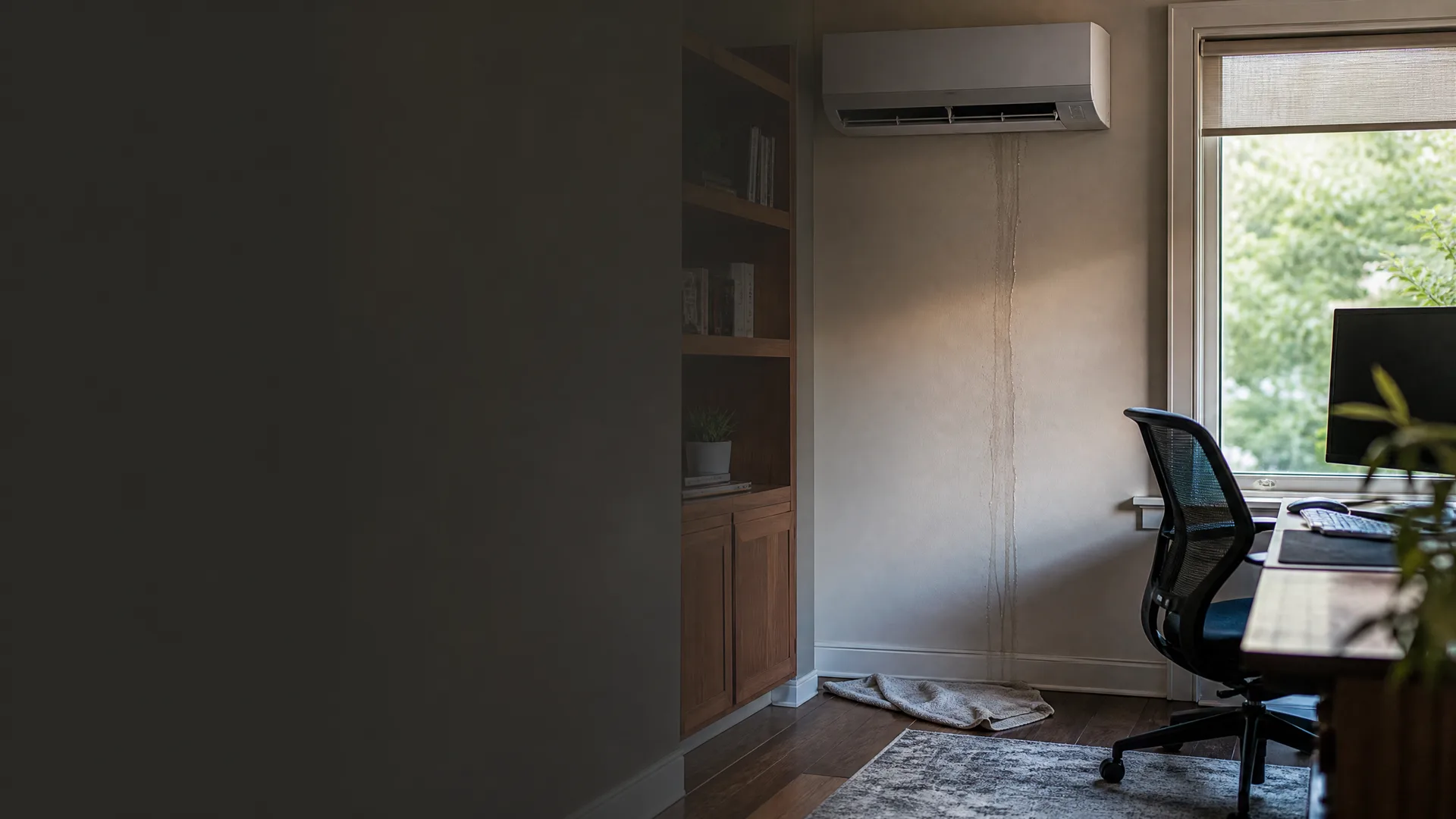
Wrong season for this one, but the wall doesn't care. It's a January afternoon and you're in the office trying to get warm, and there's a dark streak running down the wall under the indoor unit, a towel balled up on the floor where it's been catching drips for an hour. The mini split that's supposed to be heating this room is dead quiet, no light on the panel, and now there's water where there shouldn't be any. You've already called it in. There's nothing left to figure out on your end, just the cold room, the wet patch spreading a little more, and waiting on someone who actually works on these for a living to tell you what it is.
Your request goes to one pro, not a list of companies.
It costs nothing to send, and you don't have to hire anyone.
Power reaches the indoor head first, then the outdoor unit.
The control board checks for a signal from the remote.
If the board gets no signal, nothing else happens next.
A working board sends a call to the compressor outside.
At 16.09 cents a kilowatt-hour, running a mini split that's struggling (icing up, short cycling, or pulling hard to recover from a tripped breaker) costs more than one working right. A repair that fixes the real problem pays you back on every bill after.
EIA-861 2025 statewide residential average
If the breaker holds and the outdoor unit is clear of ice, cut power to the indoor head at the breaker for a full minute, then switch it back on. Some units need that full reset to re-establish communication between the indoor and outdoor parts, and it costs you nothing but the minute. If the display comes back and the unit responds to the remote, you may be fine. If it stays dark, or it powers up and still won't call for heat, stop there. Repeating the reset or swapping remote batteries again won't change what's wrong inside the board or the wiring between the two units.
A mini split ties the indoor head to an outdoor compressor through wiring and refrigerant lines that carry real voltage and pressure. Opening the indoor unit to check a board, or the outdoor unit to look at the compressor, means working around both. Someone who services these units every winter in Alabama has likely seen this exact failure, on this exact brand, more than once this season. That's different from a generalist who sees a mini split a few times a year. Getting it diagnosed right the first time matters more than getting to it fast with a guess, especially with electric heat and January power rates on the line.
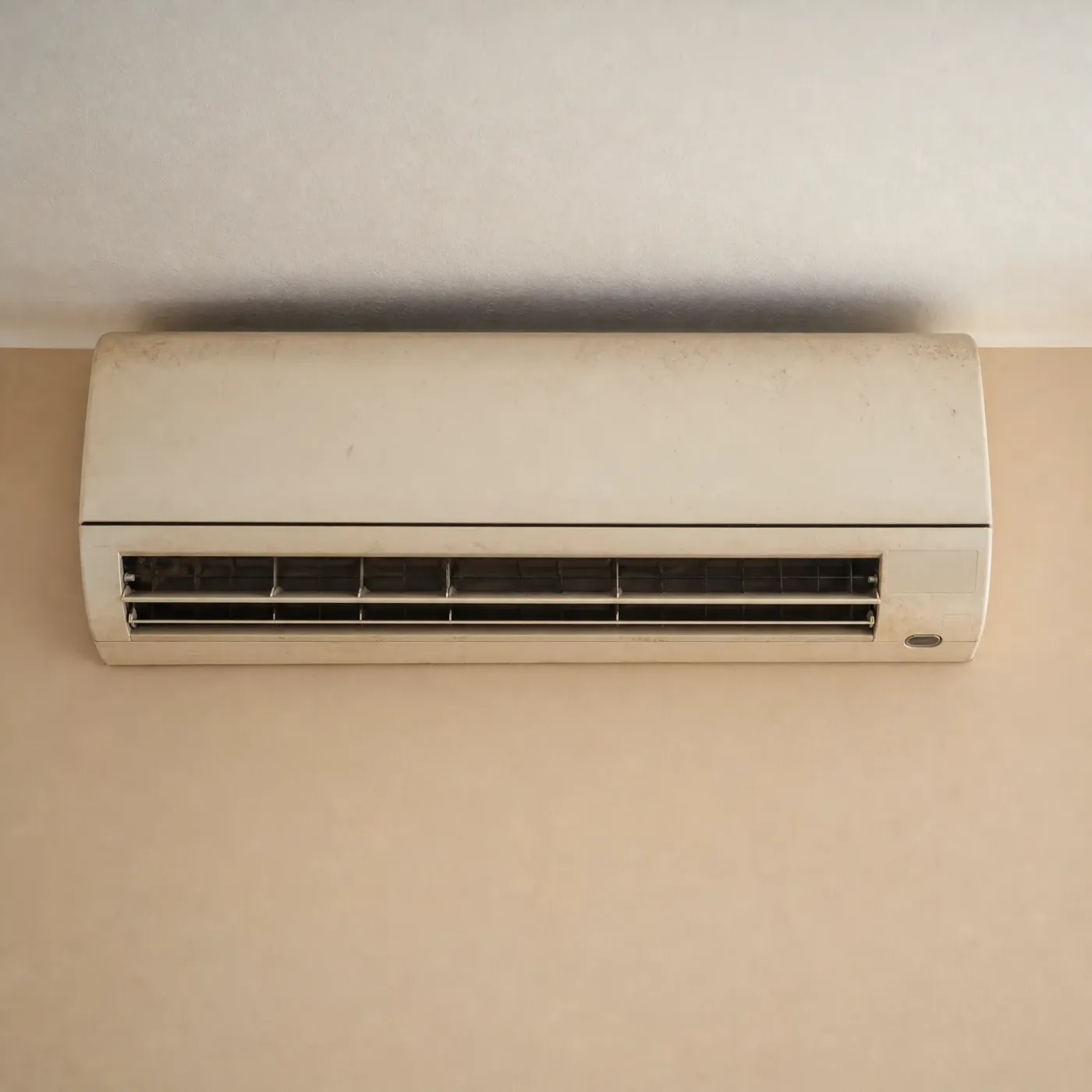
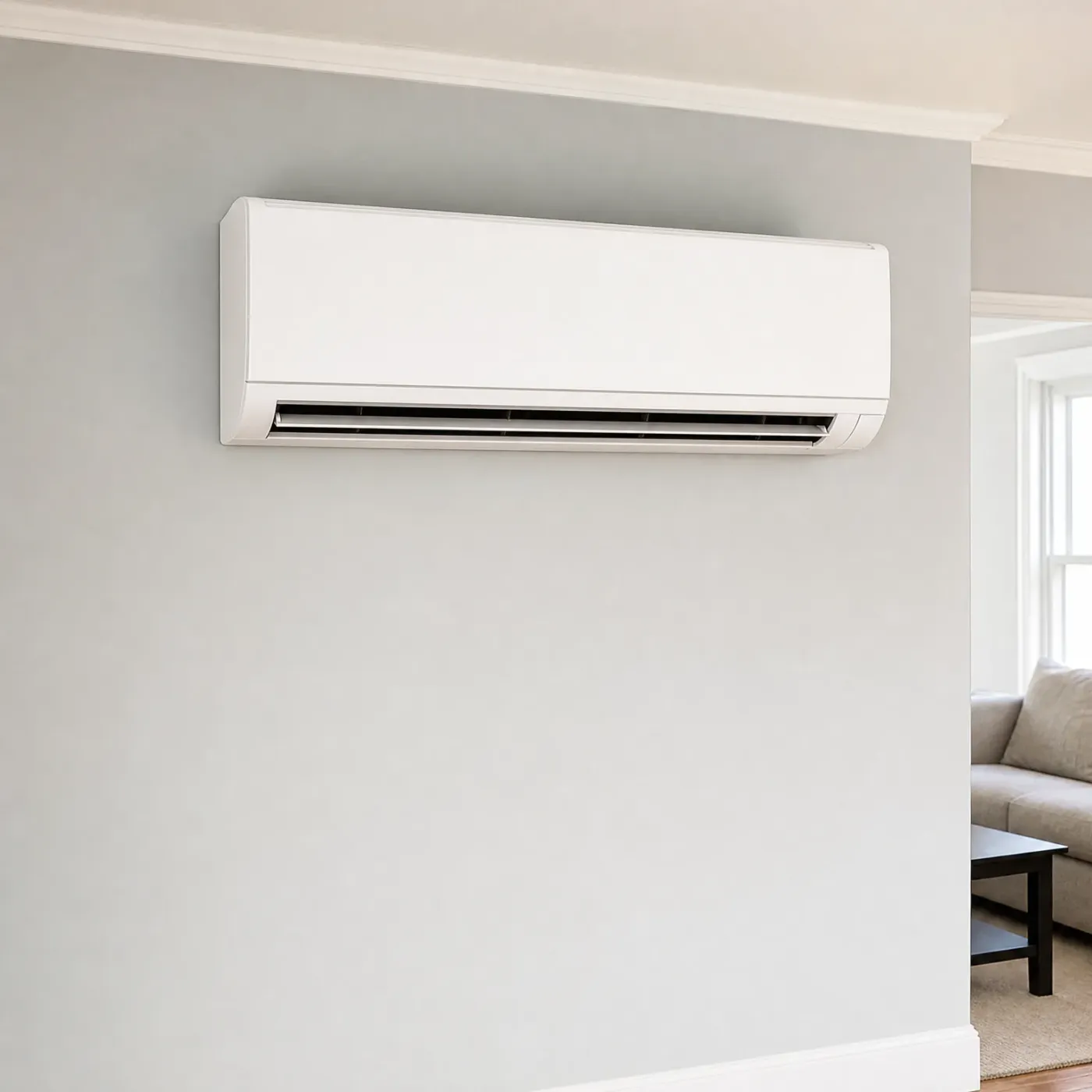
A mini split that won't come on in January usually traces back to one of a few places. The breaker, tripped by a unit that sat idle and then had to pull a real load on a cold morning. The outdoor coil, iced over and unable to move heat into the house no matter how fine the indoor head looks. Or the board itself, powered up and blinking but not getting a signal through to the parts that actually make heat. Each of these points to a different fix, and what the indoor head and outdoor unit are doing right now tells you which one you're dealing with.
Some of this you can rule out yourself. The breaker and the minute-long reset cost you nothing to try. Ice you can see. A blinking light with no heat is harder to read, and that's usually where a repair stops being a guess and starts being a diagnosis someone needs to actually run.
None of this is rare for the unit itself. It's what happens to a system that runs on electricity through an Alabama winter, sits unused for stretches, then gets asked to carry the house on a cold morning. The part that failed is usually specific and known. What matters now is getting the right person on it, someone who works on this equipment all season and can tell a tripped breaker from a bad board without guessing twice, so you're not standing in a cold room waiting on the wrong fix.


Send one request and you're done looking
The pro who reaches out is licensed in Alabama.