Why your mini split leaks water in an Alabama winter
Send the request today and stop worrying about who to call.
Your mini split is dripping or pooling water somewhere it shouldn't, and it picked a cold month to do it. In an Alabama winter, that unit is running in heat mode most days, and the way it handles moisture in that mode is different from summer. Water where you don't want it usually means a drain line, a condensate pan, or ice on the outdoor coil isn't doing what it should.
Left alone, that water doesn't stay a small problem. It can run into a wall, stain a ceiling, or soak into flooring under the indoor unit. Since most homes here heat with electricity, your mini split may be carrying the whole load on a cold night, and a unit that's struggling to drain properly often struggles to heat properly too. Power costs enough here already without a system working harder than it needs to.
This isn't a guessing game for someone who works on these year round. A local contractor who services mini splits through both Alabama summers and winters has likely seen this exact leak before, on this exact kind of system, and knows where to look first. That's a different conversation than calling around for someone who mostly installs window units or only sees a mini split twice a year.
Once you send the request, you're done with the part that eats up your afternoon. No more searching, no more calling three places and waiting on hold. One licensed local contractor gets matched to your situation, so you're not fielding calls from five different companies trying to win the job. You can stop thinking about it and let someone who knows this equipment take it from here.
The water isn't going to fix itself, and the longer it sits, the more it can affect the drywall, the floor, or the unit itself. Below is what's actually causing it and what tends to be different about a leak that shows up in winter.
Why is my mini split leaking water in the winter?
Your mini split is dripping water and it's the middle of winter, when you'd expect that kind of thing from the AC side, not the heat. You want to know if this is something minor or if it means the unit is failing on you right when you need the heat most.
Ice is building on the outdoor coil and melting into water that goes somewhere it shouldn't
In heat mode, the outdoor unit pulls heat from the outside air, and its coil gets cold enough to frost up on chilly Alabama mornings. The system defrosts itself on a schedule, melting that frost into water. Normally it drains outside through the condensate line. If that line is clogged, cracked, or was never sloped right, the water backs up and finds its way inside instead, often around the indoor unit or down a wall. A leak that only shows up now, in the cold, usually points to the drain line or the defrost cycle rather than anything wrong with the refrigerant or the compressor.
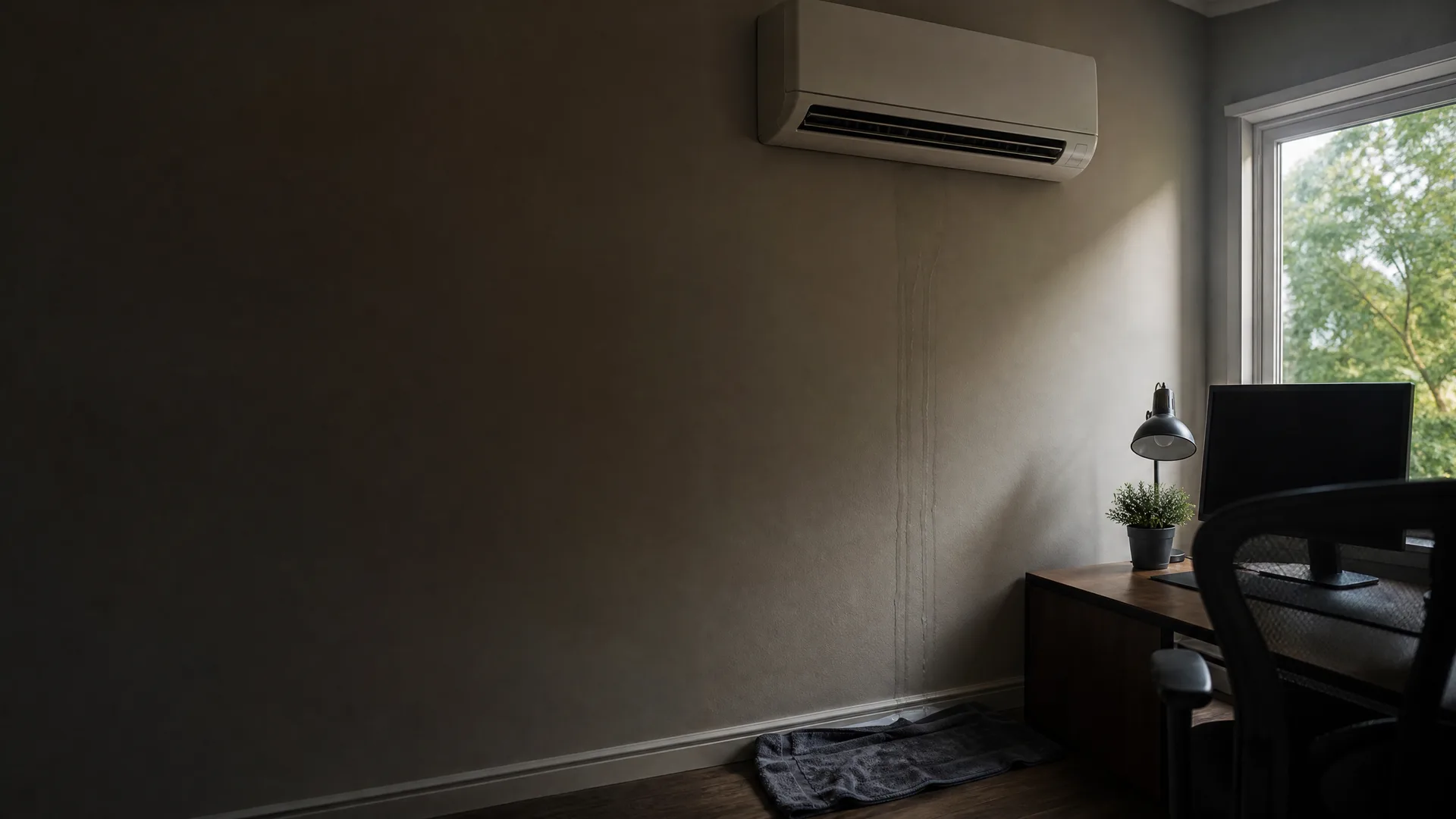
You're at your desk on a cold afternoon, half listening to the heat running, when you notice the wall under the indoor unit has gone dark. A streak of water is working its way down toward the baseboard. You get a towel down before it reaches the carpet, then stand there watching the line creep anyway. The unit keeps blowing warm air like nothing is wrong. You think about the drywall behind it, and what else might be running down inside the wall where you can't see it. The towel is already soaked through once before you decide it can't wait until the weekend.
A clogged condensate drain or a frozen coil losing its ice doesn't fix itself, and running the unit another night just adds water to the drywall or the floor under it. The part that's actually wrong, whether it's a cracked drain pan, a disconnected line, or ice built up on the coil from a dirty filter, takes someone who's opened up this kind of unit before to find fast. That's not a guess for the contractor who gets matched to your request. Mini splits are common in Alabama homes that heat with electricity, and whoever takes this job has likely pulled apart a dozen of them this winter alone, mid-leak, in houses not unlike yours. Your request goes to one of them, not a handful of companies competing for your callback. While you're waiting on power bills already higher than they should be this time of year, a mini split losing efficiency to a clogged line or frozen coil is the last thing you want adding to that number. Send the request and let the drip stop being your problem to chase down.
How a mini split makes water in heat mode
In heat mode, the outdoor unit pulls heat out of cold air and moves it inside. That outdoor coil runs colder than the air around it, the same way a cold glass does on a humid day, and it collects moisture. On a lot of systems that water drains off outside through its own line or weep hole. If the outdoor temperature sits near or below freezing for stretches, as it does on the coldest nights of an Alabama winter, that coil can ice over, and the unit runs a defrost cycle to melt it off. That meltwater has to go somewhere. If the drain path outside is blocked or pitched wrong, it backs up instead of running off.
Why the indoor unit is the one leaking
The indoor unit has its own condensate pan and drain line even though it's not the one icing up outside. That pan and line were sized to handle normal condensation, not a defrost cycle sending extra water through the system, or a line that's partly blocked with algae or debris built up over the summer. A pan with a hairline crack or a drain line with a low spot where water sits and freezes will hold water back until it has nowhere to go but over the edge. That's why the leak shows up inside, on the wall or floor under the unit, even though the real cause started outside.
Running clean
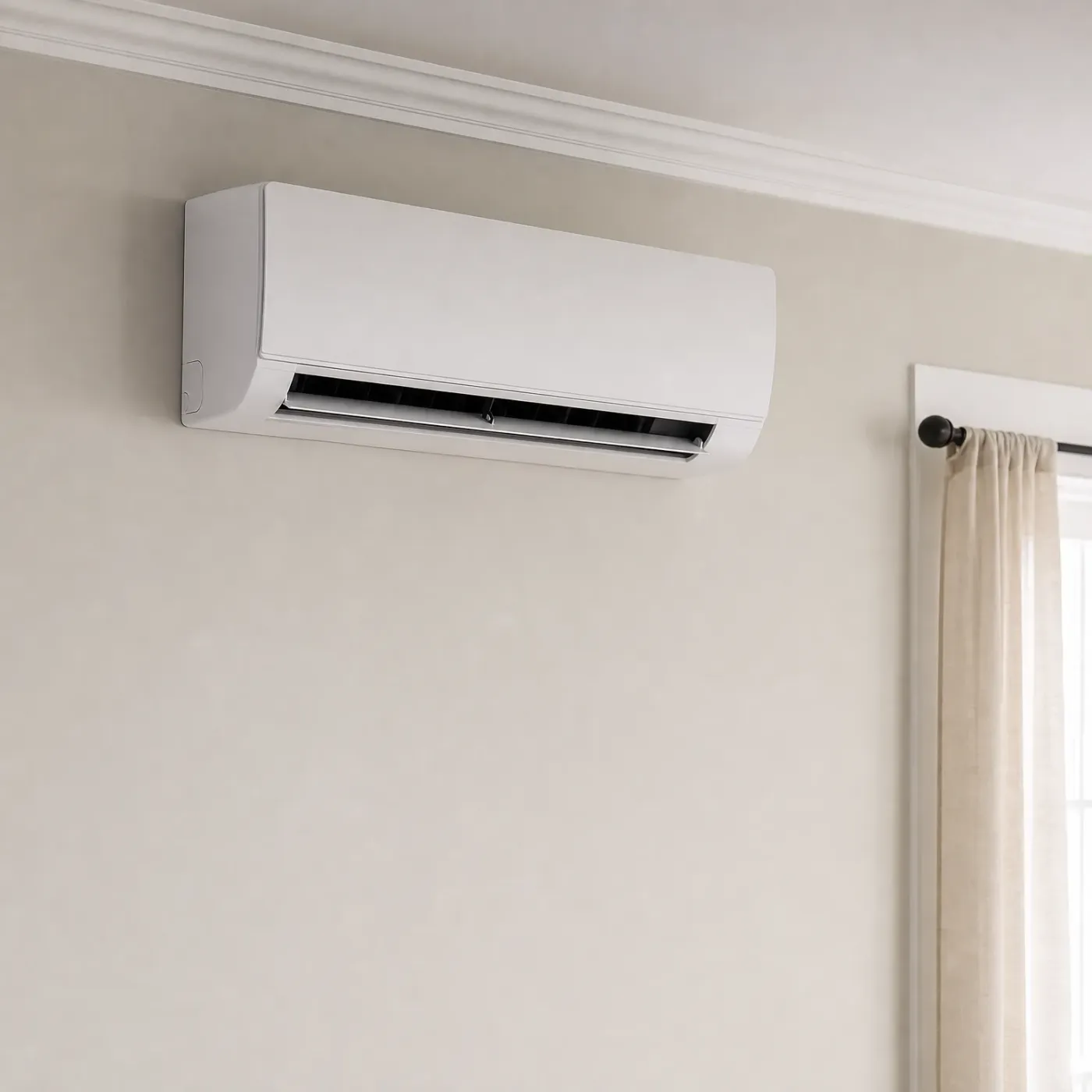
A mini split that's draining right keeps the condensate moving out through its line, not down your wall. No staining underneath, no damp smell, no sound of dripping where there shouldn't be one. The casing stays the color it was when it went up.
Running into trouble
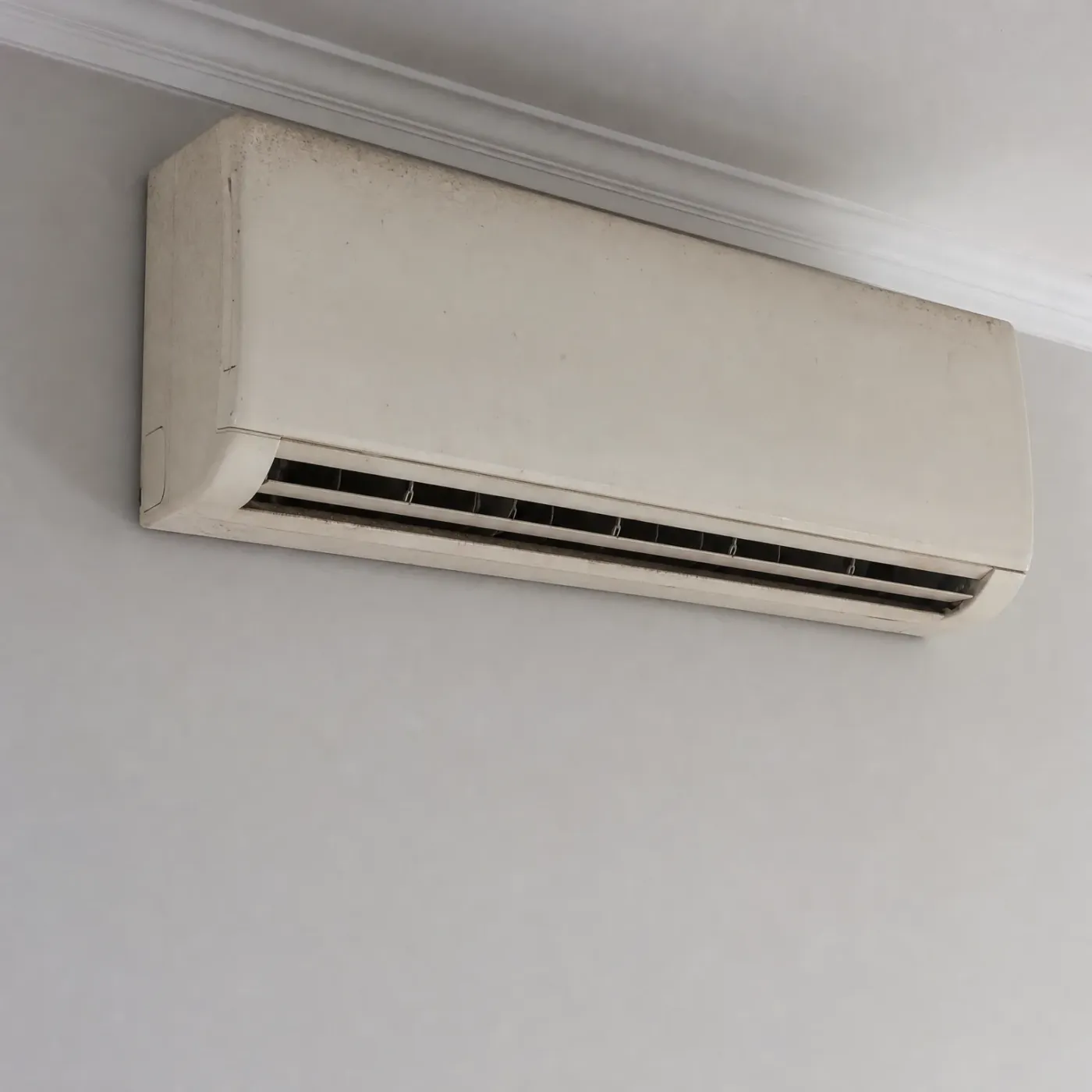
Dust and grime on the casing usually means the inside hasn't been opened up in a while, and the drain and the coil behind that panel collect the same buildup you can see outside. A clogged drain backs water up into the unit instead of out through the line, and that's what ends up on your wall or your floor.
What are you actually seeing on your wall or floor
Look at where the indoor unit mounts. A dark stain spreading down the wall below it, a damp patch on the carpet or floor, or water beaded along the bottom edge of the case are the usual signs. Sometimes it's just a drip you hear before you see anything, landing on the floor or a windowsill every few seconds. Check behind the unit too, since water can run down inside the wall before it ever shows up on the surface. Left alone through a winter, that moisture soaks into drywall and subfloor, and it can warm up enough between cold snaps to grow mold where you can't see it. The baseboard or trim nearest the unit is usually the first thing to swell or discolor.
1
Outdoor coil pulls heat from cold air and frosts over.
2
Unit switches to defrost mode and briefly runs as AC.
3
Frost on the coil melts fast into liquid water.
4
Condensate pan and drain line carry that water outside.
Power costs 16.09 cents per kilowatt-hour statewide
At 16.09 cents a kilowatt-hour, running a mini split on heat all winter already costs more than most people expect. A leak doesn't just stain your wall, it means that heat and the power paying for it are working against a clogged drain or frozen coil instead of your living room.
EIA-861 2025 statewide residential average
A mini split leaking in an Alabama winter almost always comes down to the defrost cycle and a drain that can't keep up with it, whether that's a clogged line, a cracked pan, or ice that built up faster than it melted. None of those clear up on their own, and the unit will keep making water in heat mode until something is done about the part that's actually failed. A local contractor who services mini splits all winter has seen this exact wall stain and this exact drip before, on units running the same defrost cycle yours is running right now. That's who gets matched to your request, one contractor, not a handful calling you back at once, someone who already knows where a mini split like yours tends to fail in cold weather and what to check first. You know what's on your wall and what it's been doing. The cause is one of a short list, and fixing it stops the water where it starts, at the drain or the coil, not at the towel on your floor.
Done looking for a mini split pro
Only one pro gets your request, so you hear from one company.