



Why your mini split blows cold air in Alabama

Step 1 of 3: Equipment

Why is my mini split blowing cold air when it's set to heat?

You've got the thermostat set to heat but the air coming out feels cold, not warm, and with electricity rates in Alabama what they are, you want to know if something's actually wrong before you let it keep running. A mini split that won't warm the room is usually telling you something specific, not just being slow to catch up.

It's likely low on refrigerant or stuck in defrost

A mini split warms a room by pulling heat from the outside air, even when it's cold out, and moving it inside through refrigerant. If the charge is low, the system can't carry enough heat to warm the air passing over the indoor coil, so what blows out feels cool even though the unit is running. The other common cause is defrost mode: in a cold snap the outdoor unit ices up and switches briefly to cooling to melt it off, blowing cold air inside for a few minutes at a time. If that cold air lasts only minutes, it's defrost. If it doesn't warm up at all, the charge or a part inside the system needs a look.

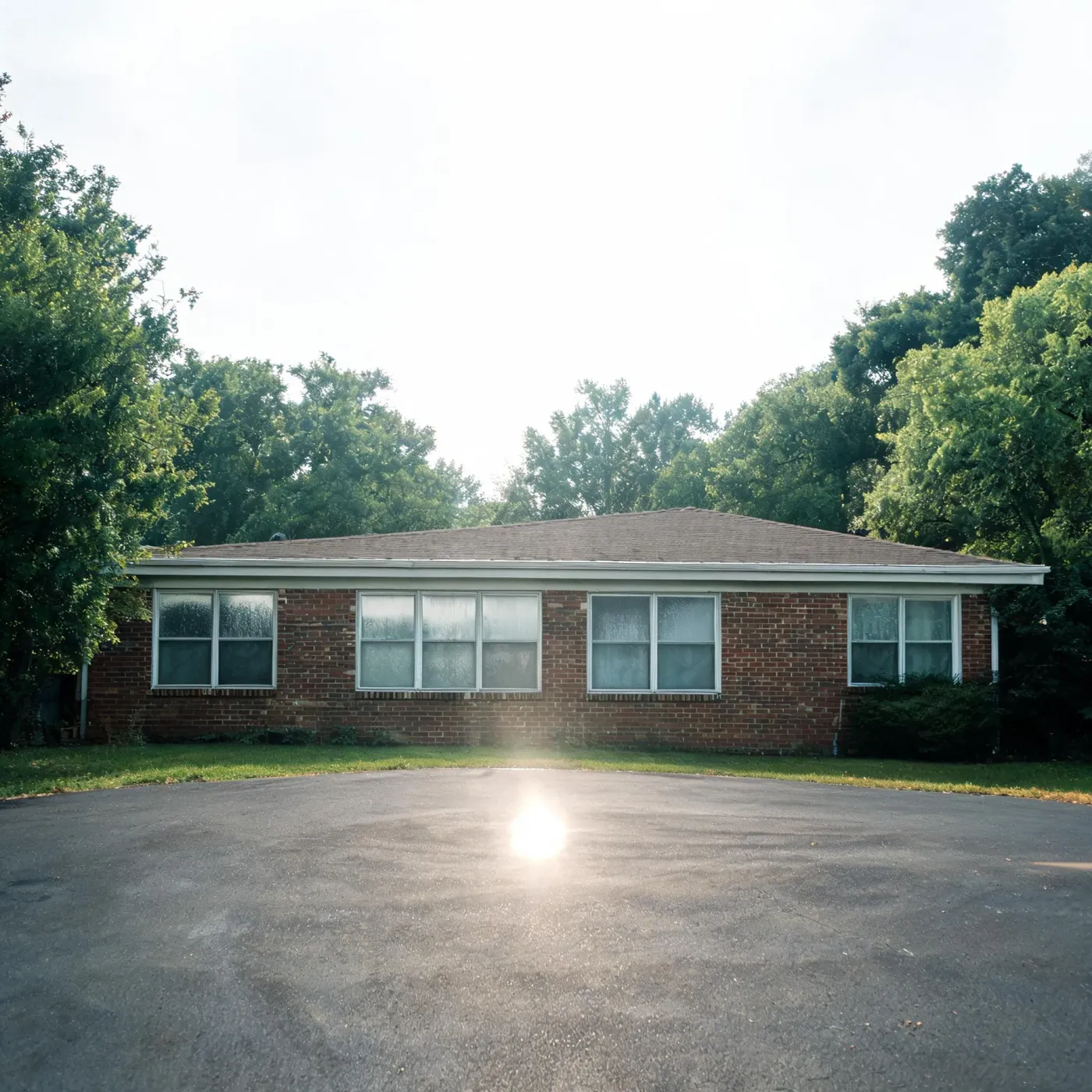
A single-story red brick building with a hipped shingle roof and several white-framed windows, fronted by a large empty asphalt lot with sun flare, surrounded by green trees under a bright hazy sky.

Summer air in Alabama holds a lot of moisture, with the dew point averaging 69°F across June, July and August, according to NOAA. That's heavy, sticky air for your mini split to wring out. The indoor coil has to pull more water from the air before it can even start cooling it, so the unit runs longer to hit the temperature on your thermostat. You'll notice it struggling to keep up on the muggiest days, or the room feeling cool but still damp. That same coil is what ices over or clogs when something's wrong, which is often behind a mini split blowing cold air in heat mode instead of warm.

NASA POWER T2MDEW county cells weighted by homes

A woman with long blonde hair in a light blue shirt leans back on a beige sofa with her eyes closed, in a softly lit living room with cushions and a blurred plant and shelf in the background.
A woman with long dark hair in a gray knit sweater sits on a gray sofa with a cushion, looking toward a window in a living room with framed pictures and a lamp in the background.
A woman with long dark hair in a light grey knit sweater sits on a sofa indoors, looking to her right, with a framed landscape picture, a potted plant and a curtained window behind her.
A woman with long dark hair leans back against a gray sofa with her eyes closed, in a living room with a curtained window, a potted plant, and a dark screen in the background.

The air feels cool but it's working

Set to heat, a mini split doesn't put out air as hot as a furnace does. It moves warm air steadily, and right after it kicks on, or during a quick defrost cycle, the air at the vent can feel cool against your skin even though the room is slowly climbing in temperature. Check the room itself after ten or fifteen minutes. If it's getting warmer, the unit is doing its job. A lot of calls about cold air in heat mode end here, with nothing wrong at all.


The air feels cool because something's off

If the room isn't warming up and the air at the vent stays cold the whole time, that's different. A low refrigerant charge, a failing reversing valve, or a frozen outdoor coil can all keep a mini split from heating even while it's running and drawing power. With how much Alabama homes lean on electric heat, a unit that runs nonstop without warming the house is costing you on the bill for no benefit. That's worth having a contractor look at rather than waiting it out.

An older woman with short gray hair in a cream cable-knit turtleneck sweater smiles while looking to the side in a wooden kitchen, with a round loaf of bread on a board in the foreground and a lit candle by a dark window.
A woman with dark hair in a bun sits wrapped in a chunky knit blanket on a couch with a child resting his head on her shoulder, eyes closed, beside a lit lamp and bookshelf indoors.

28°F to 32°F

That's the defrost range for most Alabama winters, when outdoor coils ice up and the unit briefly blows cool air on purpose. A tech can check if yours is defrosting more than it should.

Send my request

Still blowing cold after 15 minutes

If the air hasn't warmed up by then, the heat pump itself may be at fault, not a normal cycle. Worth having someone look at it before your next power bill arrives.

Send my request

Normal Cycle or Repair Call

Normal operation

  • A mini split in heat mode cycles through defrost every so often, and during that cycle it runs cool air for a few minutes on purpose.
  • Right after the unit kicks on from being idle, the air at the vent hasn't caught up to the compressor yet, so it feels cool before it feels warm.
  • A dirty outdoor coil makes defrost cycles run longer and more often, which stretches out the time you feel cool air without anything being broken.
  • If the air warms back up within 15 minutes and the room climbs toward the set temperature, the system is doing what it's built to do.

Needs a repair call

  • A refrigerant leak means the system can't move heat efficiently, so the indoor coil keeps blowing air that never gets past lukewarm.
  • A failed reversing valve can stick the system in cooling mode even though the thermostat says heat, and that won't fix itself.
  • If the outdoor unit is iced over and isn't clearing on its own after a defrost cycle, the defrost control or a sensor may have failed.
  • A clogged filter or blocked outdoor coil cuts airflow enough that the indoor unit struggles to deliver warm air even when everything else is working.
  • Electric heat costs enough in Alabama that a unit running on and off without warming the room is worth having a tech look at before the next bill arrives.
  • If the room never climbs toward the set temperature no matter how long it runs, something downstream of the thermostat isn't doing its job.
  1. The thermostat calls for heat and signals the compressor.

  2. The reversing valve shifts to send hot refrigerant indoors.

  3. The outdoor coil pulls heat from the outside air.

  4. The indoor coil releases that heat into your rooms.

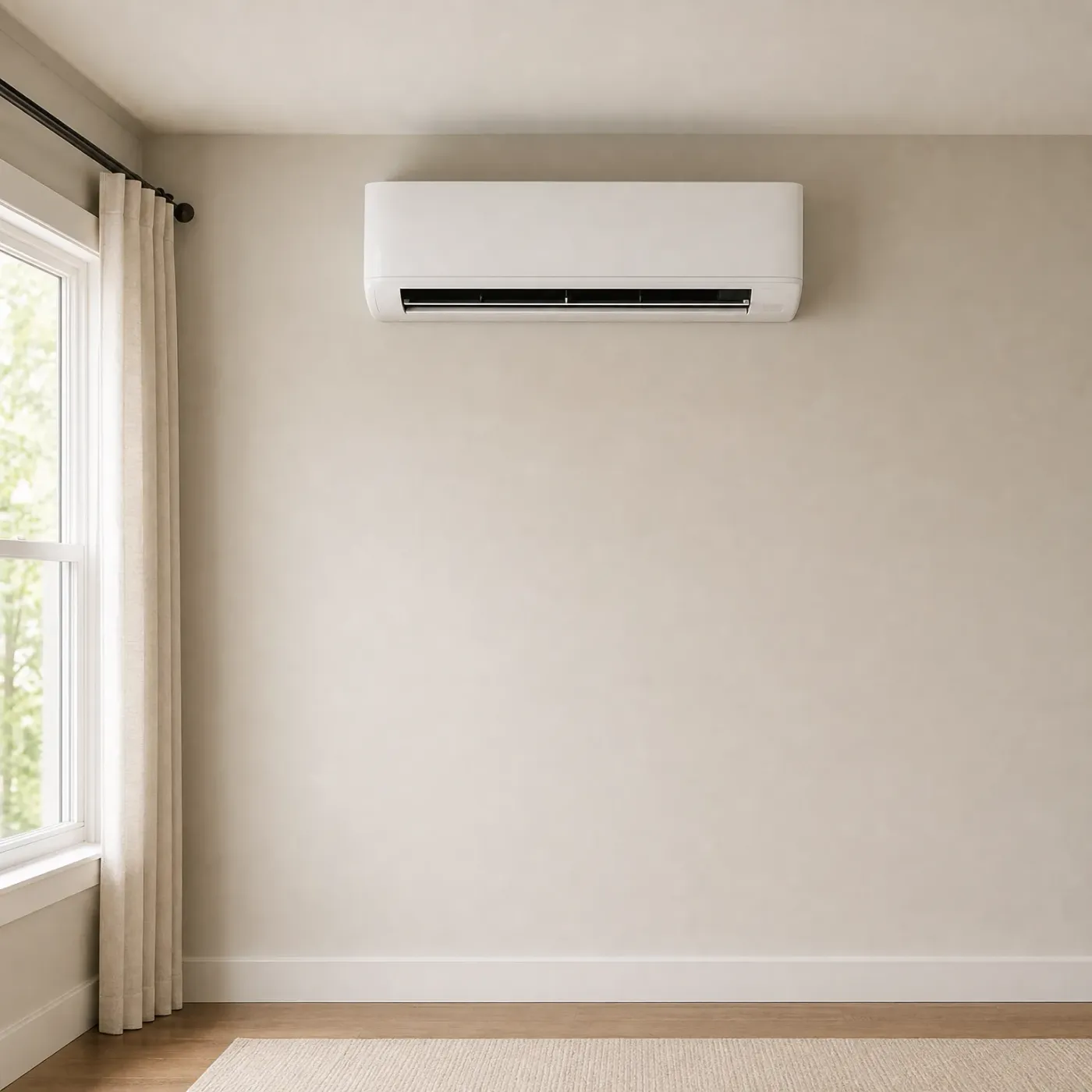
A white wall-mounted mini-split air conditioner on a beige interior wall, with a curtained window on the left and wood flooring with a light rug below.
Here the unit runs its cycle and warms the room without any fuss, no cold surprises at the vent.
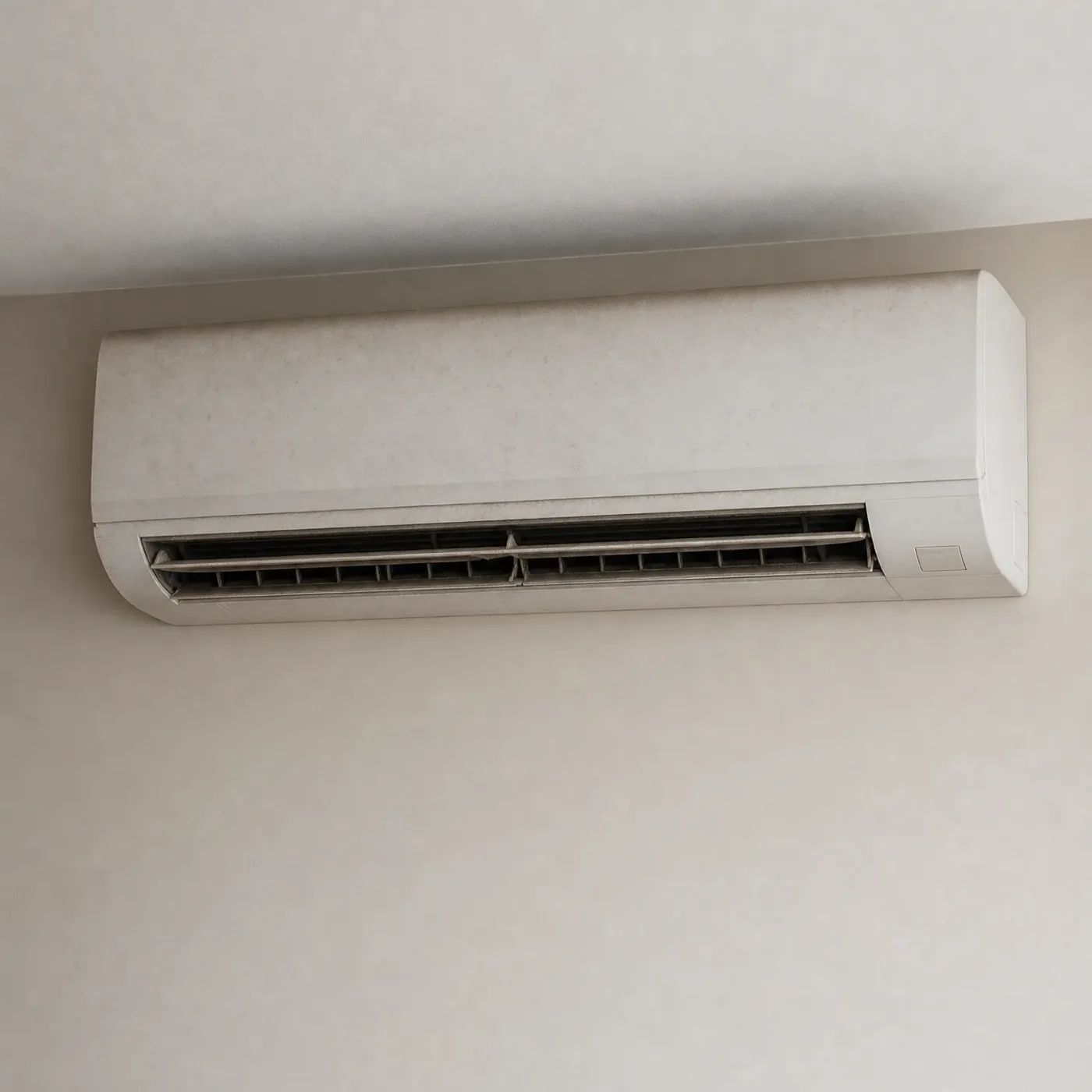
A white wall-mounted mini-split air conditioner indoor unit installed near the ceiling on a plain light-colored wall, with its horizontal outlet vent and louvers visible.
Dust on the coil and vents like this makes a mini split struggle, and that's often when the cold air won't quit.

Is the house actually warming up or just the unit running

Walk through the rooms and check. If the air at the vent is cool but the house is slowly climbing to the temperature you set, the unit is doing its job and you're watching a normal cycle. If the house stays cold no matter how long it runs, that's different. You'll notice the room never quite feels warm, the unit runs almost constantly instead of cycling off, and your electric bill goes up without the comfort to match it. With electric heat and Alabama's rates, a mini split that runs nonstop and never catches up costs you for heat you're not getting. Left alone through a cold stretch, that's a house that stays uncomfortable and a bill that keeps climbing.

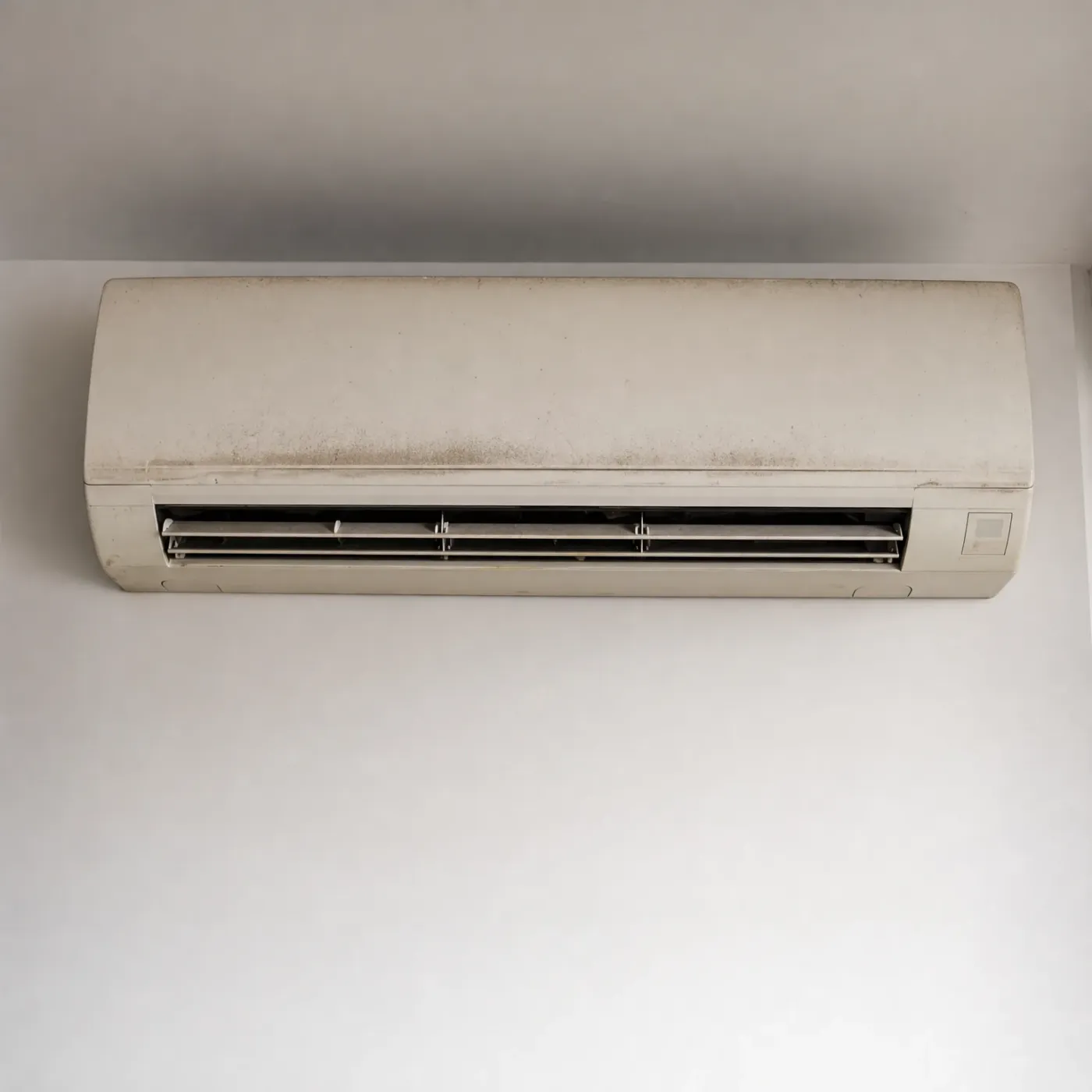
A dusty, discolored wall-mounted mini-split air conditioner indoor unit on a plain white wall, with its horizontal louvers and vent grille visible.
Before you get your mini split repair
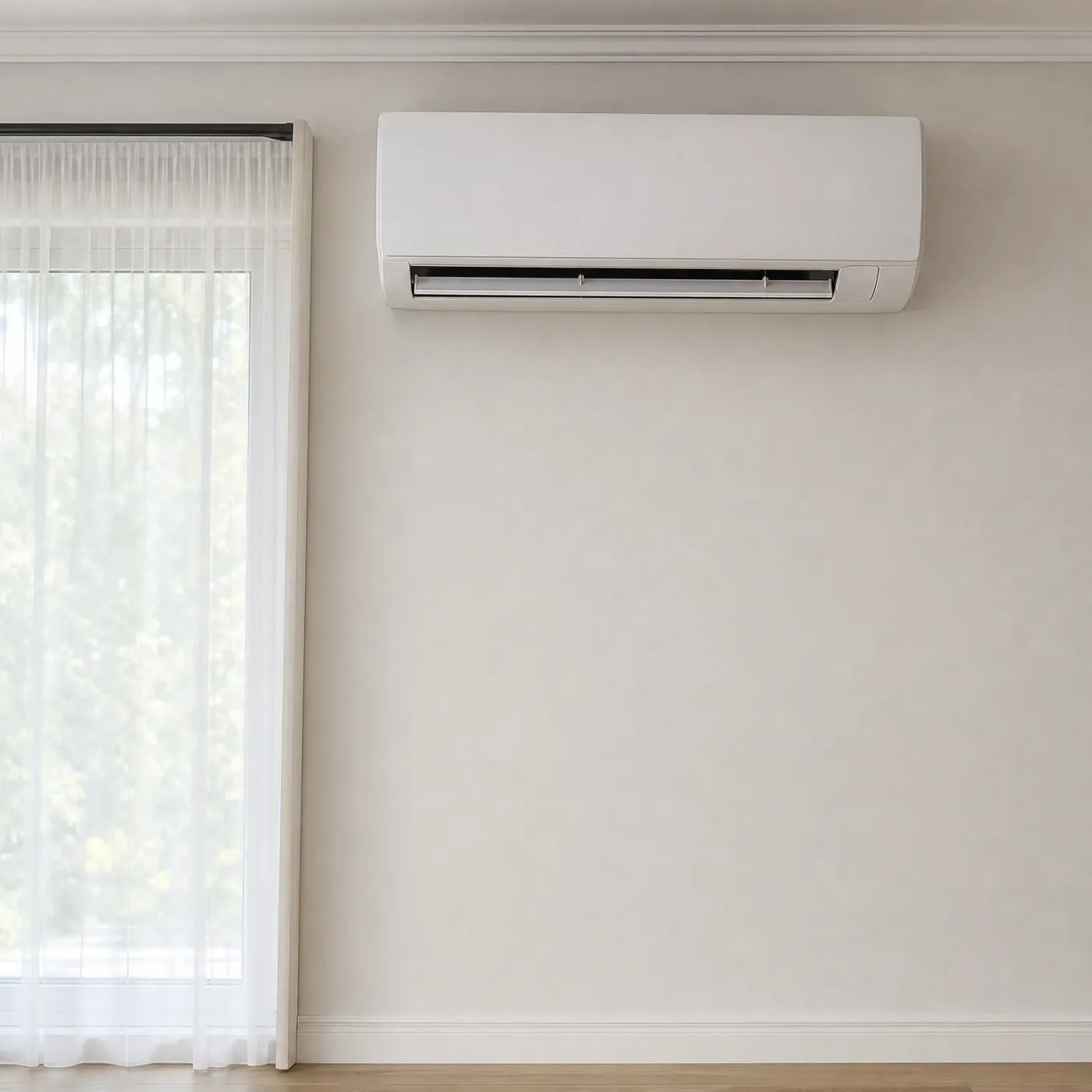
A white wall-mounted mini-split air conditioner on a beige interior wall, next to a window with sheer white curtains and green foliage outside.
After you get your mini split repair

The right pro for this job

A mini split that keeps blowing cold air isn't something to live with through an Alabama winter, especially with what electricity runs here. Every degree it fails to deliver, the backup heat strip or the thermostat creeping up tries to make up for, and that shows on the bill. You've already walked through why it happens: defrost cycles, startup lag, a dirty coil, maybe a reversing valve that's stuck. Telling those apart means getting hands on the unit, checking pressures, watching a cycle start to finish. That's not something to guess at from across the room. A contractor who works on these systems can tell in minutes whether it's doing what it should or costing you money every time it runs. Hand this off now and stop watching the vent and wondering. Someone who knows this equipment takes it from here.

What's actually causing it

  • The reversing valve is a sliding part inside the outdoor unit that switches the refrigerant's path between cooling and heating.
  • A stuck or slow reversing valve can leave the system partway between the two modes, so warm refrigerant never fully reaches the indoor coil.
  • A failing sensor can tell the control board the coil is warm enough when it isn't, so the fan keeps blowing before the heat catches up.
  • Low refrigerant charge means less heat gets carried to the indoor coil, even though the compressor is running and the fan is pushing air.
  • A dirty outdoor coil can't pull enough heat from the outside air, so what reaches the indoor side cools off before it warms your room.
  • Wiring between the thermostat and the outdoor unit can fail in a way that keeps the fan running without ever triggering the heating cycle.

A mini split moves heat with refrigerant, and a handful of parts have to work together to get that heat into your rooms. The reversing valve is what points the refrigerant toward heating instead of cooling, and when it sticks or moves slowly, the system ends up caught between the two. Warm refrigerant never makes it fully to the indoor coil, so the air at the vent stays cool. The control board relies on a sensor to know when the coil has warmed up enough to push air. If that sensor reads wrong, the fan starts blowing before there's any heat behind it. Refrigerant level matters too. With a low charge, the compressor still runs and the fan still pushes air, but there isn't enough refrigerant to carry real heat to the indoor side. Outside, the coil has to pull heat from the outdoor air before any of it can be moved indoors. A coil caked with dirt or grime can't pull in enough, so what little heat it gathers cools off before it reaches you. None of this requires the compressor to fail or the fan to quit. Everything can sound like it's running fine, because it is, except for the one part that's not doing its job. A wiring fault between the thermostat and the outdoor unit can cause the same complaint for a different reason, keeping the fan spinning without ever starting the heating cycle at all.

Power costs 16.09 cents per kilowatt-hour statewide

At 16.09 cents per kilowatt-hour, a mini split that's stuck blowing cold air and losing ground to a backup heat strip costs you more every day it runs that way. A unit heating correctly uses a lot less power than one fighting itself to warm the house.

EIA-861 2025 statewide residential average

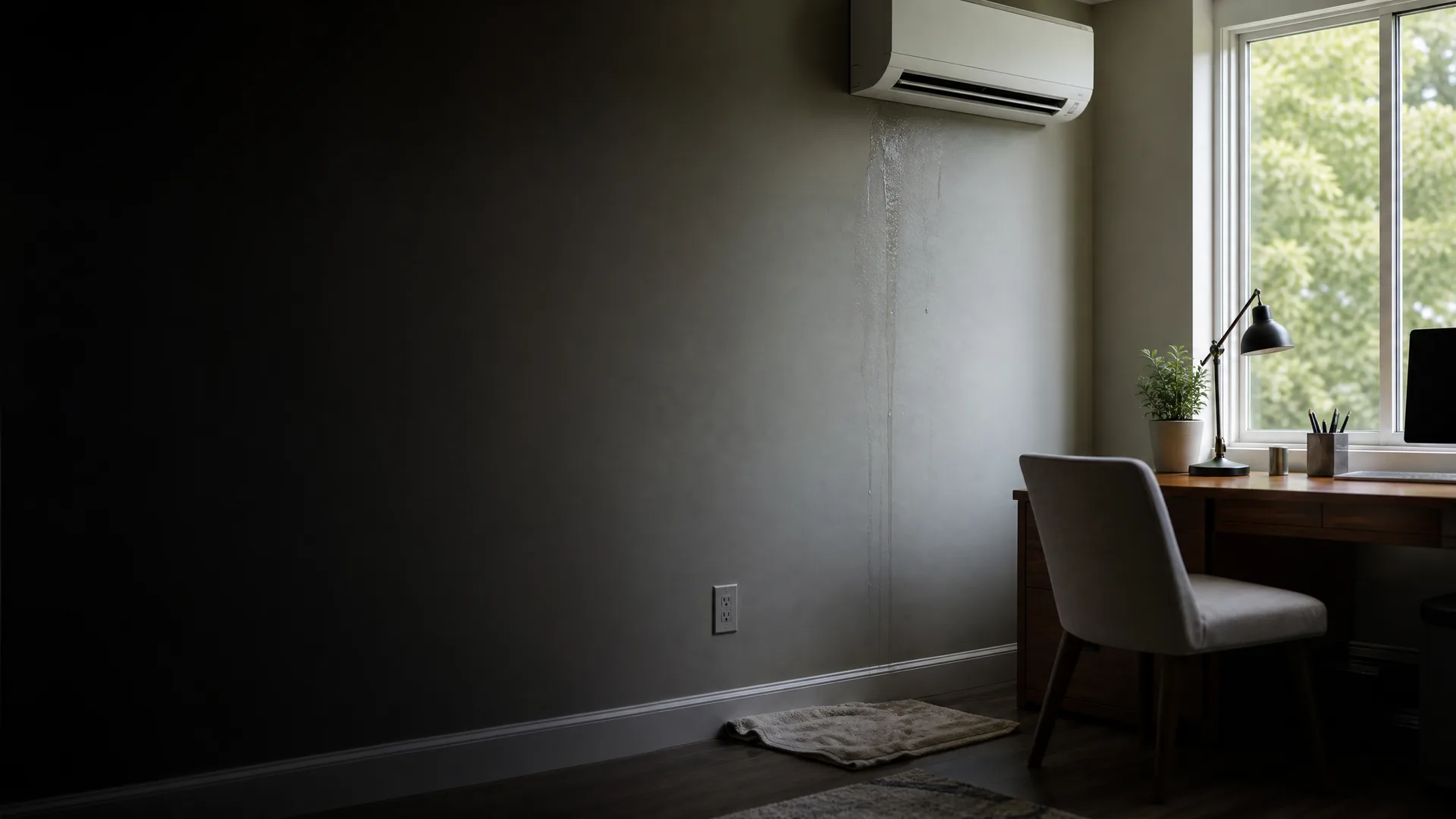
A dim room with a wall-mounted mini-split air conditioner above a vertical water stain running down the wall to a towel on the floor, with a desk, chair, lamp and potted plant beside a window.

It's a summer afternoon and you're in the home office, door shut against the heat outside. You notice the wall under the indoor unit first, a dark streak running down from the casing, the paint going soft around it. A towel sits balled up on the floor where it's caught the drips before. The unit is still blowing, air pushing out over the desk, but your eyes are on the wall now, not the vent. Outside the Alabama humidity sits heavy enough to explain a lot of water, if the unit's draining the way it should.

A mini split blowing cold air in heat mode is either doing exactly what it's supposed to, cycling through defrost on a cold Alabama morning, or it's telling you the reversing valve, a refrigerant charge, or a coil caked in dust isn't letting it finish the job. You can tell the difference by watching the room, not just the vent. If the house keeps warming up through the evening, leave it alone. If it doesn't, and the air strip keeps picking up the slack, that's a repair, not a wait-and-see. You don't have to figure out which part it is. Send the form and that part stops being yours to carry. Someone who works on these systems in Alabama homes gets the details and reaches out, and from there it's their job to find what's keeping warm air from reaching your rooms. Your part was noticing something was off. The rest moves to someone whose job it is to know.

Dark metal roofs and a stone chimney of a house seen from above, framed by moss-draped trees, with forested hills and hazy mountains under a cloudy sky in the background.

Matched to your mini split job

Find a pro near me

Sending the form costs nothing.

A mini split stuck blowing cold air won't fix itself, and every day it runs that way is another day of a heat strip or a stuck reversing valve pulling more power than it should. Send the request and let a contractor sort out what's wrong while you stop guessing at it.