What defrost mode means on an Alabama mini split

A white wall-mounted mini-split air conditioner indoor unit centered against a plain light gray background.
Find a mini split pro

Why does my mini split blow cold air and say "defrost" in winter?

You're running the heat on a cold morning and the unit suddenly blows cool air with "defrost" lit up on the display. In Alabama, most homes lean on electric heat, and a mini split acting up in January feels urgent when it's the thing keeping everyone warm. Before you call anyone, it helps to know whether this is a real problem or just the system doing its job.

It's clearing ice off the outdoor coil, not breaking down

When the outdoor temperature sits low and the air is damp, frost builds up on the outdoor coil. The mini split needs that coil clear to pull in heat, so it runs a defrost cycle: it reverses itself briefly, blows cold air inside for a few minutes, and melts the ice off the coil outside. Then it switches back to heating on its own. This is normal operation, and in Alabama's wetter cold snaps, when temperatures drop near freezing with damp air, it can happen more than once in a morning. If the cycle runs long, repeats constantly, or the unit never goes back to blowing warm air afterward, that points to a real problem, like a stuck sensor or a refrigerant issue, worth having looked at.

A woman with dark hair in a bun wearing a cream knit sweater sits on a gray sofa in a bright living room, looking off to the side.
A woman wrapped in a knit blanket sits on a gray sofa in a living room, looking toward a bright window with houseplants and an armchair in the background.
A woman in a gray cowl-neck sweater sits on a light sofa with cushions, smiling and looking to the side, with a kitchen and window visible behind her.
A woman with dark hair in a bun, wearing a light linen shirt, sits on a sofa and looks to the side, with a window, houseplants and a kitchen with pendant lights blurred behind her.

Cold, damp air is what starts this. When the outdoor coil sits below freezing and pulls in moist air, frost builds up on it the same way it would on a cold glass left outside. That frost is a problem because the coil needs open airflow to pull heat from the outside air, which is how a mini split heats your home even when it's cold out. A sensor on the coil tracks the frost, and once it builds up enough, the control board flips the reversing valve and runs the cycle backward for a few minutes. Hot refrigerant moves through the outdoor coil to melt the ice off, and the outdoor fan stops so that heat doesn't get carried off into the yard. Since the system is briefly running in cooling mode, the indoor unit blows cool air during that stretch. It's short, and it's the system clearing itself so it can keep heating your home through the rest of the morning. Once the coil sensor reads clear, the valve switches back and warm air returns.

How Defrost Actually Works

  • Frost forms on the outdoor coil when the unit runs heat in cold, damp air, and that frost blocks airflow across it.
  • The thermostat on the outdoor coil senses the frost buildup and tells the control board to start a defrost cycle.
  • The reversing valve switches the system into cooling mode for a few minutes so hot refrigerant can melt the ice off the outdoor coil.
  • Because the indoor unit is now running the cooling cycle, the air coming out of it feels cool instead of warm.
  • The outdoor fan shuts off during defrost so the heat stays on the coil instead of blowing away into the yard.
  • Once the coil sensor reads clear, the board switches the valve back and the indoor air turns warm again.
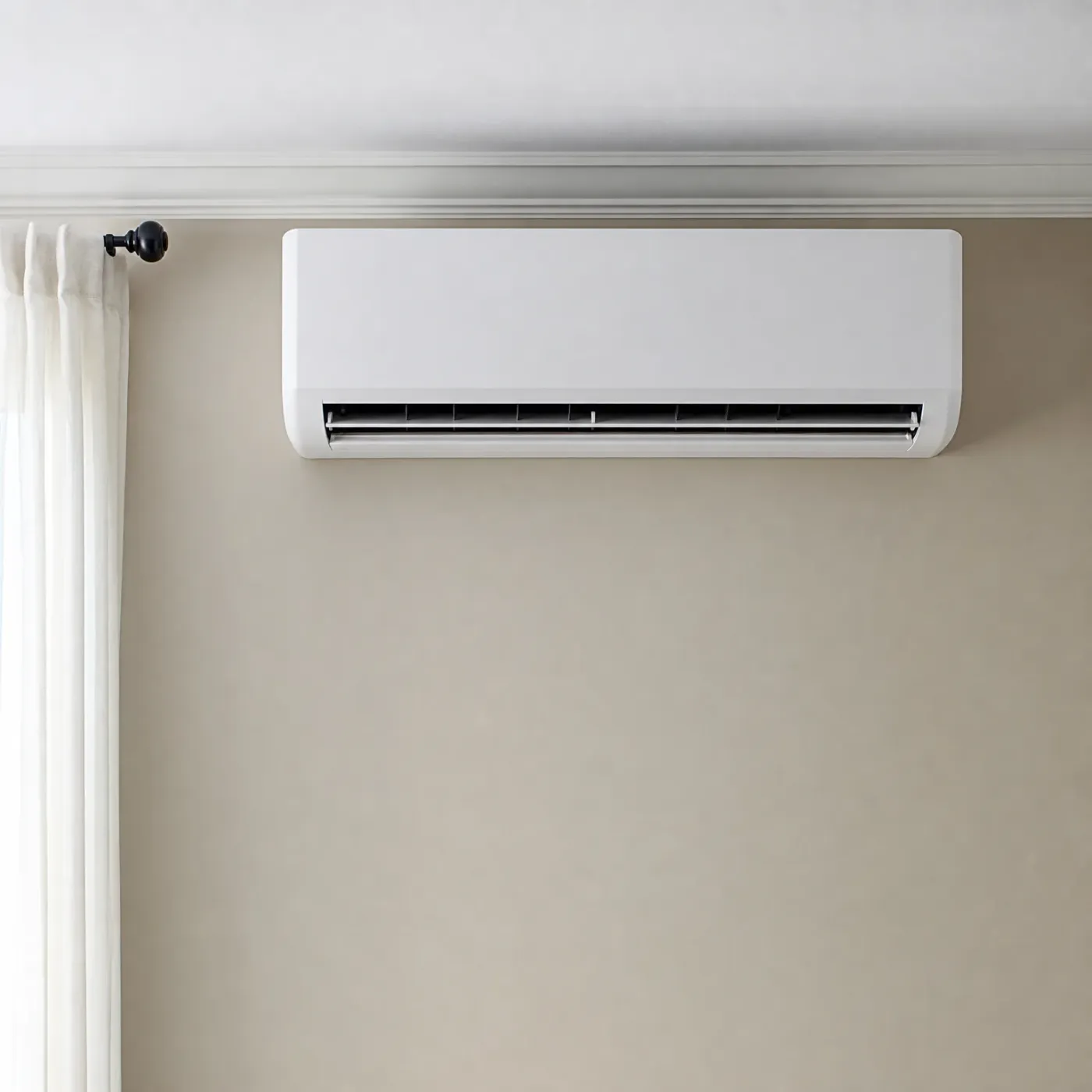
A white wall-mounted mini-split air conditioner installed high on a beige interior wall below crown molding, with a sheer white curtain on a dark rod at the left edge.
Short cycles with warm air back on in a few minutes mean the defrost cycle is doing its job.
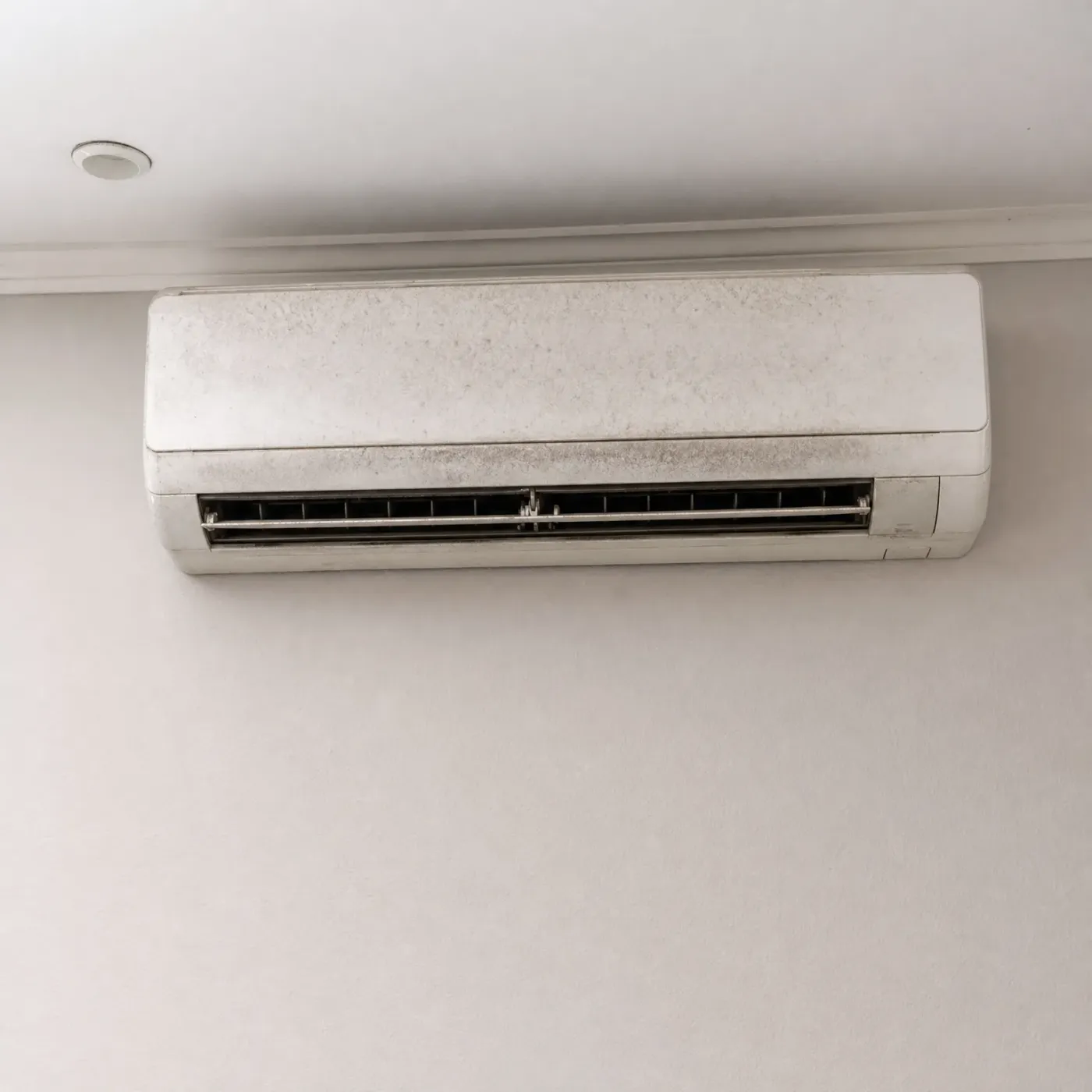
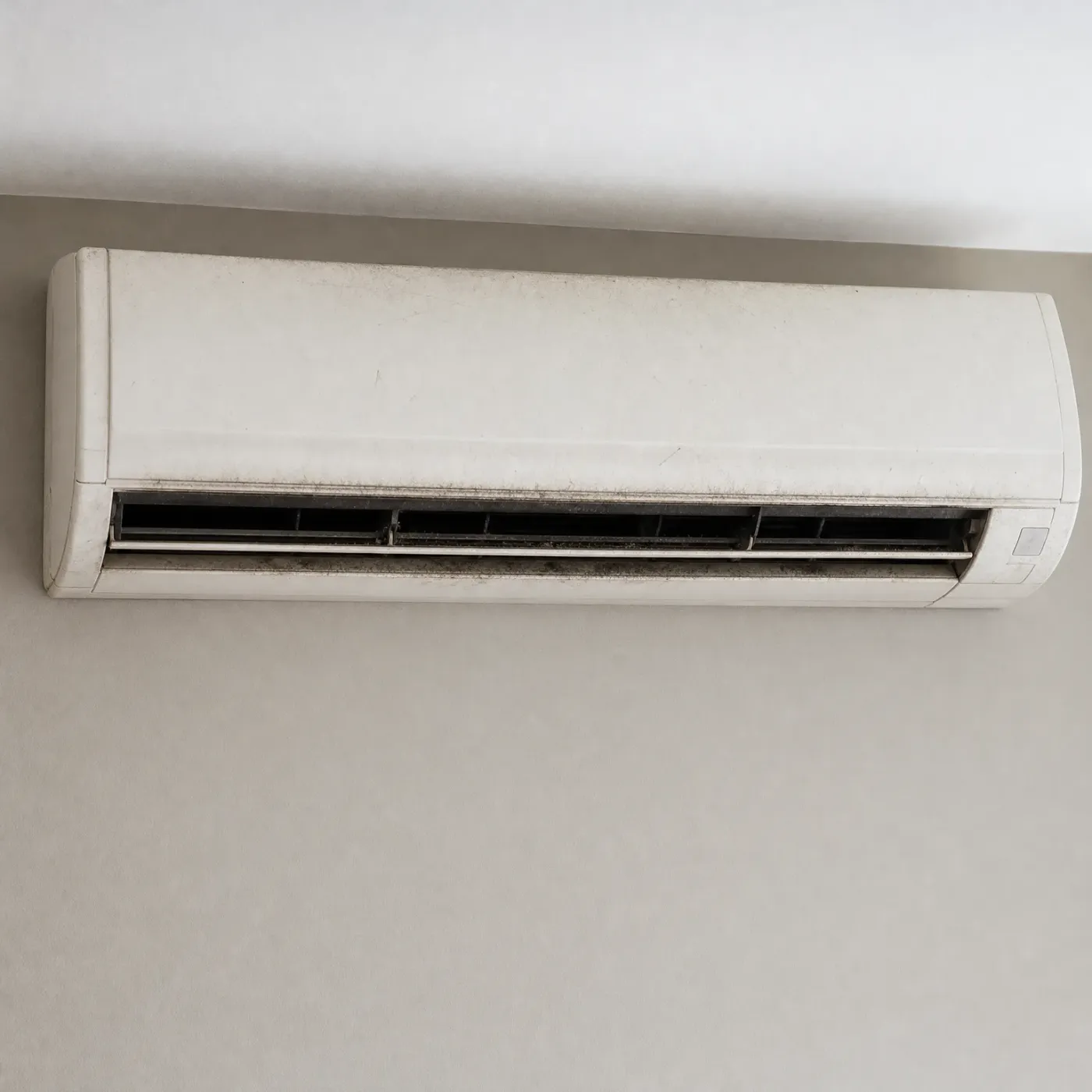
A dusty white wall-mounted mini-split air conditioner unit installed near the ceiling on a plain light-colored interior wall, with a small recessed ceiling fixture at upper left.
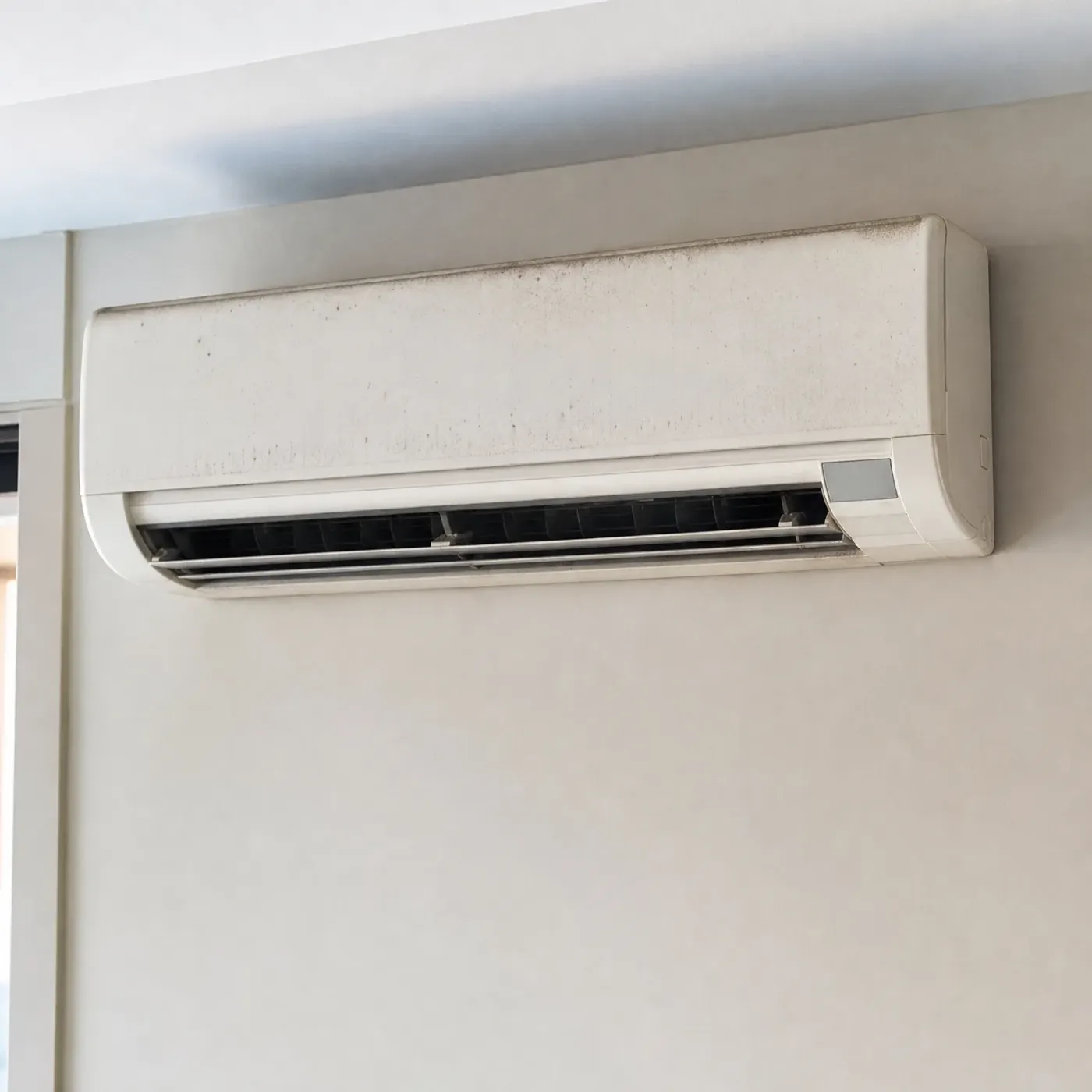
Dust and grime caked on the casing like this often mean the coil underneath is just as dirty, and that makes frost worse.
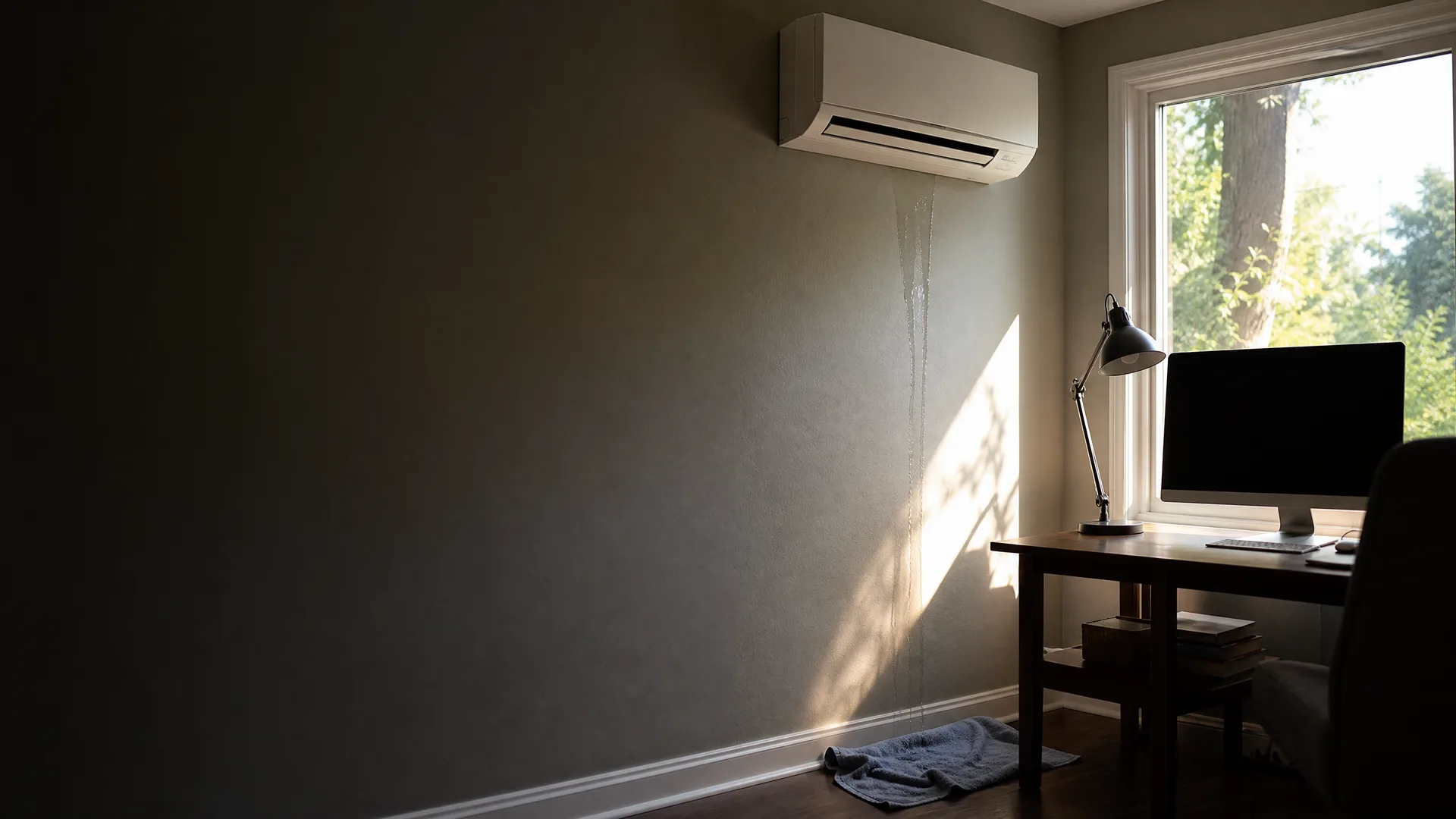
A wall-mounted mini-split air conditioner leaking water down a dim gray wall onto a towel on the floor, beside a window with a desk, lamp and monitor.

It's a July afternoon and the office window is bright with that thick Alabama heat outside. You're at the desk when you notice the carpet feels damp under your foot. You look up and see it: a wet streak running down the wall below the indoor unit, dark against the paint, with water collecting on the trim. You grab a towel from the hall bathroom and press it against the baseboard, then step back and look at the unit itself. The display is calm, no defrost warning, nothing blinking. It's just dripping where it shouldn't, steady enough that the towel is already soaked through.

Normal Defrost or Stuck in Defrost

Normal Defrost

  • The unit blows cool air for a few minutes, then switches back to warm air on its own.
  • The outdoor fan stops turning while the cycle runs, and steam or light mist can rise off the outdoor coil.
  • This happens on its own during cold, damp mornings and clears up without anyone touching the thermostat.
  • Indoor temperature barely drops because the cycle is short and the system resumes heating right after.
  • You can walk away and check back in ten or fifteen minutes to find it heating normally again.

Stuck in Defrost

  • The display still reads "defrost" after twenty minutes or more, and the air stays cold the whole time.
  • The outdoor coil stays covered in thick ice or frost instead of clearing, even after the cycle should have ended.
  • The indoor unit keeps blowing cold air into the room instead of returning to heat, and the room cools down.
  • The outdoor fan may run constantly instead of pausing, which is backward from how a normal cycle behaves.
  • If this repeats every time the unit tries to heat, the defrost sensor or control board may need a contractor's look.
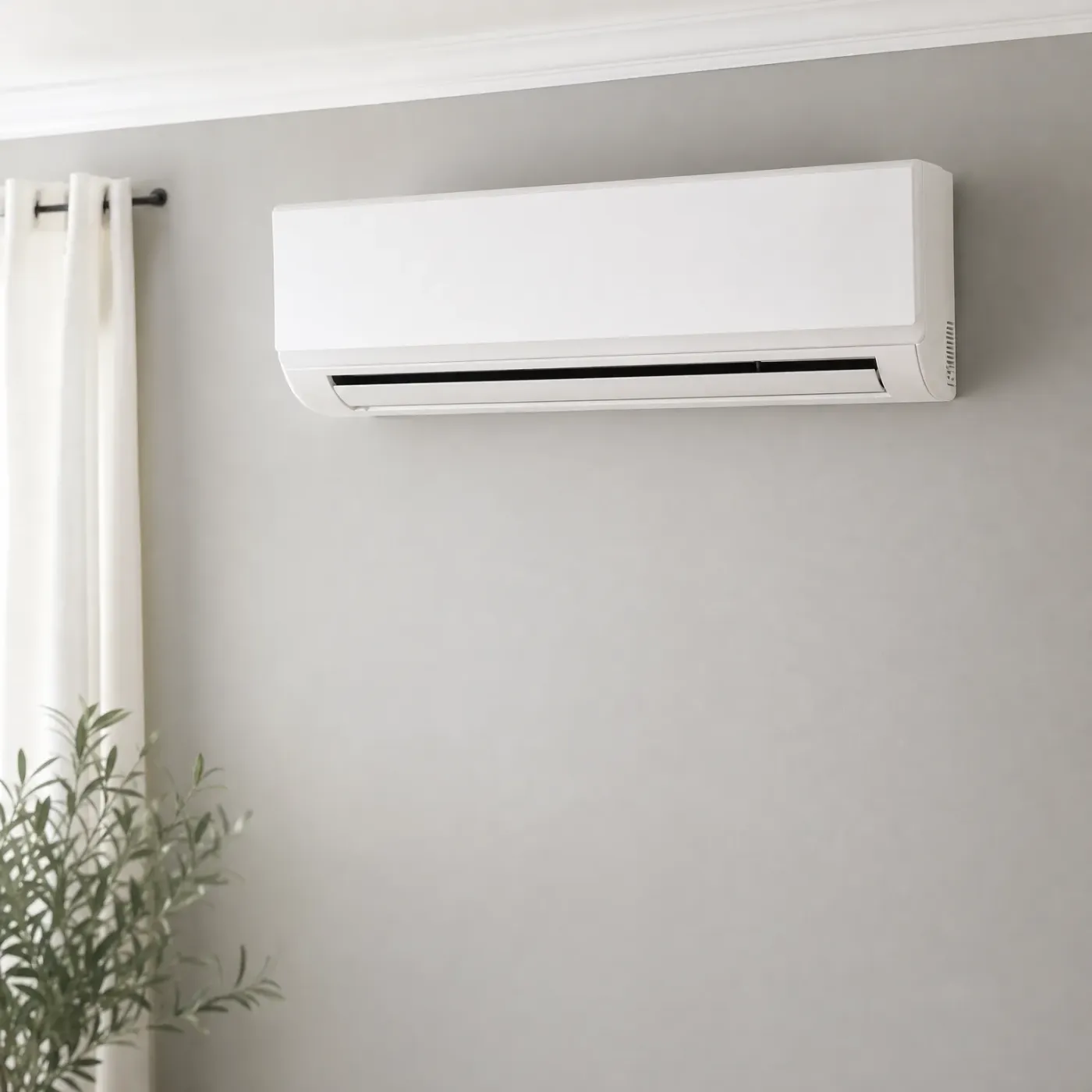
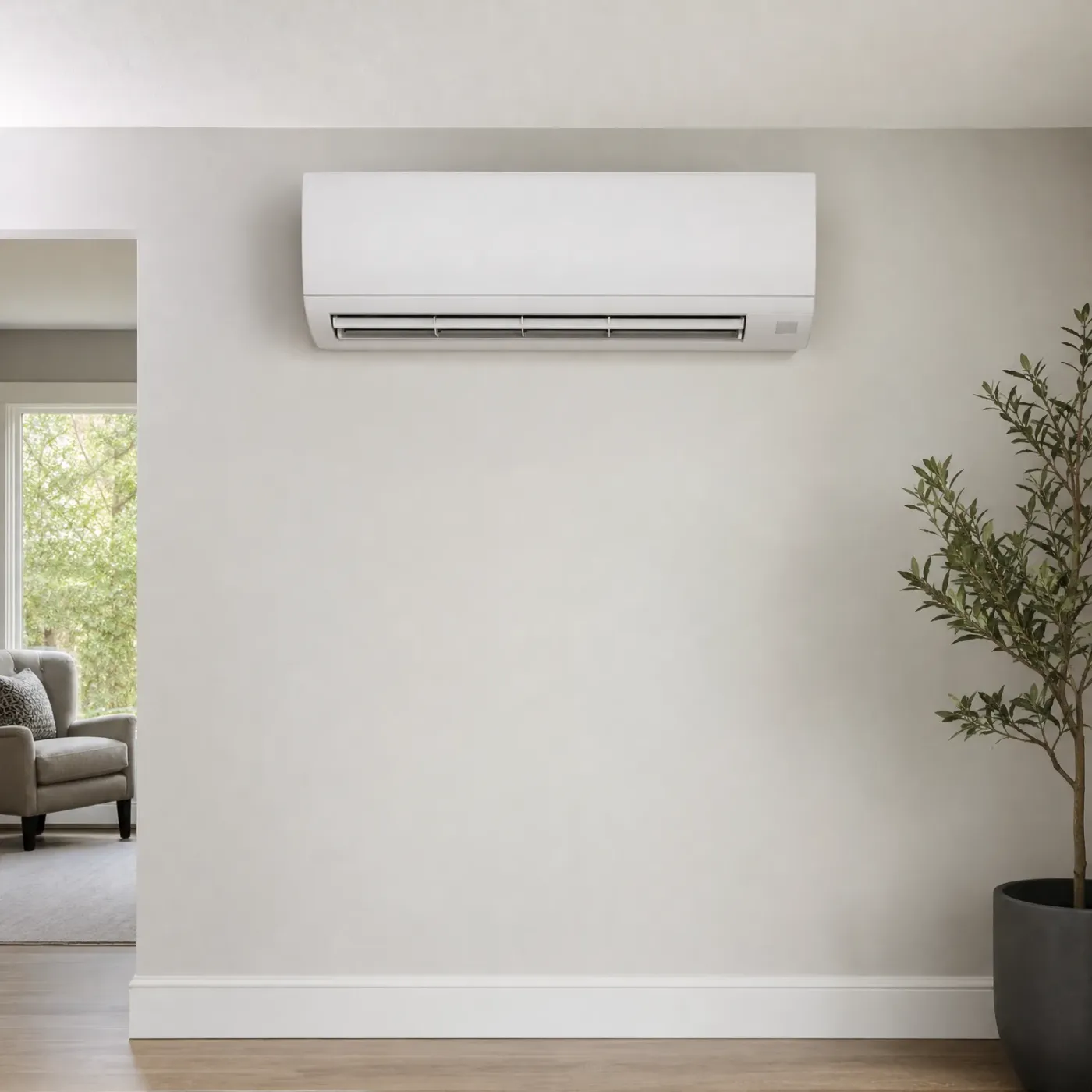
A white wall-mounted mini-split indoor unit on a light gray interior wall, with a white curtain on a black rod at left and a leafy plant in the lower left corner.

Running clean

A unit like this cycles into defrost on its own schedule when the morning is cold and damp. It blows cool air for a few minutes, the outdoor fan stops, and warm air comes back without you touching the thermostat. No smell, no drip, no noise beyond the usual hum.

A wall-mounted white mini-split air conditioner indoor unit with visible dust and grime around its outlet vent, installed near the ceiling on a plain light-colored wall.

Running dirty

Dust and grime built up like this on the vents usually means the coil behind them is coated too. A dirty coil holds frost longer and makes the unit work through more defrost cycles than it should, so the house takes longer to warm back up each time.

Power costs 16.09 cents per kilowatt-hour statewide

At 16.09 cents a kilowatt-hour, every extra minute your mini split spends stuck in defrost instead of heating is minutes you're paying for without getting warm air back. A unit that won't come out of that cycle on its own is worth having looked at before another electric bill shows it.

EIA-861 2025 statewide residential average

A white wall-mounted mini-split indoor unit high on a beige interior wall, with a potted olive-like tree at right and an armchair and window visible through a doorway at left.

Working normally

The indoor unit sits clean and quiet on the wall, running the room the way it should. Air comes out warm on a cold morning, and if it dips cool for a few minutes while the outdoor coil defrosts, warm air comes right back. Nothing to look at twice.

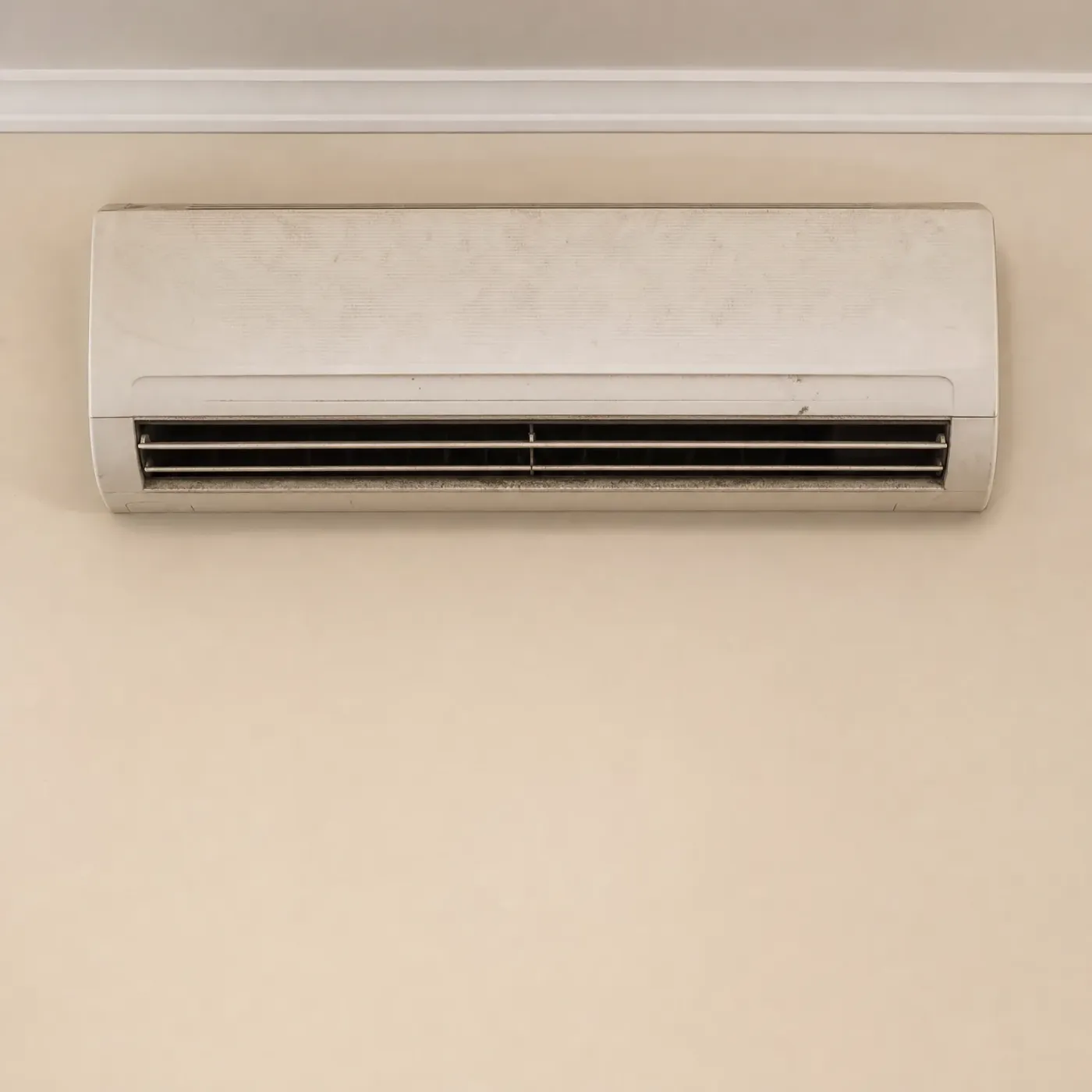
A wall-mounted mini-split air conditioner indoor unit with visible dust and staining, installed on a beige interior wall below white crown molding.

Caked in grime

Dust and grime built up like this around the vents block airflow through the indoor coil, the same way frost blocks the outdoor one. A unit running this dirty can struggle to pull out of defrost cleanly, and you'll notice it in weaker heat and a longer wait for warm air to return.

A smiling older woman with gray hair in a cream knit sweater stands in a dimly lit kitchen beside a window showing snow outside, with a round loaf of bread on the counter in the foreground.
A woman and a child wrapped together in a thick knitted blanket on a sofa, both with eyes closed, with a lit table lamp and houseplant in the dim background.

Matched to your mini split job

A mini split that cycles into defrost on its own, for a few minutes at a time, is doing what it's built to do on a cold Alabama morning. The trouble is the ones that get stuck there, or that drip and run warm air that never comes back. Every minute lost to a defrost cycle that won't end is a minute of electric heat you paid for and didn't get, and with power costing what it does here, that adds up faster than most people think. A frozen coil or a reversing valve that won't switch back doesn't fix itself, and it tends to get worse as the winter goes on, not better. You don't have to figure out which part is behind it before asking someone to look. Send the request and a contractor who knows these systems takes it from there, and that's one less thing sitting on your list on a cold morning.

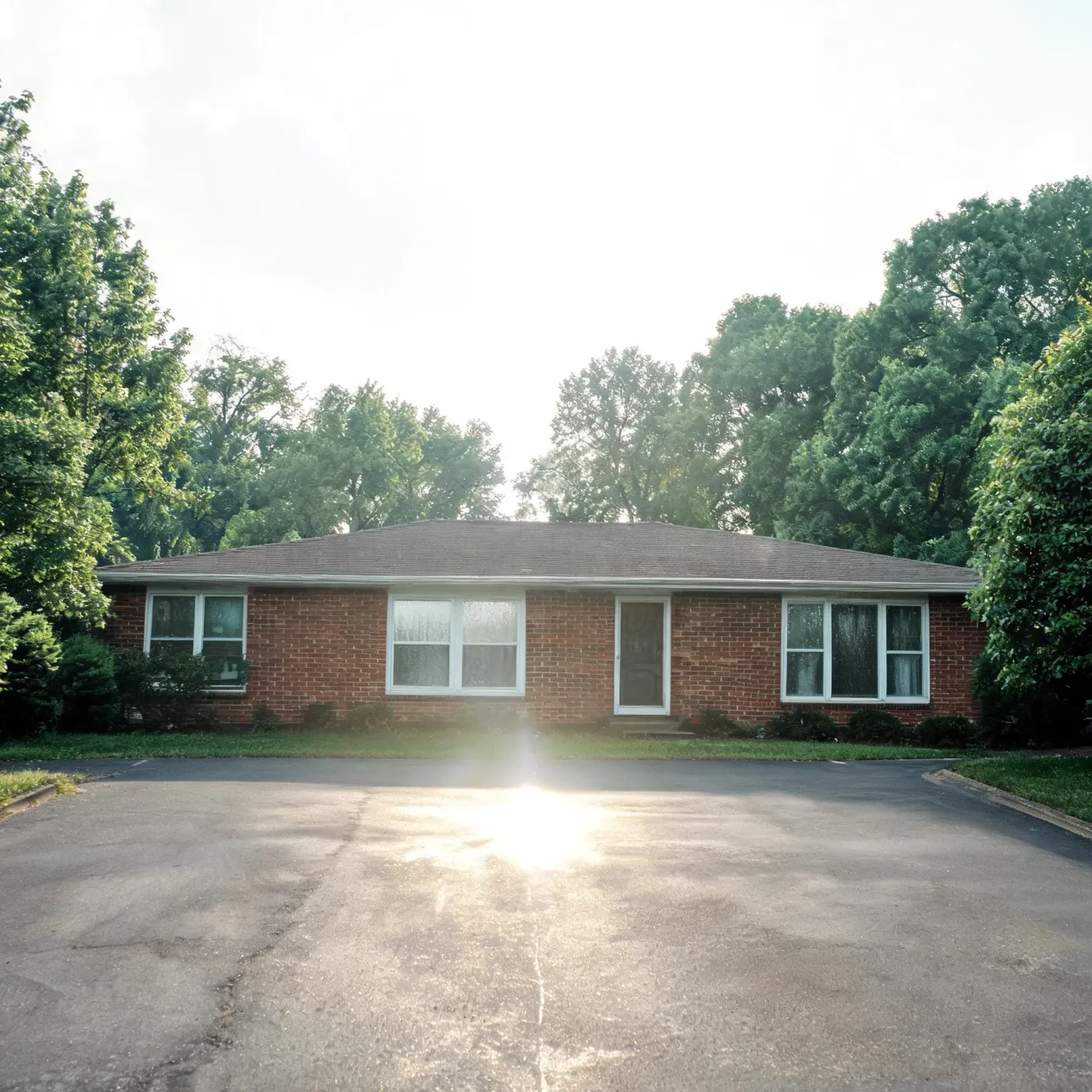
A single-story red brick ranch house with a low shingled roof, white-framed windows and a central door, fronted by a large asphalt parking area with sun glare, surrounded by leafy green trees.

Alabama air carries a lot of moisture even outside of summer, and that's the reason defrost cycles happen at all. Summer dew points here average 69°F, and that same damp air sticks around into the cooler mornings when your mini split is running heat. The wetter the air outside, the more frost builds on the outdoor coil, and the more often that unit has to stop and defrost itself. If your mini split seems to dip into defrost more than you'd expect, Alabama's humidity is a big part of why, not something wrong with the unit on its own.

NASA POWER T2MDEW county cells weighted by homes

A dusty, stained white wall-mounted mini-split air conditioner indoor unit installed high on a plain off-white interior wall near the ceiling.
Before you get your mini split repair
A white wall-mounted mini-split air conditioner unit installed high on a beige interior wall below white crown molding, with a window and woven shade at the left edge showing green foliage outside.
After you get your mini split repair
  1. Cold, damp outdoor air coats the outdoor coil in frost.

  2. A sensor on the coil tells the control board frost has built up.

  3. The reversing valve switches, sending hot gas to the outdoor coil.

  4. The outdoor fan stops while that hot gas melts the frost.

A man in a dark blue shirt stands in an open front doorway of a stucco and wood-clad house, facing a blond woman seen from behind in the foreground on a stone walkway.

A stuck defrost cycle shows up on your power bill before it shows up anywhere else

You keep the house warm for whoever's home during the day, and a mini split stuck in defrost is working against that. It blows cool air, the outdoor fan stops, and instead of coming back to warm air in a few minutes it just sits there. The room cools off, someone turns the thermostat up to compensate, and the unit answers by running longer without actually heating the space. At Alabama's electric rates, that's real money spent on a system that isn't doing its job.

If this is what your unit is doing, a contractor matched to your situation can look at why it won't come out of the cycle, whether that's a sensor, the reversing valve, or something else entirely. You won't have to track down who to call or explain the problem twice. Once you send the details, that part is off your plate.

Interior corner of a dining room with a round wooden table, a ceramic vase holding olive branches, a dark spindle-back chair near a curtained window, and a sideboard with a lamp against beige walls.
A white wall-mounted mini-split air conditioner indoor unit installed near the ceiling on a plain beige wall.

A cold snap versus a mild one

On a hard freeze, a mini split in Alabama can cycle into defrost every hour or so, since cold air holds less moisture and frost builds fast once the coil temperature drops. The cycles run short, a few minutes each, and warm air comes back on its own. You'll notice the pattern more because the outdoor fan stops and starts more often through the morning.

A white wall-mounted mini-split air conditioner on a plain off-white interior wall, with a gray curtain at the right edge.

A damp, mild morning

On a morning in the upper 30s or low 40s with heavy dew, frost can actually build faster than in a hard freeze, because the air holds more moisture at that temperature. The unit may run fewer defrost cycles, but each one has more frost to clear, so the cool air blows a little longer before the heat returns. Either way, the cycle should still end on its own.

Defrost mode is the unit clearing frost off the outdoor coil so it can keep making heat. A few minutes of cool air, a quiet outdoor fan, then warm air again on its own, that's the cycle working. What's not normal is cool air that stays, a cycle that won't end, water dripping where it shouldn't, or a smell when the heat kicks back on. If that's what you're seeing on a cold Alabama morning, the unit needs a look rather than more time. You don't have to track down who does that kind of work or sort through who's any good at it. Send the form and that search is off your plate. A contractor who handles mini splits in your area gets your information and reaches out to you, and from there it's on them to sort out what the unit needs. You go back to keeping the house warm, which is the part that was yours to begin with.

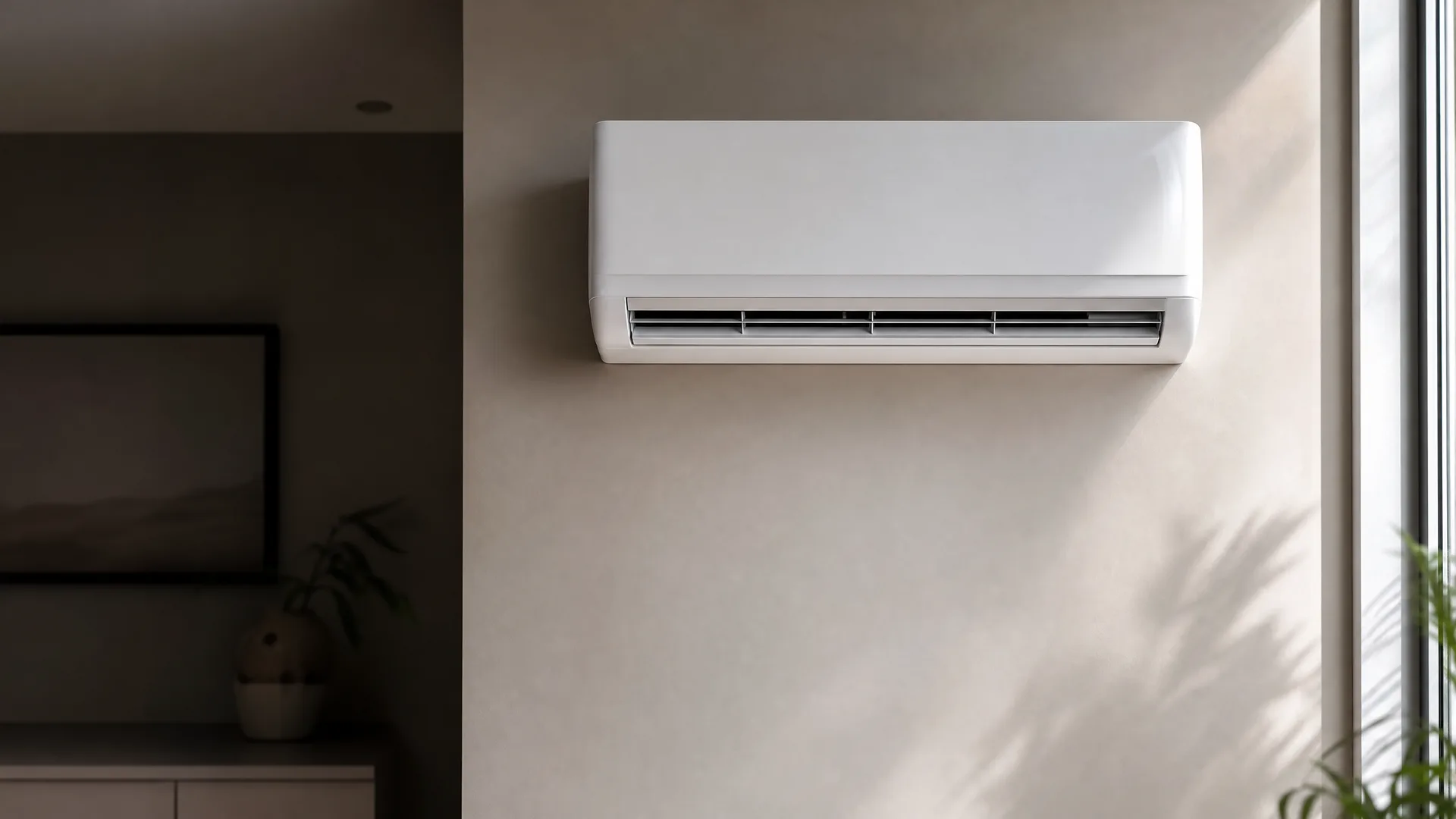
A white wall-mounted mini-split air conditioner on a plain beige interior wall, with a framed picture and potted plant in the dim left background and sunlit window with foliage at right.

A mini split pro near you

Step 1 of 3: Equipment