



Ductless Alabama

Mini split light blinking in Birmingham, AL

Get matched with a pro who works on mini splits in Jefferson County.

Get matched

A blinking light on your mini split is the unit telling you what's wrong, not just that something is. Most indoor units use a pattern of flashes, a certain number of blinks, a pause, then the same number again, to point to one fault: a clogged filter, low refrigerant, a drain line that's backed up, or a sensor that's failed. The pattern differs by brand, so a 3-blink code on a Mitsubishi doesn't mean the same thing as 3 blinks on a Daikin or an LG. Some systems blink one color for normal operation and switch to a different color or a faster rate when something's off, which is easy to miss if you're not watching closely. With Birmingham summers running long and humid, a mini split that's struggling to drain condensate or hold its charge will often show a light before it stops cooling altogether. Catching it at the blink is catching it before the bigger repair.

Why does a blinking mini split matter so much in Birmingham?

  • Cooling runs May through September

    Your mini split carries the cooling load here from May through September, so a blinking light during those months is a unit working hard enough to fail under strain.

  • Heat runs November through March

    Heat runs November through March, and most mini splits here handle both jobs, so a code you ignore now can show up again when the weather turns.

  • Power here costs 17.78 cents per kilowatt-hour

    At 17.78 cents per kilowatt-hour, a fault code that's quietly making the unit run harder, like a dirty filter or a sensor issue, shows up on the power bill fast.

NOAA nClimDiv 1991-2020 · EIA-861 2025

A blinking light that keeps blinking the same pattern for a day or two means the fault is still active. The unit is still trying to tell you, and running it longer on a bad reading can push a small fix into a bigger one.

A blinking light that stops on its own after the unit cycles off and back on may have been a one-time trip, like a brief power blip. If it does not come back, there is less urgency, but the code is worth writing down in case it does.

A woman in a gray turtleneck sweater stands by a window looking outside at snowy ground, with a dimly lit living room containing a sofa, shelves, lamp and a lit candle behind her.
A woman in a cream cable-knit turtleneck sweater stands in a warmly lit living room with a fireplace and shelves behind her, looking out a window toward snow-covered trees and a railed deck.
A woman in a cream knit turtleneck sweater stands by a window looking out at snow, with a lit fireplace, sofa and lamp in the room behind her.
A woman in a gray knit sweater sits by a window looking out at falling snow, with a dimly lit living room containing a sectional sofa, pillows, a lamp and houseplants behind her.

What the blink count tells the tech

Each flash pattern maps to a fault code specific to that indoor unit's board. Two blinks might mean a frozen coil, four might mean a communication error between the indoor and outdoor unit, and so on. The codes aren't universal across brands, so the same pattern means something different on a Mitsubishi than on a Daikin. A contractor pulls up the manual for that model, matches the count, and knows before opening the panel what to check first. That's the difference between guessing at a repair and starting with the one or two likely causes, which matters when a unit is straining through a Jefferson County summer and sitting idle isn't really an option.

Why the outdoor unit matters too

A blinking indoor light doesn't always mean the fault is indoor. Mini splits run refrigerant lines between the indoor head and the outdoor condenser, and a fault in that outdoor unit, a failing fan motor or a pressure problem, often shows up as a blink code inside. Jefferson County summers push the outdoor unit hard for months at a stretch, and that's where a lot of the strain actually lands. A tech checking a blink code checks both ends of the system, not just the wall unit the reader can see. Ignoring the outdoor half because the light is indoors is how a small fault turns into a compressor replacement.

Cooling runs May through September

Five months of steady cooling means your mini split logs a lot of run hours between May and September. A blinking light in July carries more weight than one in January, since the unit has had months to wear toward whatever it's now flagging.

NOAA nClimDiv 1991-2020

What you'd notice first

The light usually isn't the first sign. Before it starts blinking, you might notice the air isn't as cold as it was, or the unit cycles on and off more than usual, or you hear a hum without much airflow behind it. By the time the light blinks, the board has caught something your ears or hands already half noticed. In a Birmingham summer, that gap between first notice and blinking light might be a day. In mild weather it could sit unnoticed for weeks since the unit isn't working hard enough to make the fault obvious.
What it risks if you wait

A mini split that keeps running on a fault code is working around a problem, not fixing it. A frozen coil that keeps icing over can push liquid refrigerant back toward the compressor. A communication error that keeps throwing can leave the indoor and outdoor units out of sync on every cycle, which wears both sides. None of that fixes itself by waiting. With power costs what they are in Jefferson County, a unit straining against a fault is also a unit pulling more than it should off your bill every month it keeps blinking.

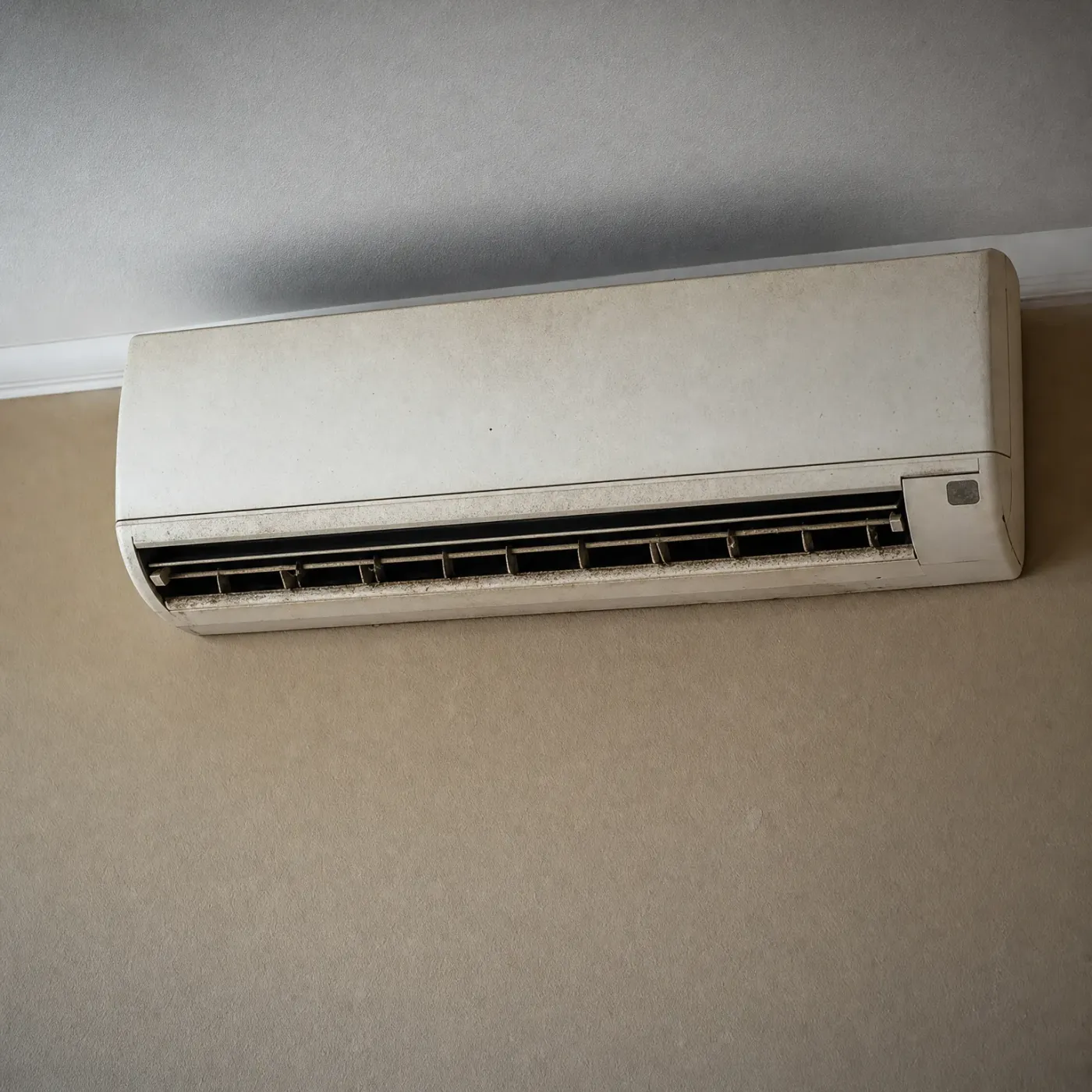
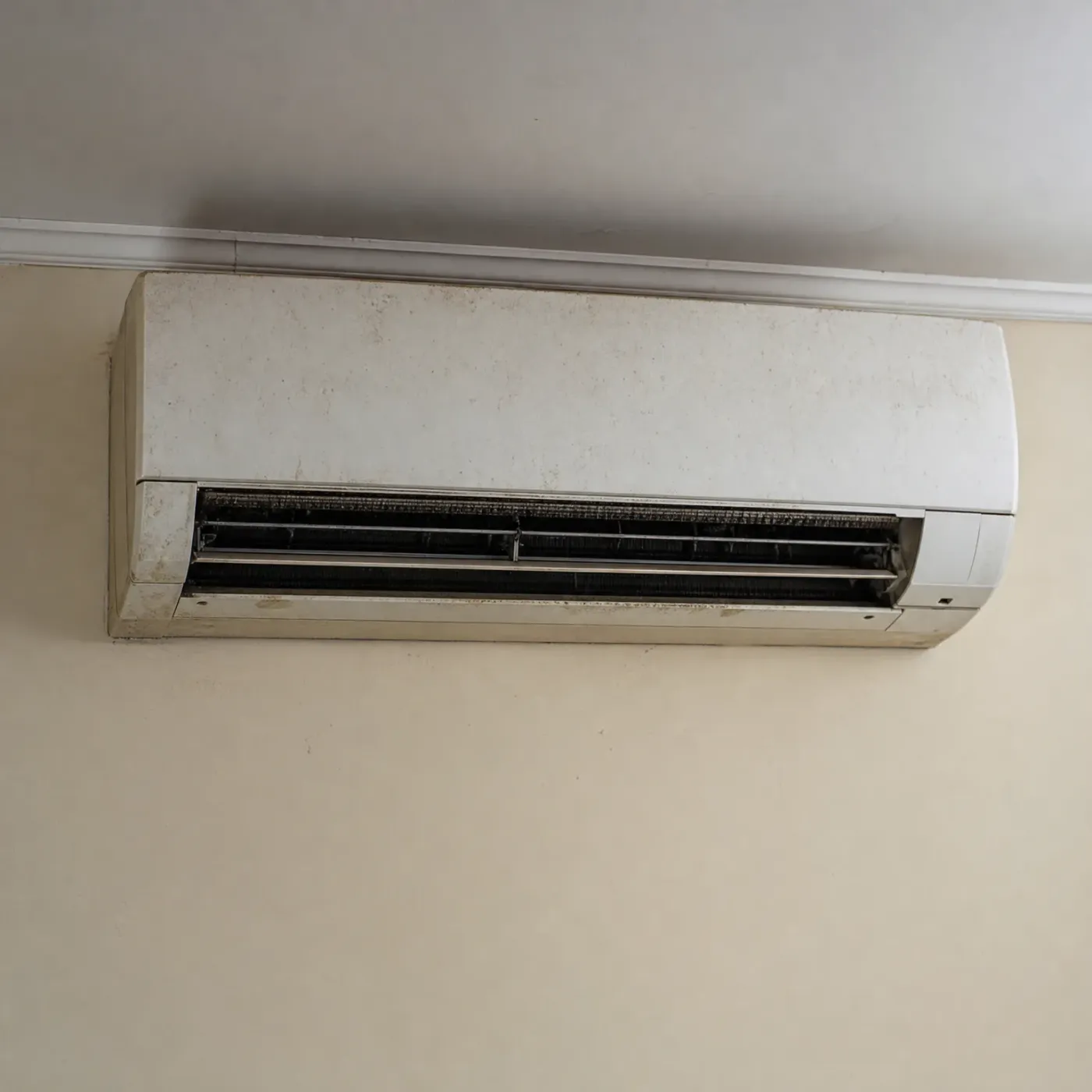
A dusty white wall-mounted mini-split air conditioner installed high on a beige interior wall below a molded ceiling trim.
Before you get your mini split repair
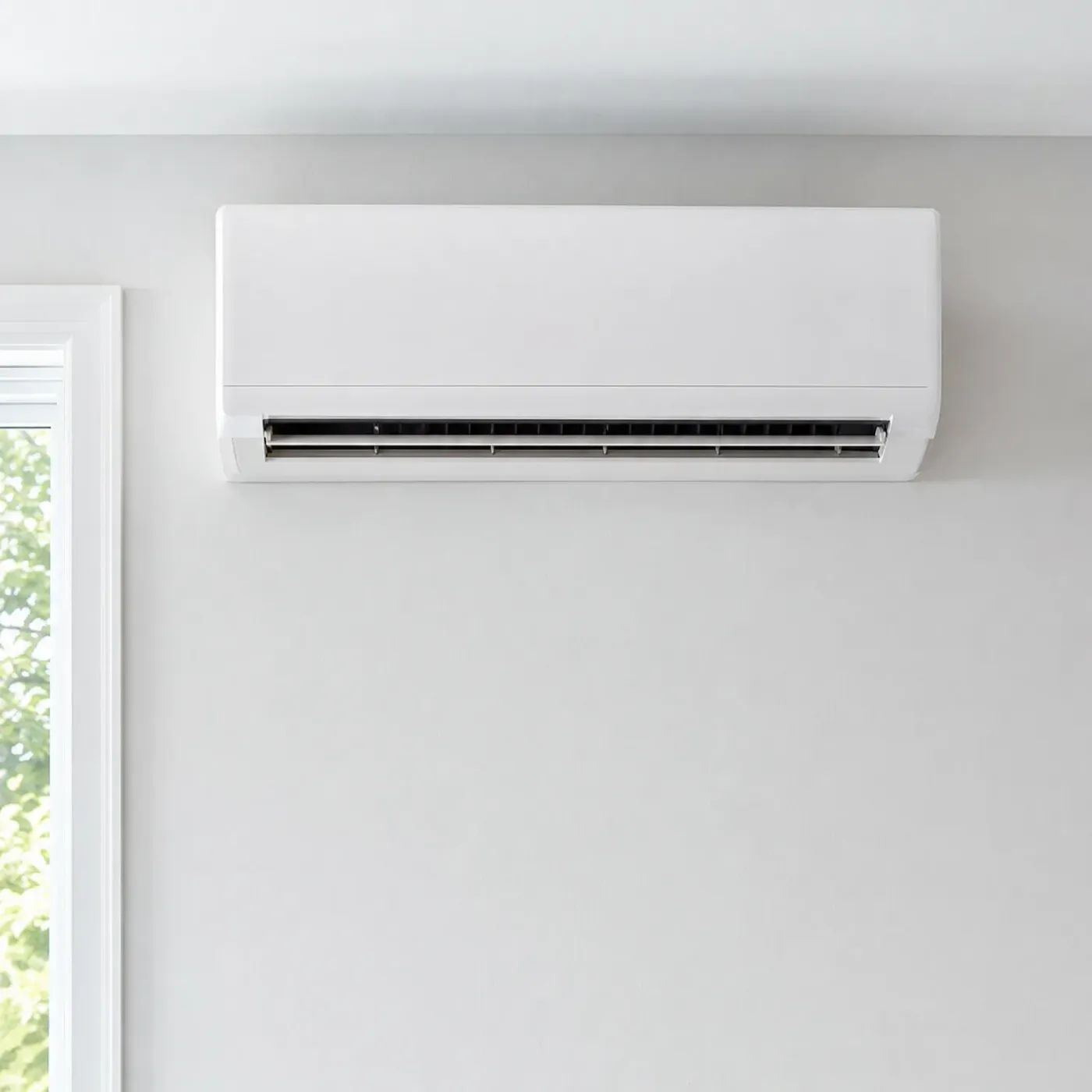
A white wall-mounted mini-split air conditioner unit installed high on a light gray interior wall near the ceiling, with a white-framed window and green foliage visible at the left edge.
After you get your mini split repair

The board inside your indoor unit watches its own sensors all the time, and when something falls outside range, it blinks that fault out in a pattern rather than just flashing to get your attention. The remote won't tell you anything here. You have to watch the light on the unit itself, count the flashes, and note how long the pause runs before the next group starts, since a short pause and a long pause can mean two different problems even with the same blink count. Cutting power and restoring it will often stop the blinking for a while, but if the fault is still there, it comes back as soon as the unit runs long enough to trip it again. Some patterns trace back to something as simple as a filter switch that isn't seated right. Others point past the indoor unit entirely, to the outdoor unit, carried back over the wire that connects the two. A tech checking the pattern matches it against a chart built for that specific brand and model, because the same four blinks on one board can mean something else entirely on another.

Reading the blink pattern

  • The indoor unit reads its own sensors and board constantly, and the blink pattern is that board reporting a specific fault rather than a general warning.
  • A remote control won't show you the code; only the blinking light on the indoor unit itself carries that information.
  • Resetting power to the unit can clear the blinking, but if the underlying fault is still there, the same pattern returns once the unit runs again.
  • Some patterns point to something simple like a dirty filter switch, while others point to the outdoor unit, which the indoor light can still flag through the connecting wire.
  • The pause between blink groups matters as much as the count, since a short pause versus a long pause can separate two different faults on the same board.
  • A tech reads the pattern against a chart specific to that unit's brand and model, since the same number of blinks means different things across manufacturers.
A bearded man in a plaid flannel shirt sits indoors looking out a window at snow-covered trees, with a steaming mug on the sill and wooden kitchen shelves behind him.
A smiling man in a dark blue T-shirt sits on a light gray sofa in a living room with a wooden shelf and window behind him, with a laptop edge visible in the foreground.

Get matched with a mini split pro in Jefferson County

Send the request today and let a mini split pro reach out to you.

You're not committing to anything by asking.

How the blink code actually works

  • The indoor unit's circuit board drives the blink pattern through an LED behind the front panel, not through the remote.
  • A pause between blink groups marks the end of one code, so counting past the pause gives you the wrong number.
  • Some brands repeat the code three times in a row, then go dark for a few seconds before starting over.
  • The outdoor unit can also carry a fault, and on many systems the indoor light still blinks to relay it.
  • Clearing the error from the remote stops the light but doesn't clear the fault stored on the board.
  • A tech reads the code with the panel off, checking it against the wiring diagram glued inside the unit.

The blinking comes from the indoor unit's circuit board, not the remote, so checking the remote app for a code is a dead end. The board drives an LED behind the front panel in a set pattern, and that pattern is the whole message. Count the blinks in one group, then wait for the pause. The pause is where one code ends, and if you keep counting past it you get a number that doesn't match anything on the chart. Some brands run the full pattern three times before going dark for a few seconds, then start the cycle over, so watching just one pass can cut you off partway through. The fault doesn't have to start outdoors or indoors specifically. Even when the problem sits in the outdoor unit, compressor or fan trouble, many systems still route the signal through the indoor light, since that's the only display the system has. Pressing clear on the remote turns the light off, but it doesn't touch the fault sitting in the board's memory. The unit will often throw the same code again once it cycles back on, because nothing about the underlying problem changed. A tech works from the panel itself, popping it off to read the blink count directly against the wiring diagram glued to the inside of the housing, since that diagram lists the exact codes for that model and nothing else will.

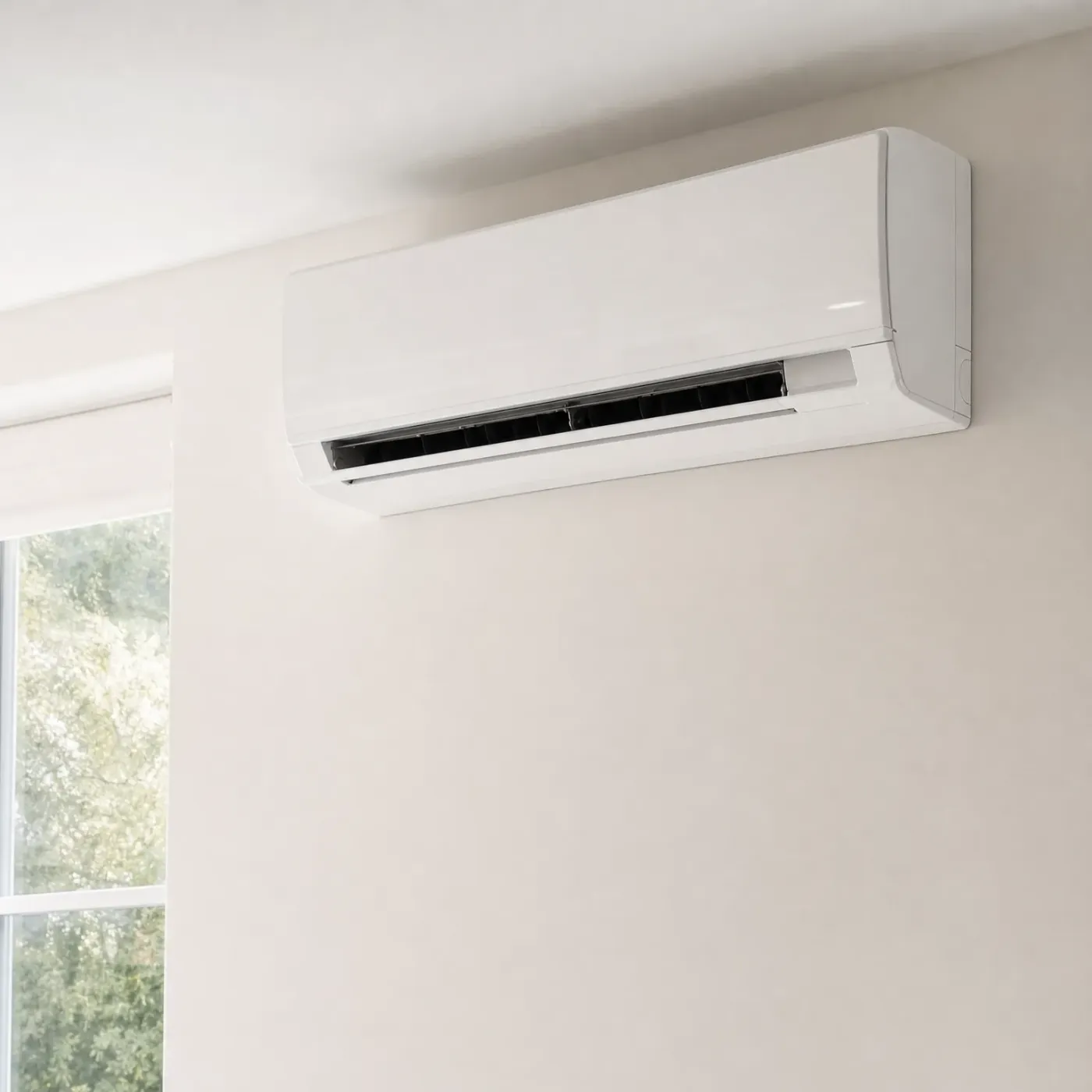
A white wall-mounted mini-split air conditioner installed near the ceiling on a light-colored interior wall, with a window and green foliage visible at the left edge.
A clean unit like this one pulls air through an open filter, so the blinking light is pointing at something else entirely.
A dusty white wall-mounted mini-split air conditioner indoor unit installed high on a beige interior wall below a white ceiling and trim.
This much dust on the intake grille blocks airflow on its own, and a blinking light here often starts with the filter.

Still Running or Already Shut Down

Blinking, unit still running

  • The compressor and fan keep cycling, so the room is still getting some cooling or heat while the fault sits active in the background.
  • A code logged now is easier for a tech to read, since the board is actively reporting it rather than something you're trying to reconstruct after a shutdown.
  • Running on a flagged fault for days can still let a small issue, like a clogged filter or a low charge, wear into something that costs the compressor itself.
  • You still have the choice of when to get it looked at, instead of being without cooling on a 95 degree July afternoon.
  • The blink pattern itself is evidence, so a tech arriving while it's still blinking can confirm the code against what the board is doing in real time.

Blinking stopped, unit shut down

  • A shutdown usually means the board tripped a safety limit rather than clear a minor fault, so the problem behind it didn't go away on its own.
  • Without the live blink pattern, a tech has to pull stored fault history from the board instead of reading it off the panel directly.
  • No airflow at all means no partial relief, which matters more in August than it would in a mild February stretch.
  • A unit that shut itself off has already decided running was worse than stopping, which points to something more serious than a dirty filter.
  • You lose the option of waiting it out, since there's no cooling or heat coming from that unit until the fault gets cleared.
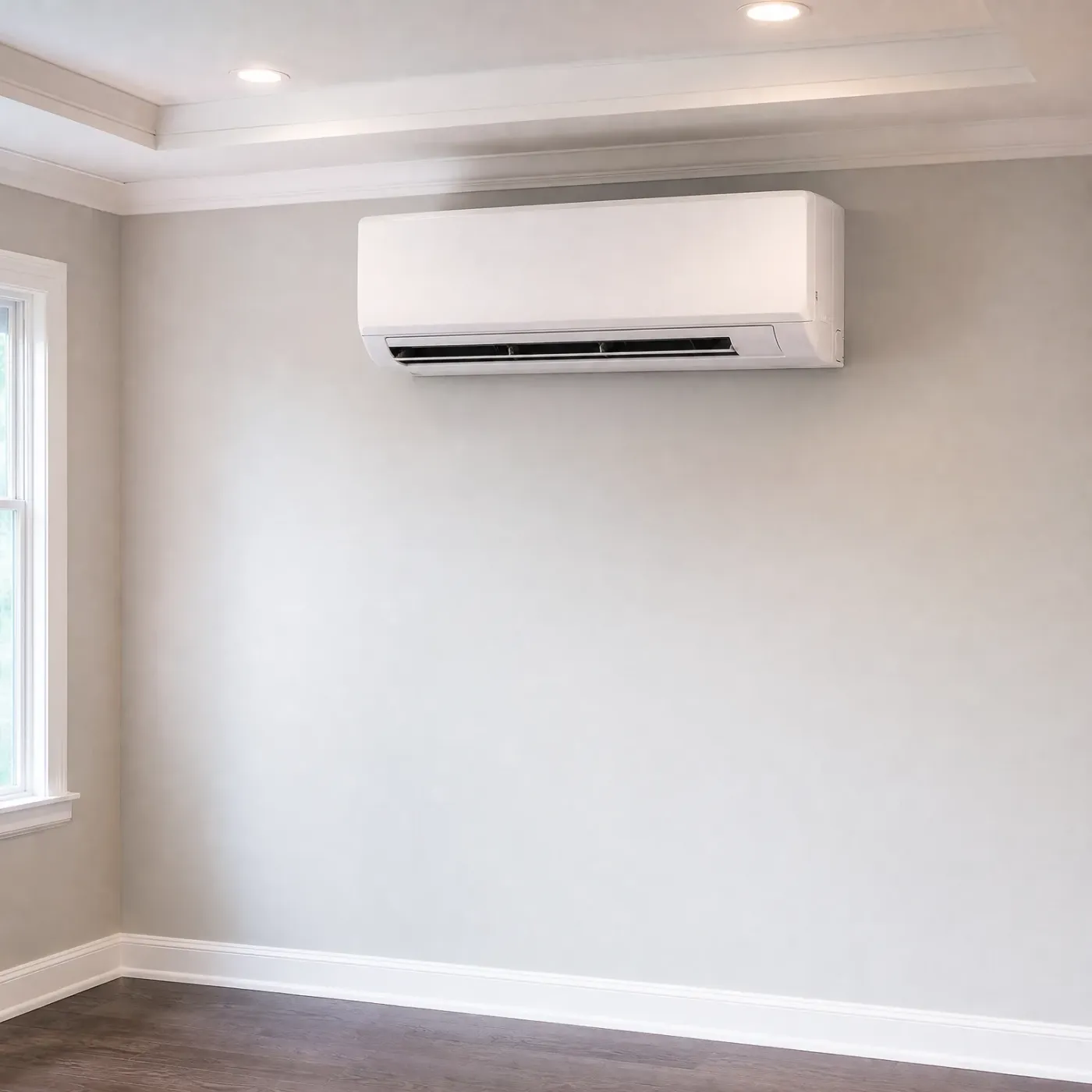
A white wall-mounted mini-split air conditioner on a light gray wall in an empty room with dark wood flooring, white baseboards, a tray ceiling with recessed lights, and a window at the left.

Running clean

This is what a mini split looks like when nothing's wrong. The filter's clear, the coil behind it is clean, and air moves through the room without the unit straining. No blinking, no residue on the housing, no reason to check the manual for a code.

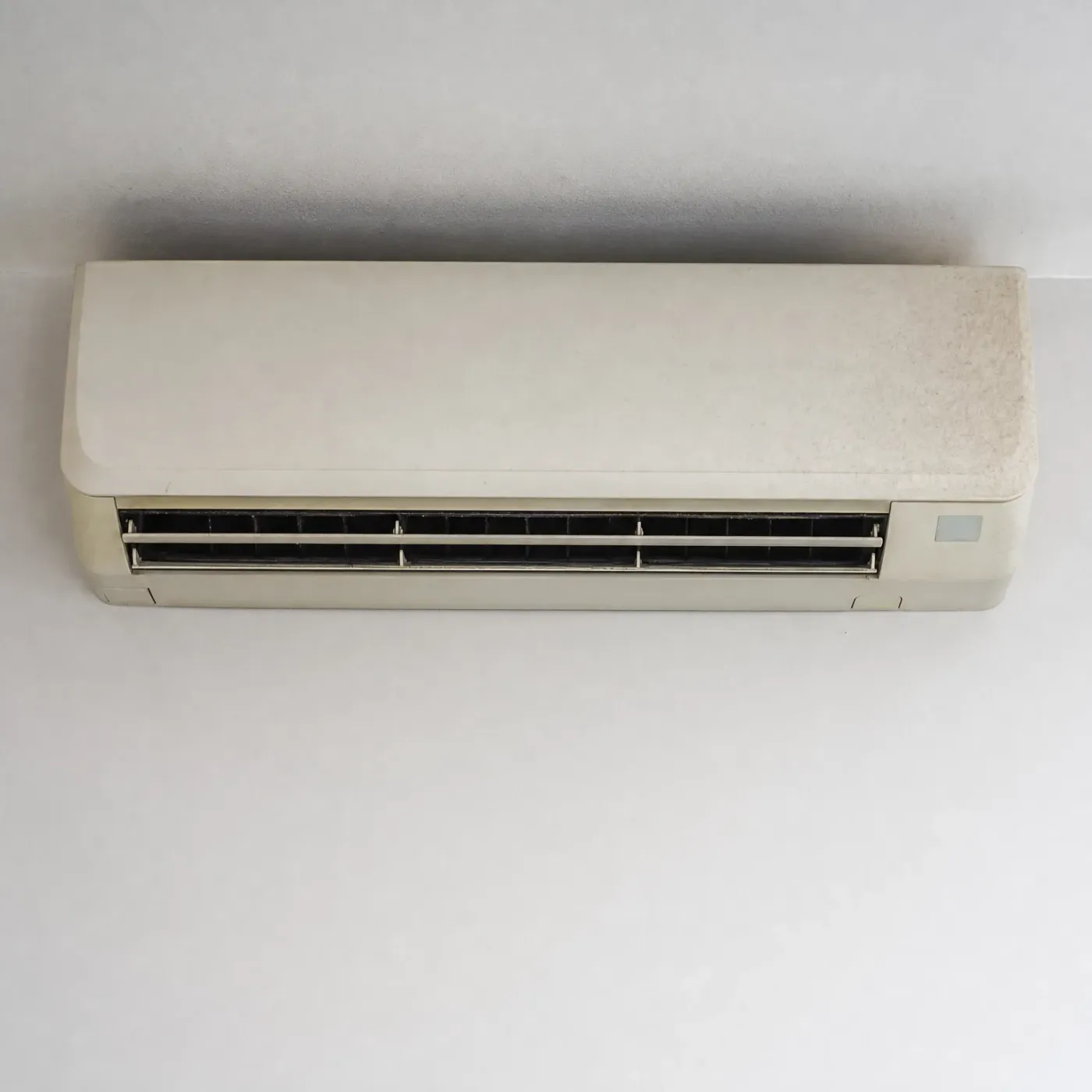
A wall-mounted mini-split air conditioner indoor unit with a yellowed plastic casing and dark horizontal vent louvers, installed on a plain light-gray wall.

Dust and residue built up

Dust on the top surface and dark residue around the vents mean air isn't moving through the way it should. The unit works harder to push through a blocked intake, and a blinking light on a unit that looks like this usually comes back to the filter or the coil behind it.

A woman stands in the open front doorway of a single-story house with stone and wood siding while a man in a dark polo shirt and cap walks toward it along a concrete path.

A blinking light is a call for a look, not a guess

A blinking light on your mini split means one thing. Something specific is wrong, and the board is counting it out for whoever reads it. You don't need to match the count to a chart to know what to do next. You need someone who can read it correctly and act on what it says.

Jefferson County runs these units hard for months at a stretch, and a fault that shows up mid-summer or deep winter doesn't wait well. Getting matched with a contractor who works on your equipment means the counting and guessing stop being your problem. You send the details once, and the next call you get is from someone ready to look at the unit itself.

A speckled beige ceramic vase holding thin dried branches sits on a round wooden table near a window with sheer curtains, with a dark upholstered chair and draped blanket blurred in the background.
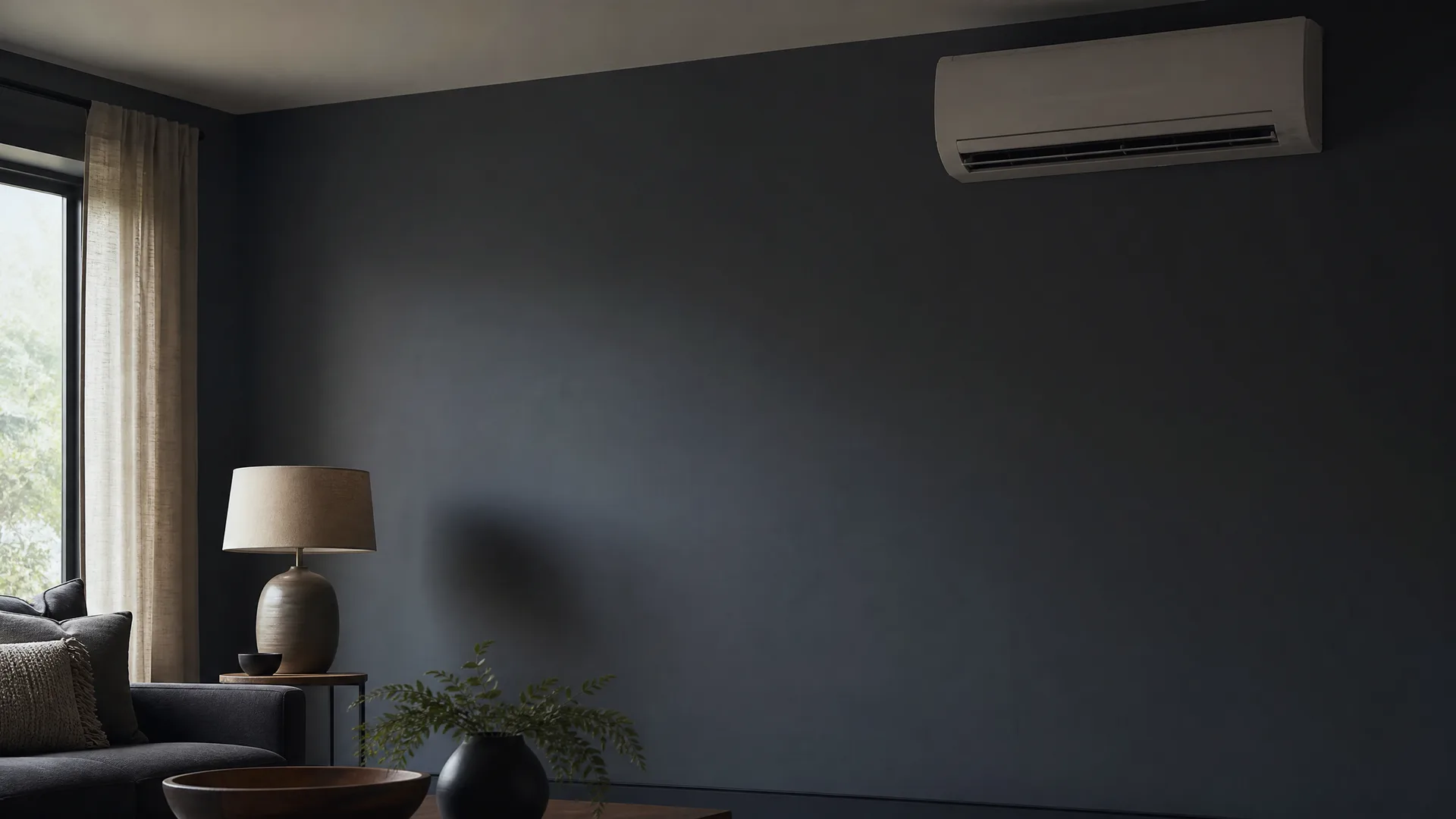
A dimly lit room with a dark gray wall holding a white wall-mounted mini-split air conditioner near the ceiling, with a sofa, table lamp, potted plant, and curtained window at left.

Find a mini split repair pro in Jefferson County

Get the mini split repair search off your mind today.

Step 1 of 3: Equipment