Mini split leaking water in Birmingham, AL

A white wall-mounted mini-split air conditioner indoor unit with a horizontal louvered air outlet, shown against a plain light gray background.
Get a local pro

Water dripping from your indoor unit usually means the condensate drain line is clogged. Mini splits pull a lot of moisture out of the air to keep up with Birmingham's humidity, and all that water has to drain out through a small line, often run through a wall to the outside. Algae and dust build up inside that line over time and block it, so the water backs up into the drain pan and spills over, dripping out of the unit and onto your floor or wall. It can also mean the drain pan itself has cracked, the line was never pitched right to drain downhill, or the filter is so dirty that ice has formed on the coil and is now melting faster than the pan can handle. Left alone, it keeps dripping every time the unit runs, and it can soak into drywall or flooring nearby.

Why does this leak keep coming back in Birmingham?

  • Cooling runs May through September

    Cooling runs May through September. That's five straight months of the indoor coil producing condensate, which means five months for algae and dust to build up inside the drain line.

  • Heat runs November through March

    Heat runs November through March. The line dries out for part of the year, but a clog that started last summer is still sitting there waiting for the unit to run again.

  • Power here costs 17.78 cents per kilowatt-hour

    Power here costs 17.78 cents per kilowatt-hour. A mini split working against a clogged drain or a dirty coil uses more of it to move the same amount of air.

NOAA nClimDiv 1991-2020 · EIA-861 2025

A wall-mounted mini-split air conditioner with a water streak running down the wall beneath it to a gray towel on the wood floor, beside a desk with a potted plant, lamp, and office chair near a window.

You're at your desk on a August afternoon, trying to get through a few emails before the heat outside makes the house feel smaller. The mini split above the window has been running non-stop since morning. You notice the wall first, a dark streak running down from the bottom corner of the indoor unit, soaking into the paint. By the time you stand up to look closer, there's already a small pool forming on the floor. You grab a towel from the hall closet and lay it down, pressing it against the baseboard. The unit keeps blowing cold air like nothing's wrong. You stand there a minute, listening to it hum, watching the towel soak through.
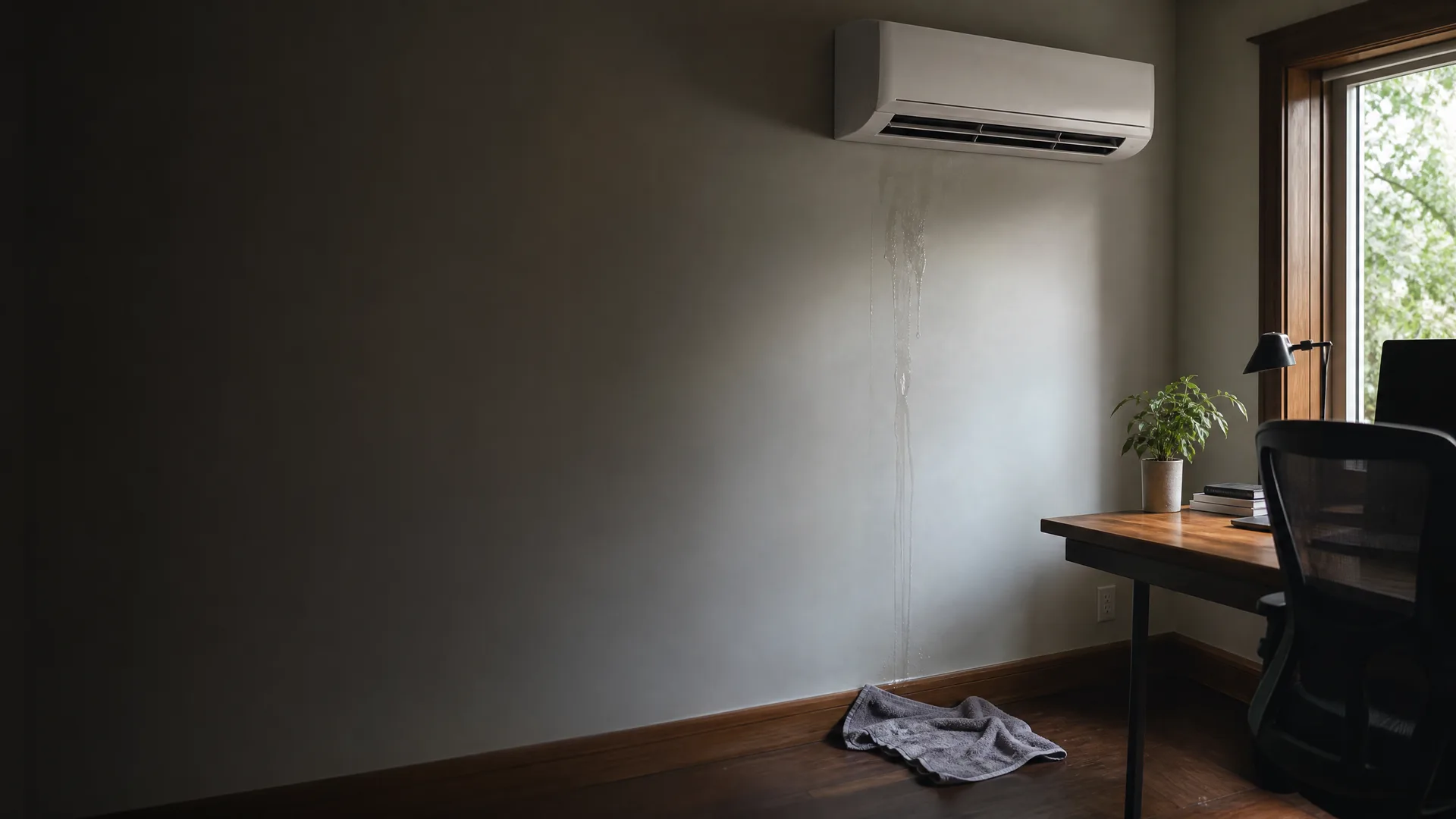
Is the water from your mini split actually a problem?

Look at the wall below the indoor unit. A dark streak, a soft spot, or paint starting to bubble means water has been running down there a while, not just today. Check the floor too. A puddle that shows up by afternoon and dries by morning is still a puddle every day you don't deal with it. If the unit is mounted near drywall or trim, that water sits against the material and it doesn't dry the way a spill on tile does. Left long enough, you're looking at stained or soft drywall, warped trim, and the kind of mold smell that shows up in a room before you can see why.

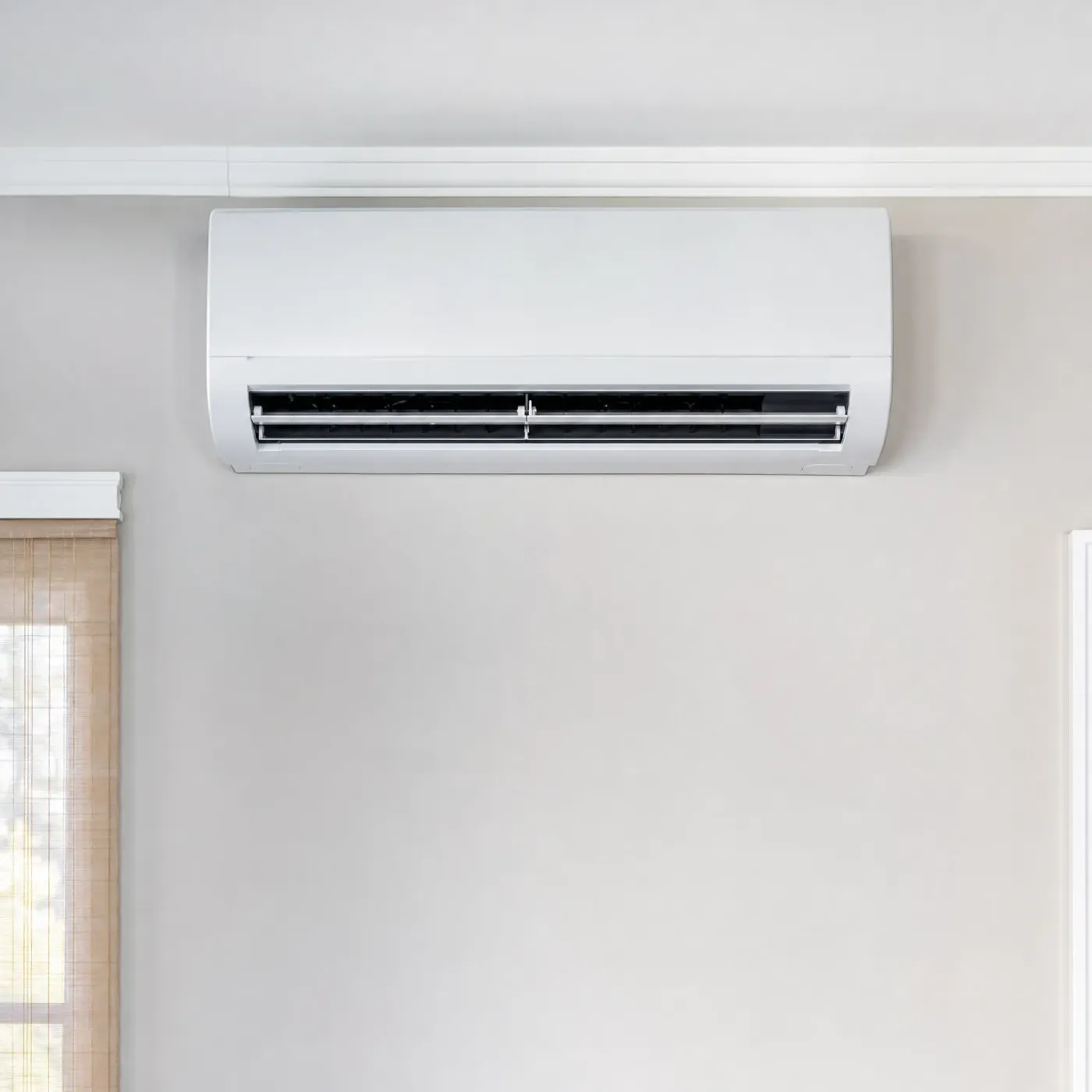
A white wall-mounted mini-split air conditioner unit installed high on a light gray interior wall below crown molding, with a bamboo-shaded window at the lower left.

Running the way it should

No drips, no stains, no sound of water hitting the floor. The drain line is moving condensate out as fast as the coil makes it, even on the longest August afternoon. This is what every indoor unit looks like most of the time it runs.

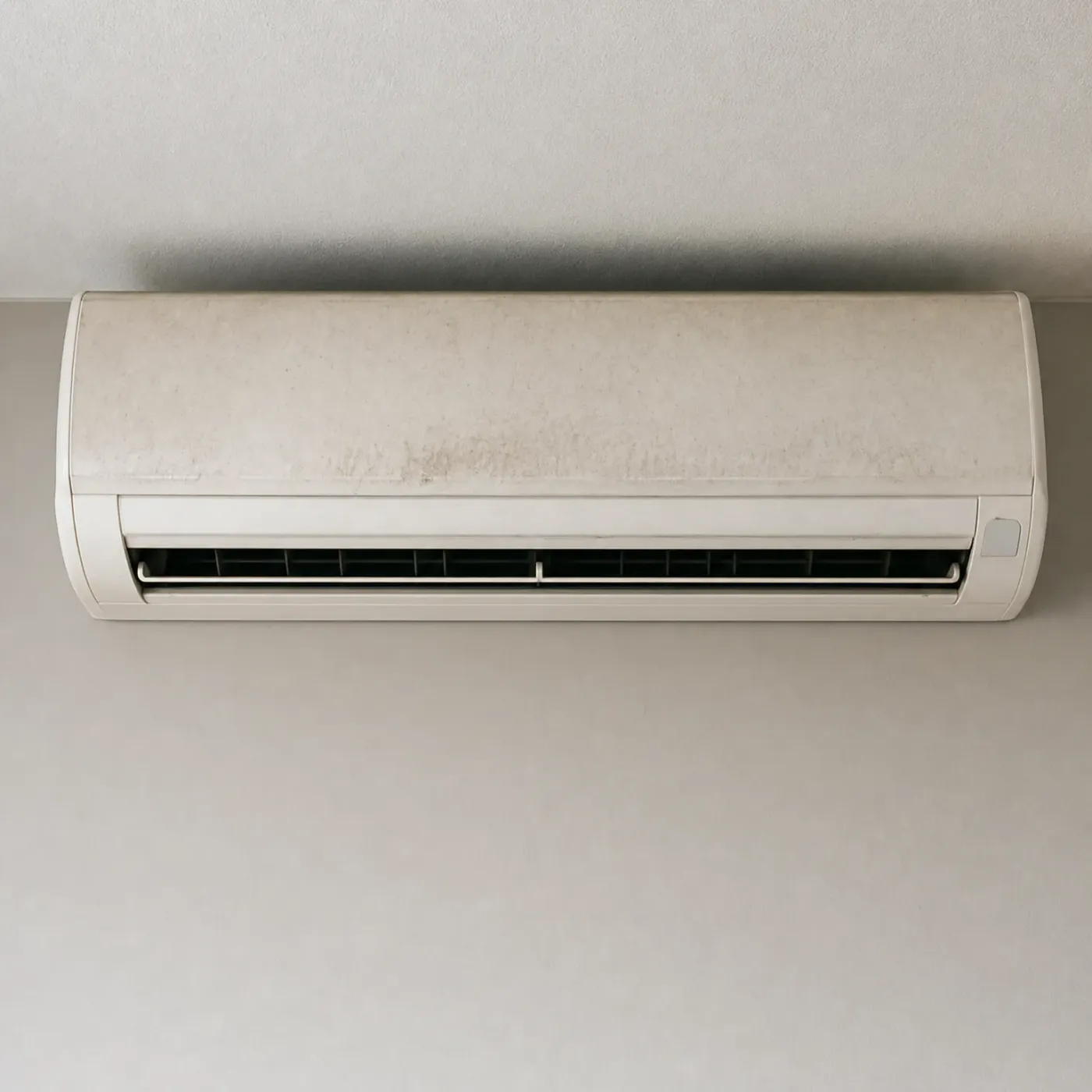
A wall-mounted mini-split air conditioner indoor unit with a dusty, discolored cover, installed near the ceiling on a plain light-colored wall.

The drain line is losing the fight

Dust has settled into the plastic casing and the louvers sit open, pushed that way by a unit that's been running hard. Somewhere behind that panel, water isn't making it out through the drain line anymore. It's finding another way down.

A woman with wavy blonde hair wearing a grey knit cardigan over a green top sits on a sofa in a living room, looking off to the side.
A woman with long brown hair in a cream knit sweater sits on a light sofa in a living room, looking toward a window with sunlight on her face.
A woman in a gray sweater sits in a chair in a living room with a dark sofa, wooden coffee table with a potted plant, and a staircase behind her, looking toward a window.
A smiling woman with dark hair in an updo, wearing a gray ribbed turtleneck sweater, sits on a light sofa in a living room and looks off to the side.

Get matched with a mini split pro in Jefferson County

A mini split that's leaking water isn't something to watch for a few more weeks. Water sitting against drywall or running inside a wall cavity does damage that keeps going after the drip stops, and in a Birmingham summer, with the unit running nearly every day, a slow leak doesn't stay slow. The drain line, the pan, or the condensate pump are things a tech needs to actually open the unit to see, not guess at over the phone. Someone who services mini splits around Jefferson County all summer has seen which models clog first and where the line usually backs up, and that's worth more than a generic callout. Once you put in the request, it goes to one local contractor who works on this equipment, not a handful of companies competing for the job. Given what's running down your wall right now, that's the faster way to get someone looking at it.

What to Do About the Drip

  • A clogged condensate drain line is almost always why a mini split drips water in a Birmingham home.
  • Five months of summer cooling and another stretch of winter heat give algae and dust plenty of time to build up inside that line.
  • A stain on the wall, a soft spot, or a puddle on the floor tells you the water has been running for a while, not just today.
  • Left alone, the leak keeps damaging drywall and flooring long after the drip itself stops.
  • A local contractor who services mini splits all season already knows which part of the drain line tends to clog first in this area.
  • Matching you with one licensed local contractor means a single call back from someone who works on this equipment, not a pile of calls from strangers.

The drip almost always traces back to the condensate drain line, blocked somewhere along its run by the algae and dust that build up over a Birmingham cooling season. Five months of steady summer runtime, plus the stretch of winter heating, gives that buildup plenty of time to settle in before it finally backs up and shows itself on your wall or floor. By the time you see the stain or feel the soft spot in the drywall, the line has likely been partly blocked for a while. That water doesn't stop at the surface. It keeps working into the wall and the floor underneath for as long as the unit keeps running and the line stays clogged, which is why this isn't something to leave for next month.

A contractor who works on mini splits all season in this area has cleared this same line in plenty of other homes nearby. They know where it tends to clog first, how it's usually routed through the wall, and what it takes to flush it clean without just pushing the blockage further down. You'll be matched with one licensed local contractor, not a handful of companies competing for the job, so the call back is from someone who already has a sense of what's likely wrong before they get there. That's simpler for you, and it means the person looking at your unit actually knows this equipment and this climate, not just mini splits in general.

A white wall-mounted mini-split air conditioner high on a dim gray interior wall, with a potted thin-leaved plant, dark curtains and a window at left and a dark sofa at bottom.

Find a mini split repair pro in Jefferson County

A licensed pro who works in Jefferson County gets your request.

Step 1 of 3: Equipment