

Clean coil, clear airflow
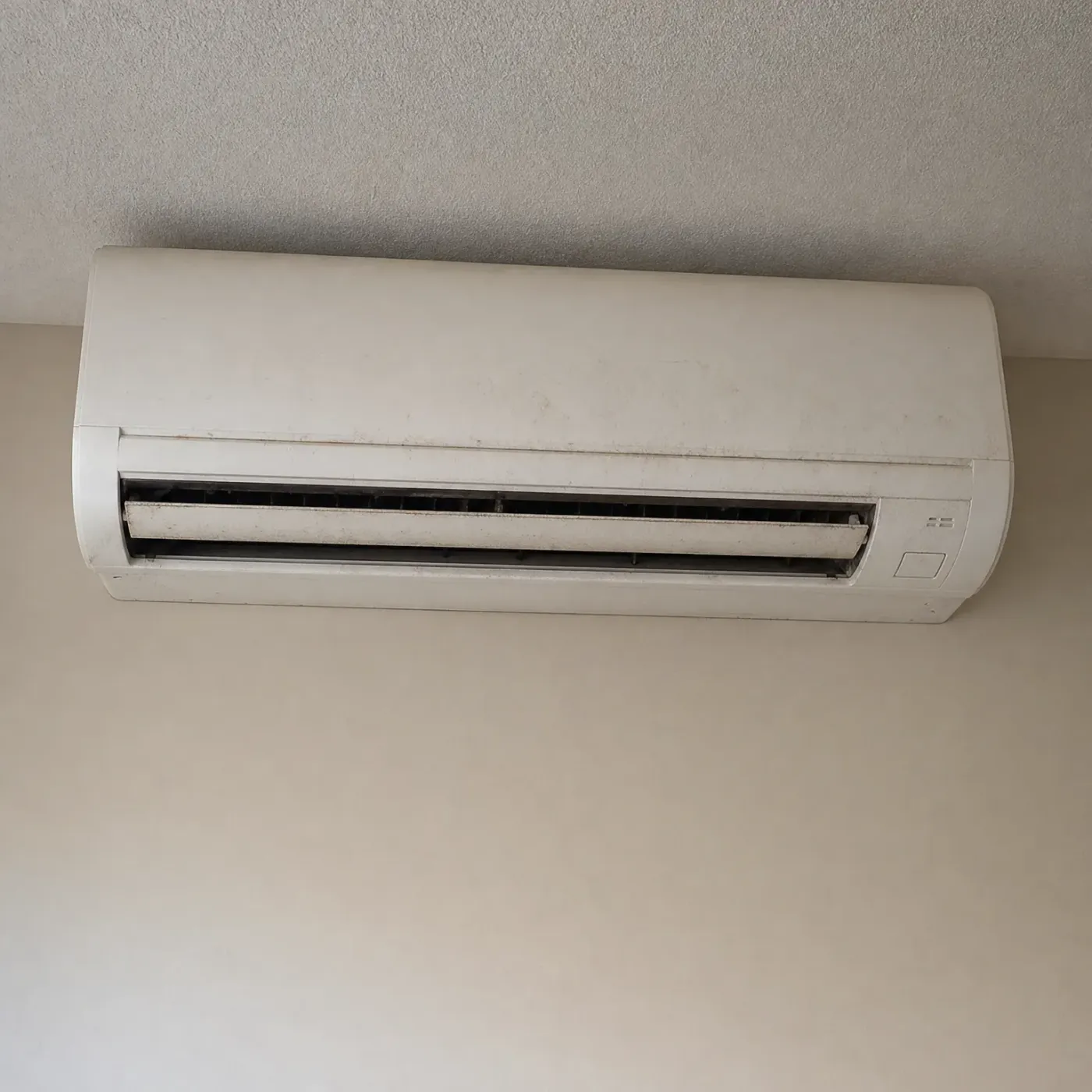
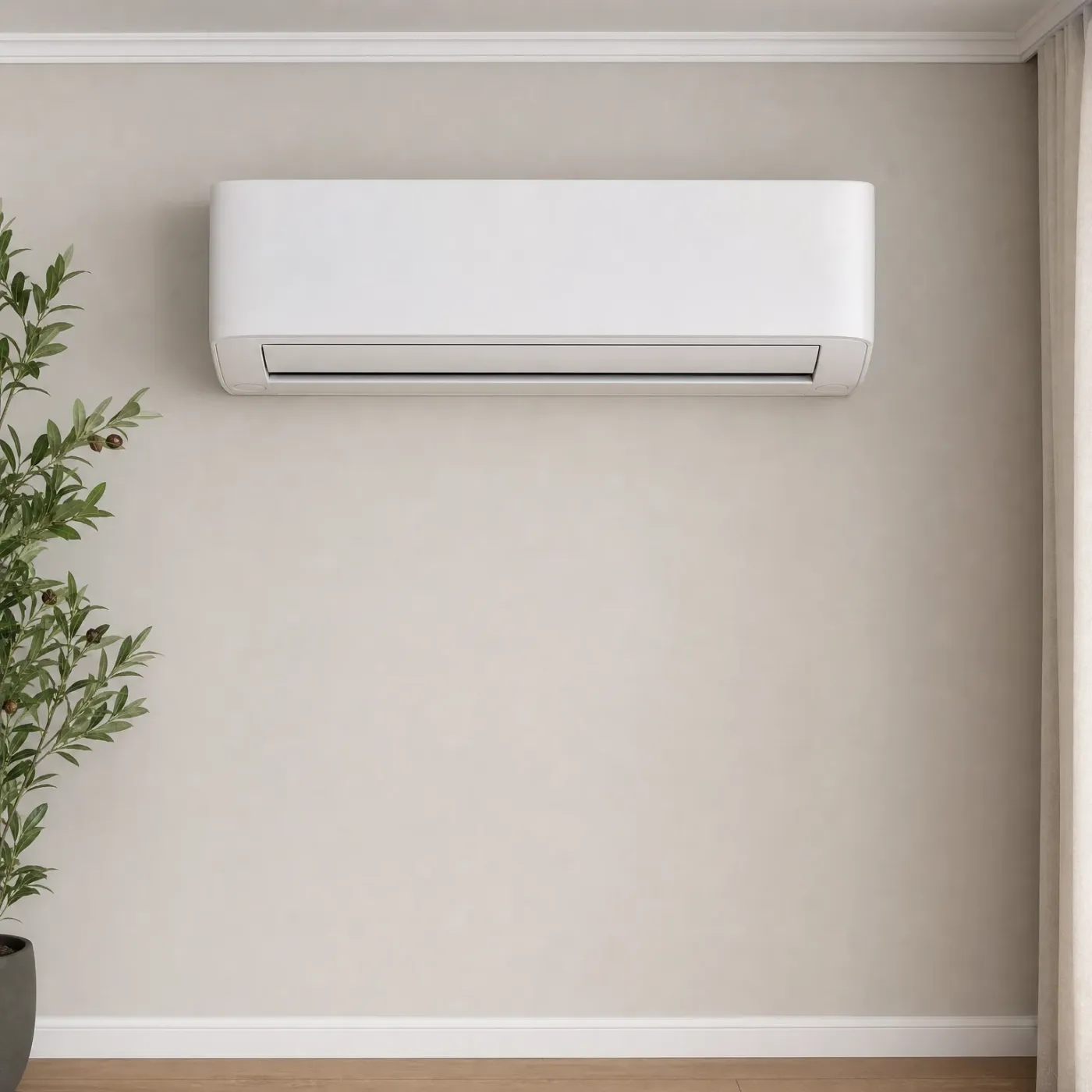
This is what a mini split should look like doing its job all winter. Air moves through the coil without resistance, the sensor reads the room correctly, and the unit holds your setting without straining to get there.
Alabama winters don't stay cold for long, but on the nights that do get into the 30s and 40s, you want your mini split working with you, not against it, especially with electric heat already costing more than most other fuels.
A mini split heats most efficiently when it runs steady instead of chasing big swings in temperature. Setting it at 68 to 70 and leaving it alone lets the system hold that heat with less strain on the compressor than if you crank it up at night and down during the day. Turning it down a lot while you're out doesn't save money the way it does with a furnace. The unit has to work harder to climb back up, and on a cold Alabama morning that catch-up can run the compressor longer than if it had just held steady. With power rates here, that steady setting is usually the cheaper way to run it over a winter.




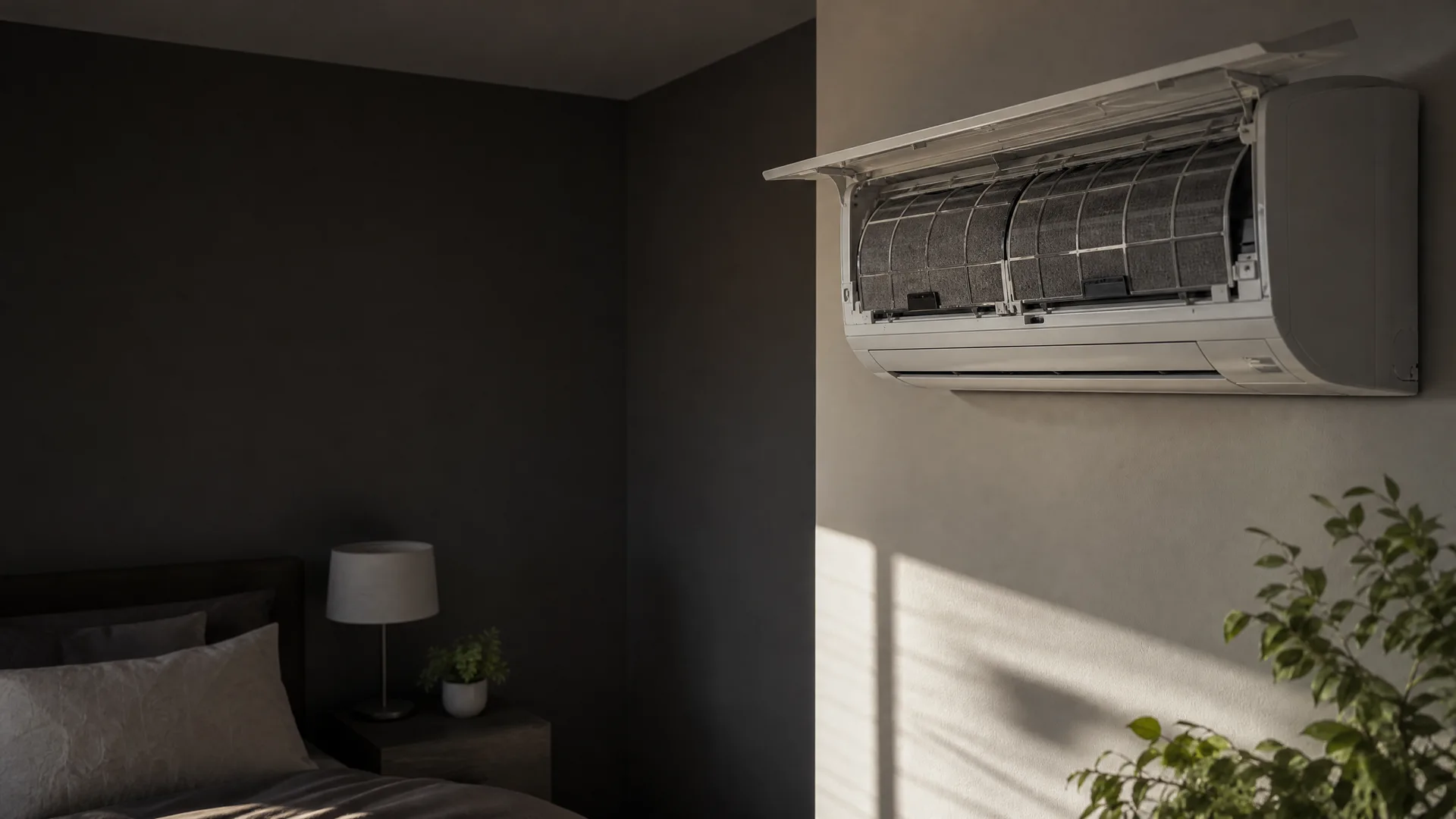
You pull the cover off the indoor unit in the bedroom to check on it before the first real cold snap gets here, and the filter screen is grey with dust, the kind that builds up over a long Alabama spring and summer of running the AC against the mugginess. You hadn't thought about it since then. Light from the window catches the dust caught in the mesh. It's been sitting behind that cover drawing more air through it than it should have to. You can already feel it will run harder tonight than it needs to once the temperature drops into the 40s, pulling heat through a filter that's working against it instead of with it.

A mini split in heat mode runs a reversing valve that flips the refrigerant cycle, pulling heat from the outside air and pushing it inside through the indoor coil. The outdoor unit's compressor is doing the real work. Below freezing, that compressor has to run longer and harder to pull the same amount of heat out of the air, and some units will kick into a defrost cycle for a few minutes to clear frost off the outdoor coil. During defrost the indoor fan usually slows or stops, which is normal and not a sign anything's wrong. A thermostat set too high makes the compressor work against a bigger gap, and on electric heat that shows up on the bill.
If you don't already have someone who services this system, finding out whether a unit is running the way it should usually means calling around, explaining the setup more than once, and sorting through a few quotes before you pick someone. A local contractor who works on mini splits all winter has usually seen your specific unit, knows what tends to go wrong with it in cold snaps, and can tell you quickly whether what you're seeing is normal defrost behavior or something that needs attention.

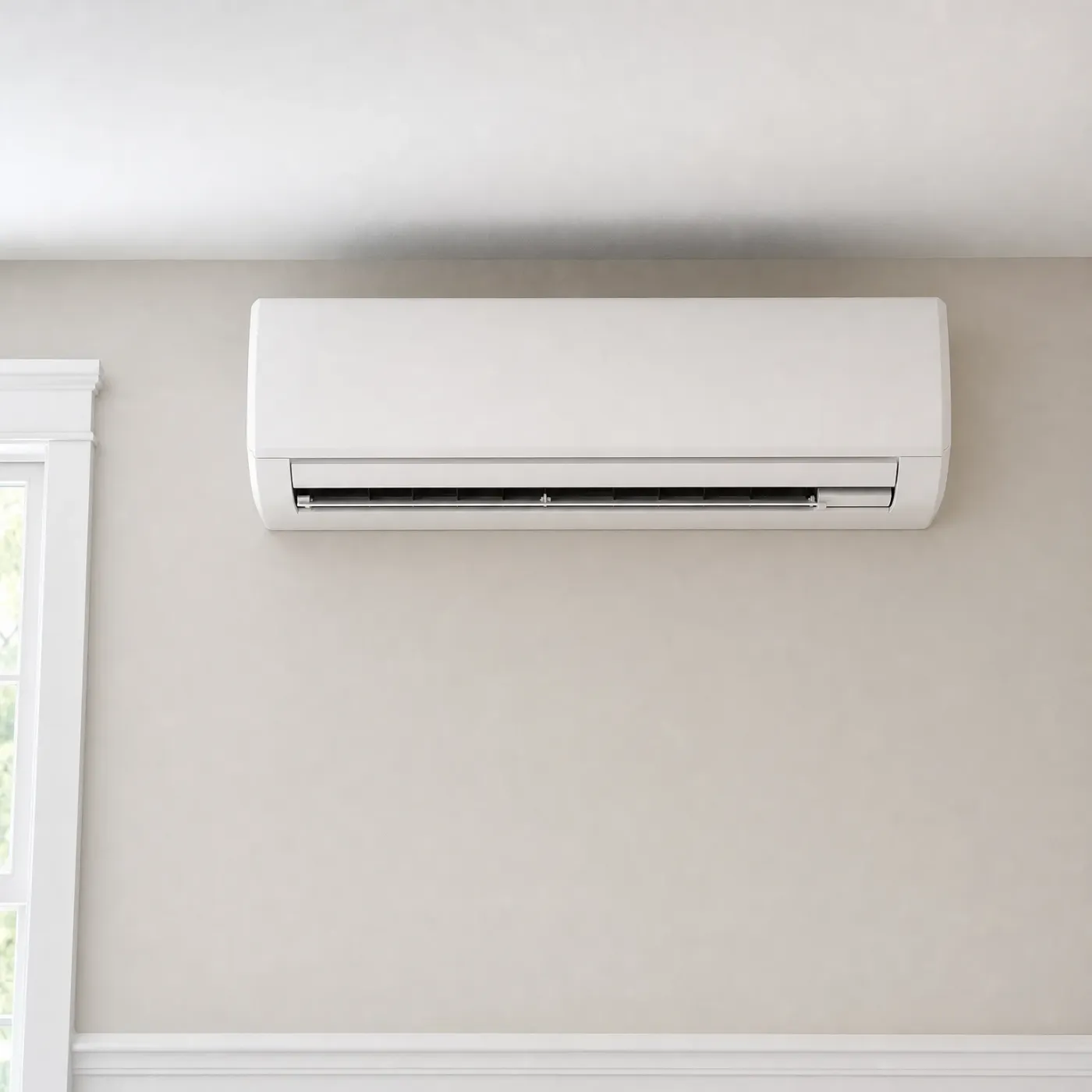
This is what a mini split should look like doing its job all winter. Air moves through the coil without resistance, the sensor reads the room correctly, and the unit holds your setting without straining to get there.
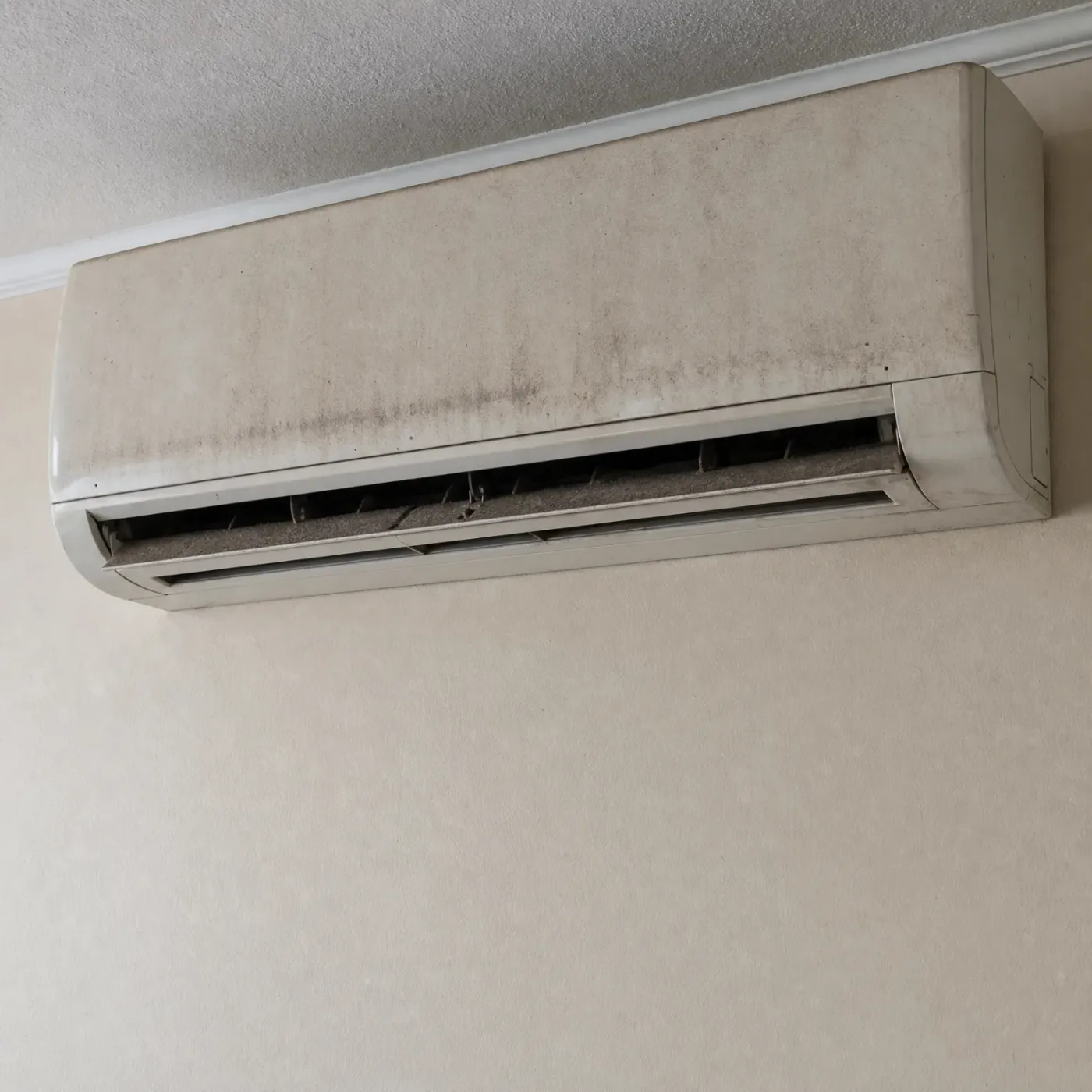
Dust and grime like this settle on the coil and filter screen after months of running, and they don't announce themselves. The unit still blows warm air, but it works harder for the same heat and the coil underneath stays caked until someone opens it up.



A licensed local pro takes the request for your mini split tune-up.
Skip calling around to set up a mini split tune-up.
There's no charge for the request.
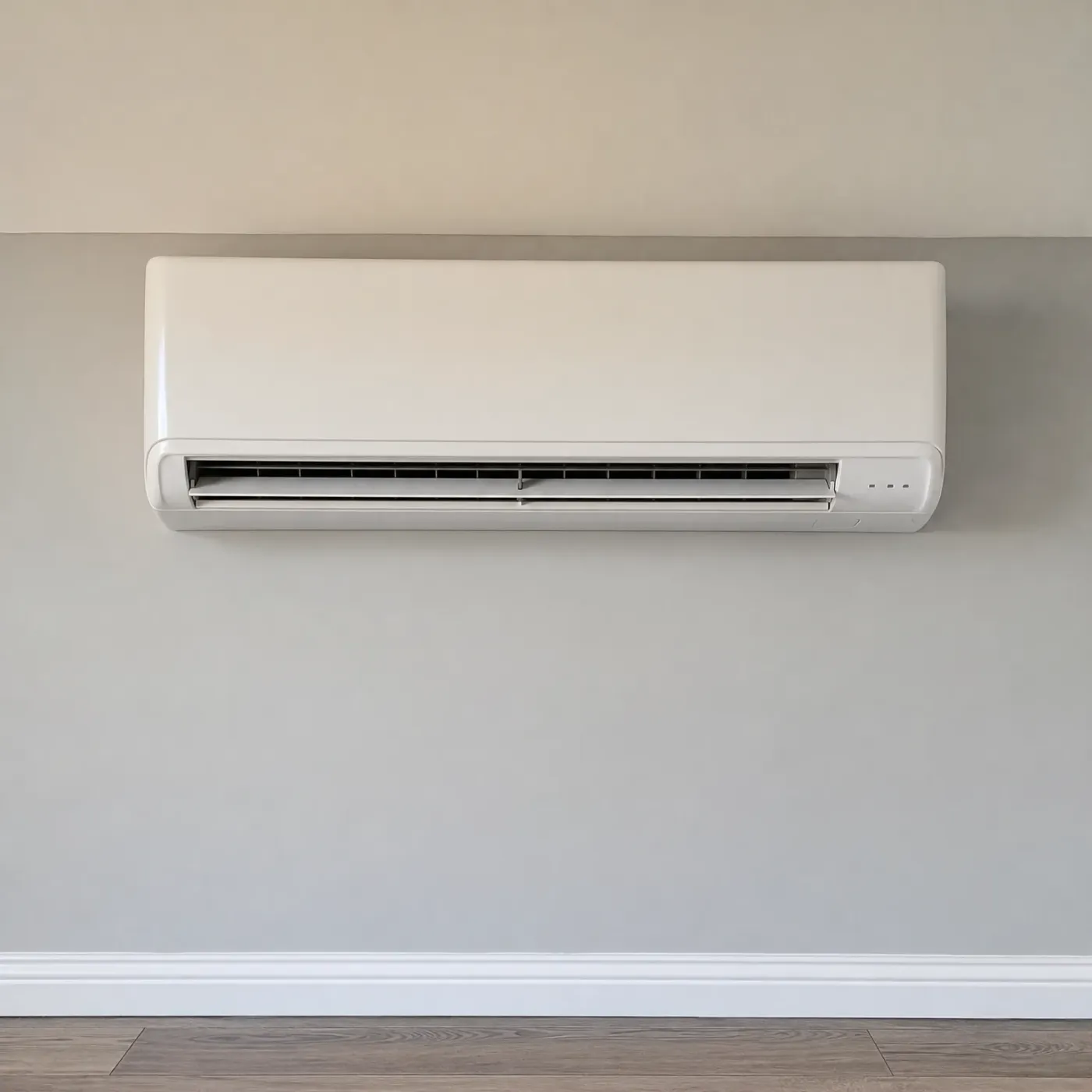
The thermostat sensor reads the room air temperature right now.
The control board compares that reading to your setting.
The reversing valve shifts to send refrigerant into heat mode.
The outdoor compressor pulls heat from the outside air.
You set the mini split to 68 and the living room gets there fine, but the bedroom down the hall stays a few degrees cooler no matter how long it runs. You notice the air coming out of the indoor unit feels weaker than it used to, more of a breath than a push. Maybe you hear it running longer stretches than it did last winter, or the outdoor unit seems to cycle on and off more than hold steady. Left alone, a unit working that hard to hit your setting is pulling more power to do it, and on electric heat that shows up on the bill before it shows up as a repair. A unit that struggles to heat one room in January is often the same one that struggled to cool it in July.
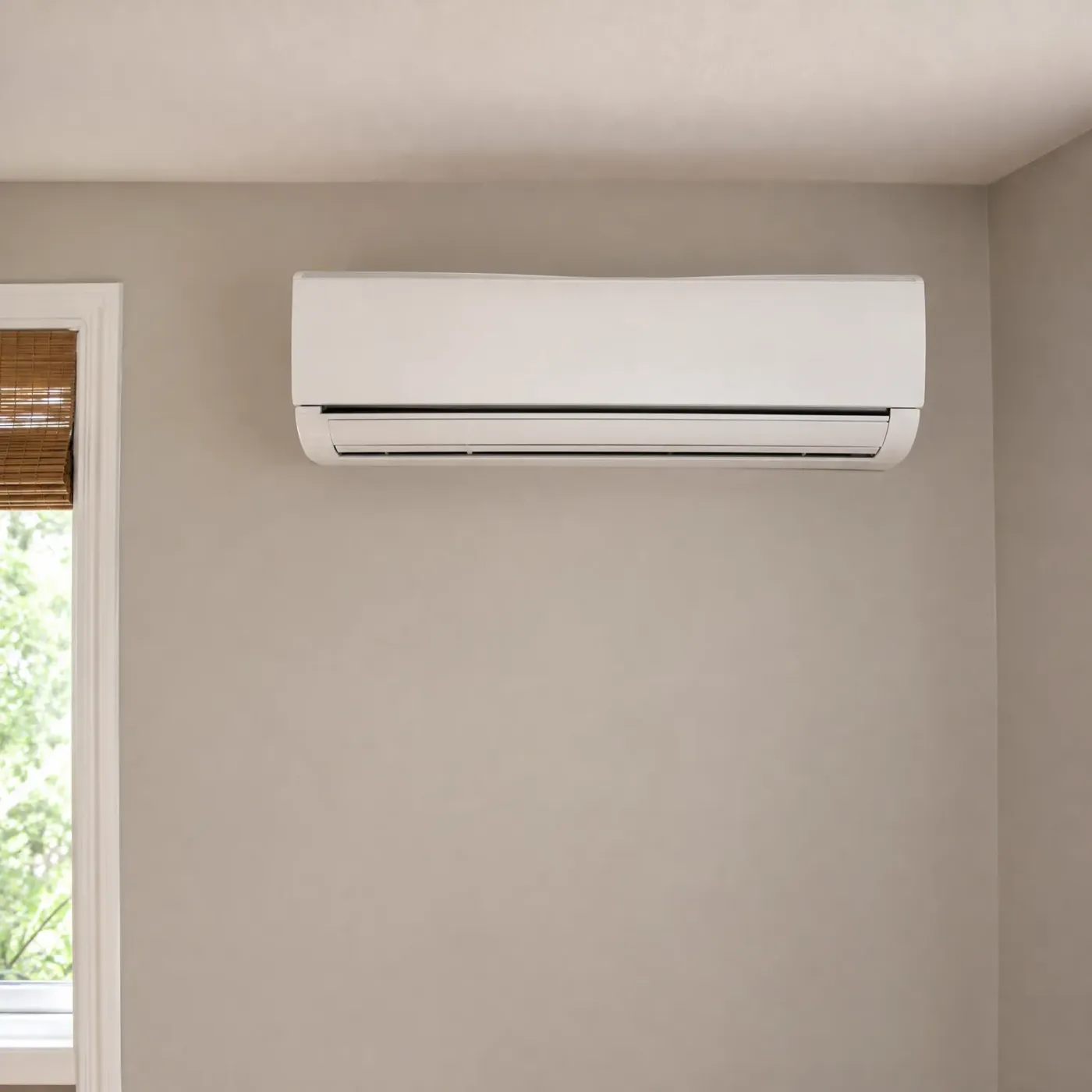
The panel is clear and the vents are open, so air moves through the coil the way it should. The unit reaches your setting and holds it without straining. On a cold night that's the difference between steady heat and a mini split that runs long and still falls short.
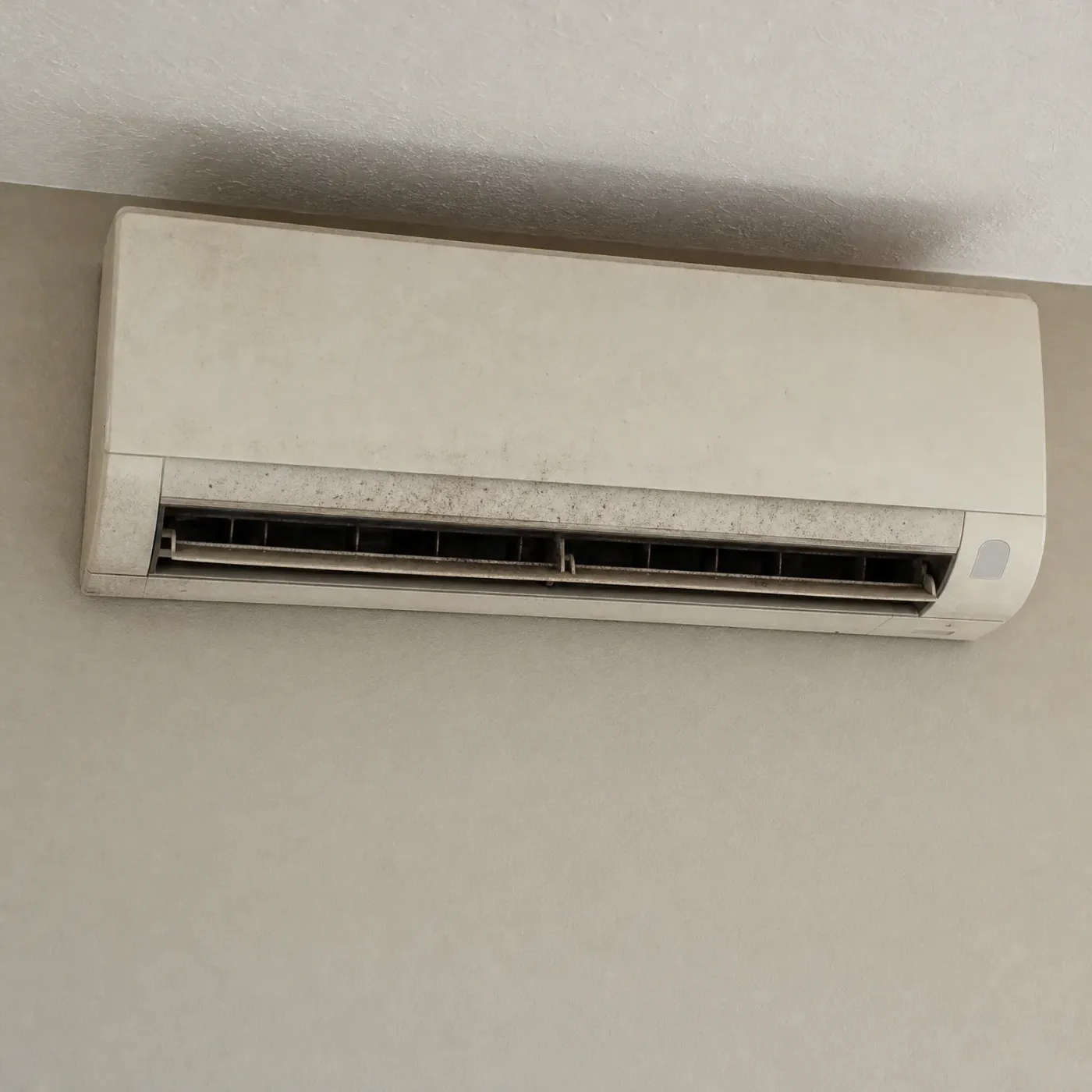
Dust has built up across the front panel and louvers, the kind that collects over a spring and summer of running the AC. That same grime sits on the coil behind it, where it blocks airflow and makes the unit work harder to push out the same heat, costing more to get there.
At that rate, every degree you push your mini split past what it needs to hit shows up on the bill, since electric heat is what's running the meter in most Alabama homes. A setting it can hold steady costs less than one it has to fight for all night.
EIA-861 2025 statewide residential average
Alabama nights rarely stay cold enough to make defrost a constant thing, but on the ones that drop into the 30s, your outdoor unit is working through a cycle most people never notice. Cold outdoor air holds less heat for the coil to pull in, and when that coil gets cold enough, moisture in the air freezes onto it just like frost on a windshield. A frosted coil can't absorb heat well, so the unit has to stop and clear it before it can keep working. It does this by briefly reversing itself, running the hot gas side backward through the outdoor coil to melt the frost off, which is why you might catch steam or water running off the outdoor unit on a cold morning. While that's happening, the indoor fan usually cuts back or stops, since the air coming off the indoor coil during defrost isn't warm. That's normal for a few minutes. What's not normal is a unit that's doing this often on a night that isn't even that cold. A coil that's already dirty frosts up faster and takes longer to clear, so a mini split overdue for a cleaning ends up defrosting more than it should, running less efficiently on the nights you need it most. If your unit has backup heat strips, those stay off until the compressor genuinely can't keep up, not every time defrost kicks in.
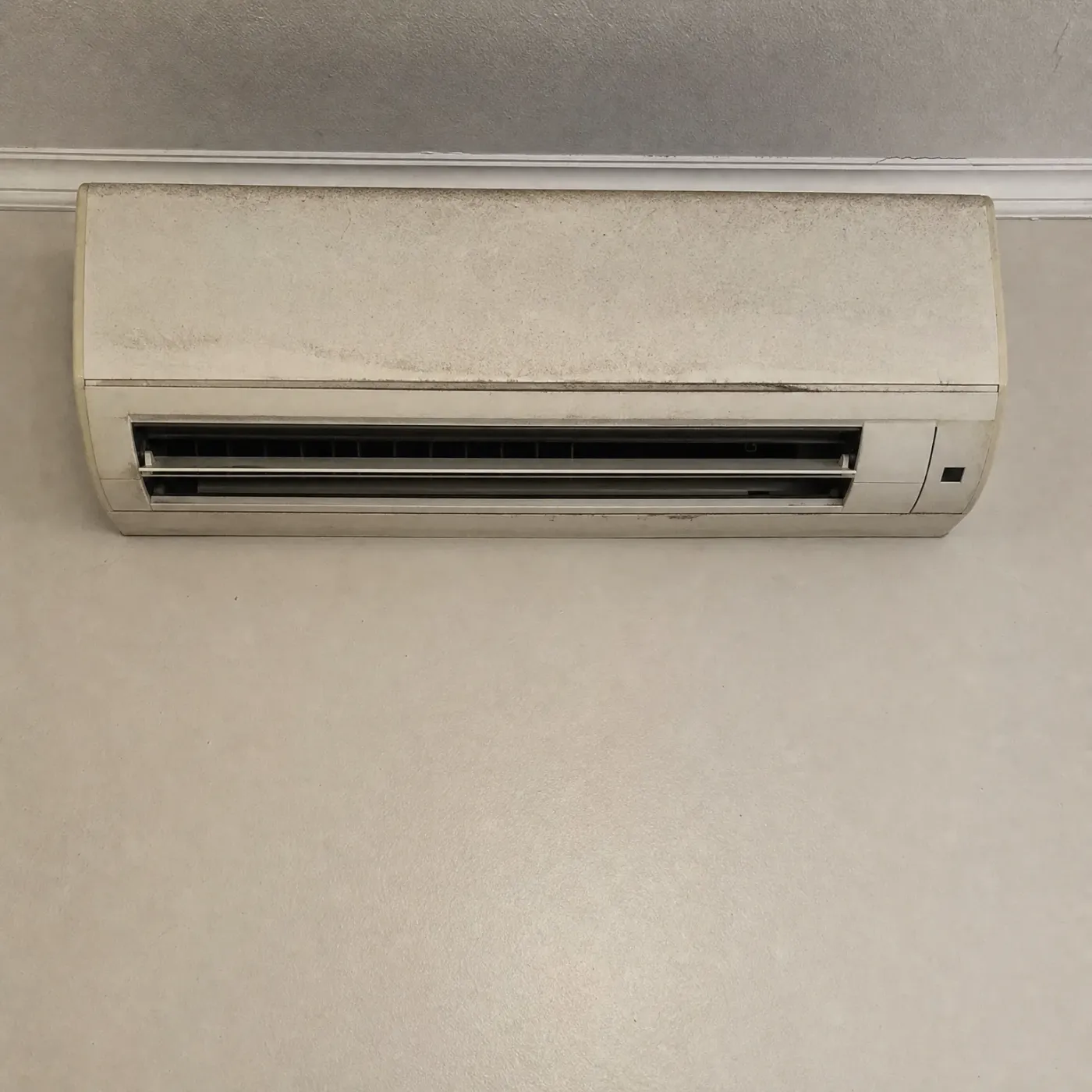

That same coil doing the work in January is the one that spent last summer fighting a dew point that averages 69°F across June, July and August. Air that heavy holds more moisture than a coil can shed easily, and what it sheds leaves a film behind. Carry that into winter and the coil has less bare metal to pull heat from, so the outdoor unit runs longer to hit the same setting. You'd notice it as a system that takes its time catching up on a cold morning instead of answering right away. A coil cleaned before winter starts gives the unit the surface it needs to work fast on the nights that call for it. Source: NOAA climate normals.
NASA POWER T2MDEW county cells weighted by homes
A steady setting in the upper 60s, held there instead of pushed up and down, is what gets your mini split through an Alabama winter without running up the bill. The nights that drop into the 30s are what strain a coil that spent last summer caked with dust, and that strain is where a maintenance visit pays for itself, not in the setting on the wall. Someone who services mini splits in this area all year knows that a system running fine in June can still be struggling by January if the coil and filter never got looked at, and that's the kind of thing a local contractor catches before a cold night turns into a no-heat call. One contractor, working on your unit, rather than a handful of companies competing for the job, means whoever shows up already knows what tends to go wrong with these systems here and what to check first. The setting is the easy part. What the unit can actually hold that setting with, on the coldest night of the year, is the part worth having someone look at.