



Adding a mini split to an Alabama home with a furnace

A white wall-mounted mini-split air conditioner indoor unit shown straight-on against a plain light gray background.
Hand it off

A mini split works alongside your furnace instead of replacing it. Most Alabama homes already heat with electricity, so a mini split can run your heat in the mild stretches of fall and spring, when a full furnace cycle is more than the house needs, and your furnace stays ready for the harder cold. Where it earns its keep fastest is summer. A mini split cools the one room or addition your main system struggles to reach, and it does that on its own thermostat, so you are not paying to cool the whole house down to make one room comfortable. With power costs in Alabama running high, running a small unit for a small space instead of the whole system for one room shows up on the bill. Installation means running a line set and mounting an outdoor unit, work tied to your home's electrical setup and where the indoor unit can go.

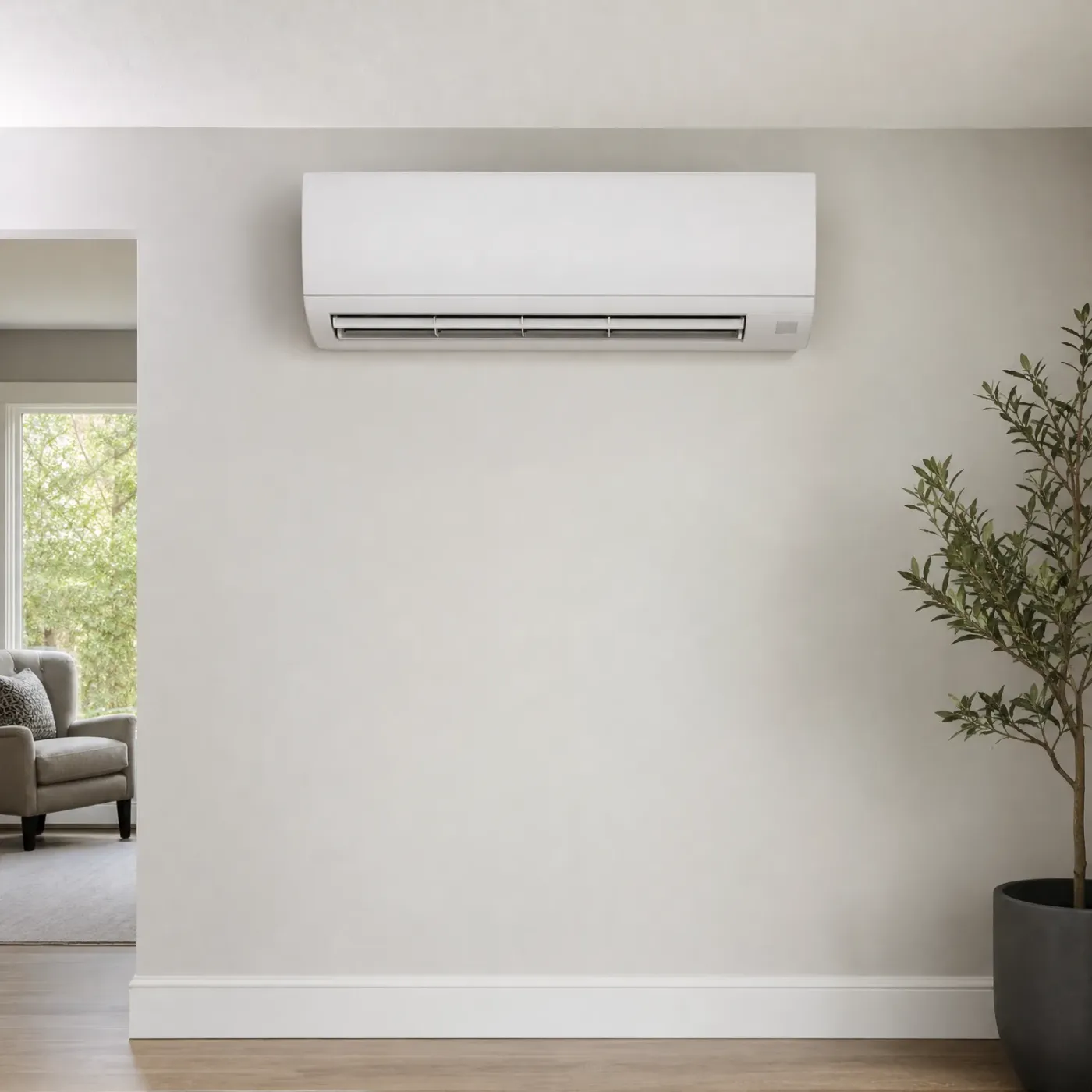
A white wall-mounted mini-split indoor unit high on a beige interior wall, with a potted olive-like tree at right and an armchair and window visible through a doorway at left.
A mini split that's keeping up cools the room evenly and runs without strain, even on Alabama's muggiest afternoons.
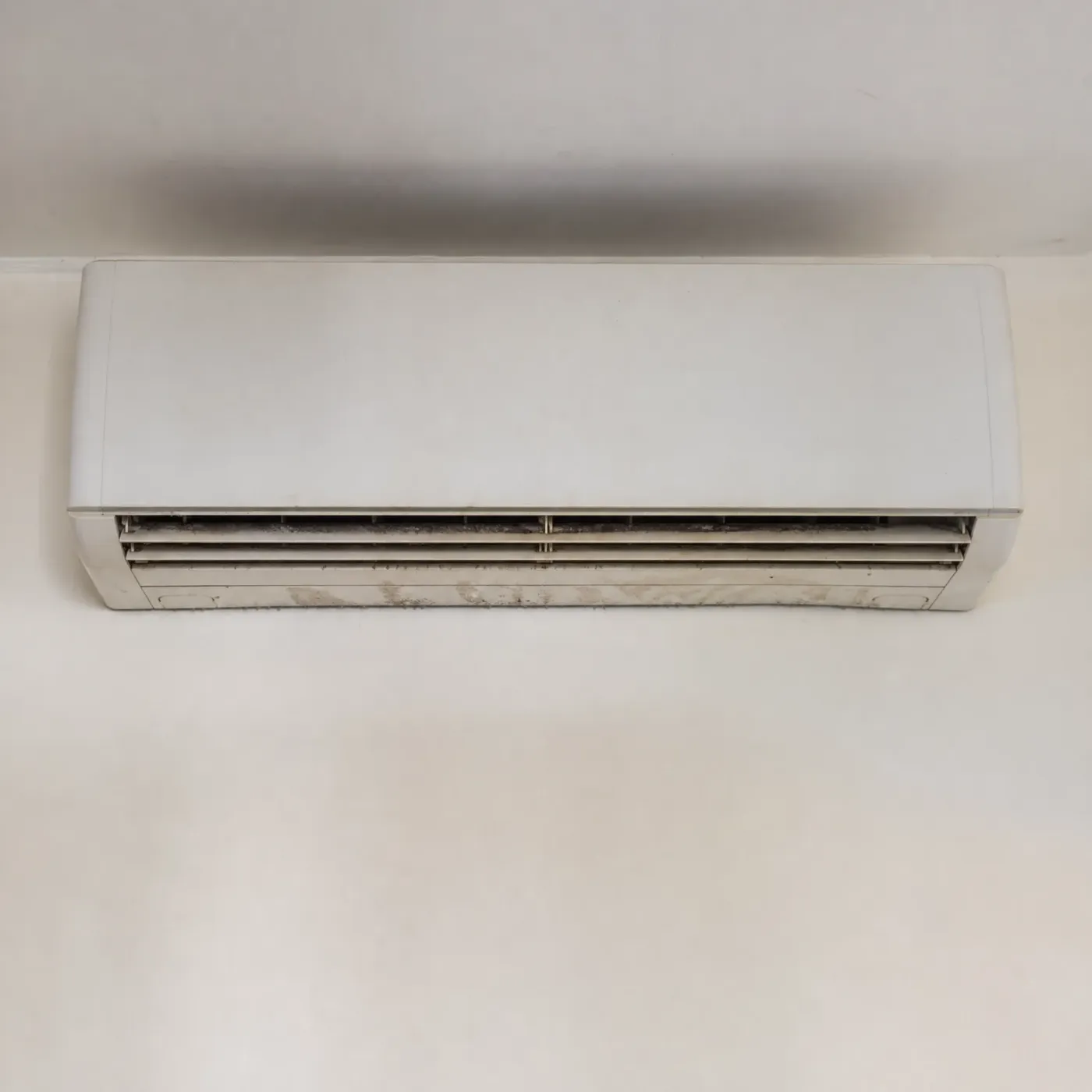
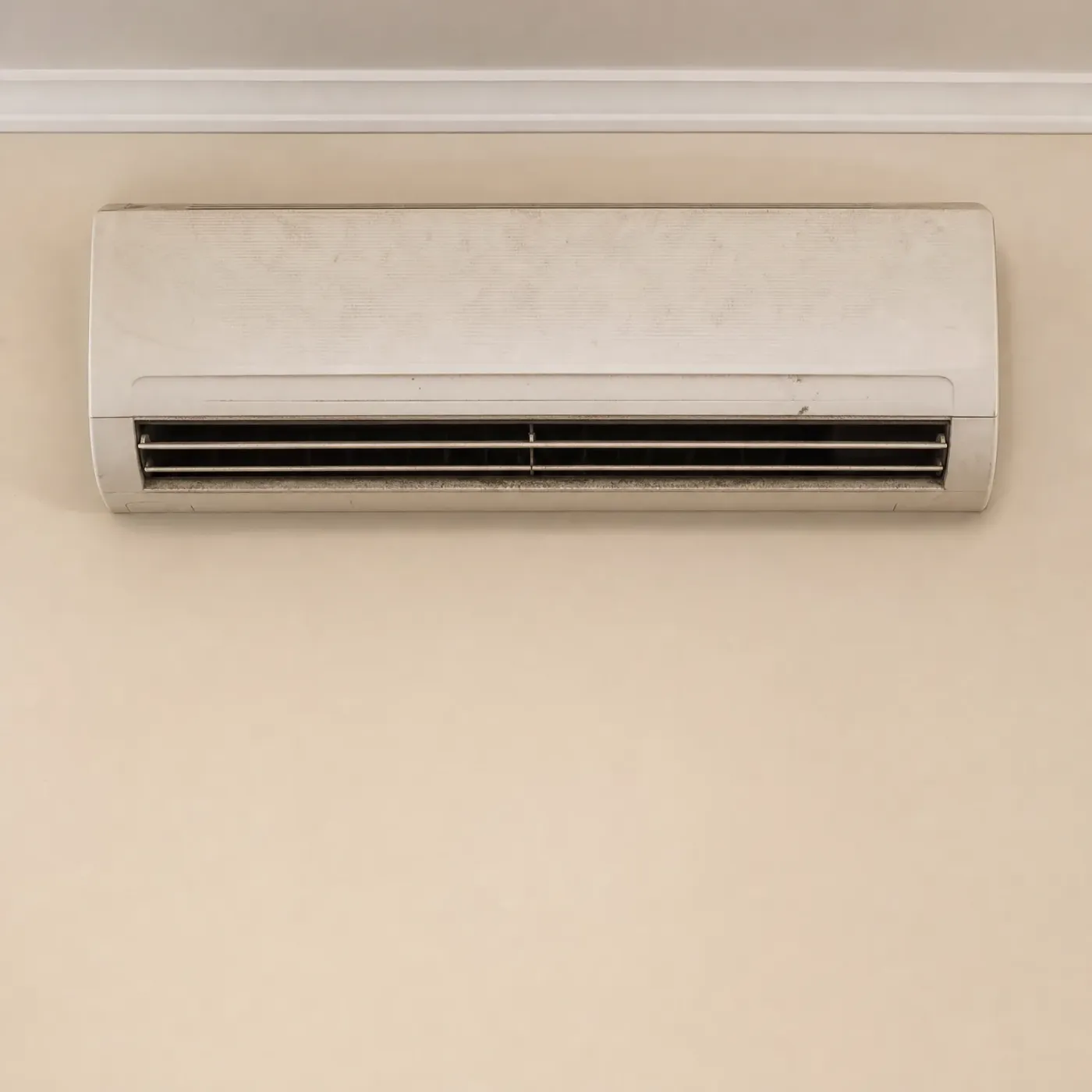
A wall-mounted mini-split air conditioner indoor unit with visible dust and staining, installed on a beige interior wall below white crown molding.
A mini split caked in dust around the vents loses its grip on humidity first, then on the heat itself.
A single-story brick house with a hipped shingle roof, large front windows and a central door, fronted by a wide paved driveway with sun flare, surrounded by green deciduous trees.

Summer air in Alabama holds a lot of moisture. The National Weather Service puts the average dew point at 69°F across June, July and August, and anything past 65°F feels heavy on the skin. That's the air your mini split has to wring out, not just cool. A unit sized and installed right will pull that moisture down so the room feels dry and comfortable, not just cold. One that's undersized or placed wrong will chill the air while the dampness stays, so the room feels clammy even with the temperature low. That's the difference a proper install makes here.

NASA POWER T2MDEW county cells weighted by homes

Why does one room still feel muggy with the mini split running

You'd notice it in the room the mini split actually serves. The air moves, the thermostat reads where you set it, but the room still feels damp, and anything left on a counter has that faint sticky film by evening. You might hear the unit cycling on and off more than it used to, short runs that never settle into a steady hum. Meanwhile the furnace is quiet, doing nothing, because this isn't its job for months at a time. If the mini split keeps losing that fight with the humidity, the room holds moisture against the drywall and the window trim, and that's how mold gets a start in a house that otherwise has no reason for it.

A white wall-mounted mini-split air conditioner unit installed high on a plain beige wall near the ceiling, with empty wall space to the right.

How a mini split handles humidity

A furnace only heats. A mini split, in cooling mode, pulls moisture out of the air as it runs, because the indoor coil has to cool below the air's dew point before it can cool the room. That's why a mini split sized right for the room keeps the air dry as well as cool. Oversize it and it cools the room fast, shuts off, and never runs long enough to pull the moisture out.

A white wall-mounted mini-split air conditioner indoor unit on a plain light-colored wall, with a beige curtain at the right edge of the frame.

Where the two systems meet

Your furnace and the mini split don't share ductwork, so there's no mixing of the two airstreams to balance. The furnace still heats through the vents it always has. The mini split heats and cools the room it's mounted in directly, on its own thermostat. That split is what lets you run the mini split through October and April instead of firing up the furnace for a 60 degree morning.

One System or Two in Your Home

Mini split plus furnace

  • Your furnace keeps running on the coldest nights, so you're never asking the mini split to cover a load it wasn't sized for.
  • The mini split can carry the mild stretches in spring and fall by itself, and the furnace stays off until it's actually needed.
  • Each room with an indoor unit gets its own setting, so you can run the mini split in a bedroom without conditioning the whole house through the ducts.
  • Two systems means two things that can need service, and a contractor has to account for both when sizing the mini split's output.
  • If your ductwork leaks or runs through an unconditioned attic, the furnace still loses some of what it makes before it reaches the room.

Furnace alone

  • One system to maintain, and whatever that furnace already does for heat, it keeps doing without a second unit to think about.
  • Every room ties back to the same thermostat, so you can't cool one room a few degrees past the rest of the house.
  • With power rates what they are in Alabama, a furnace running on electric heat alone covers the whole house every time it cycles, even for one occupied room.
  • A ducted system doesn't give you the room-by-room split that a mini split's separate indoor heads allow.
  • You lose the option of running a single room through a mild fall evening without the furnace kicking on for the whole house.
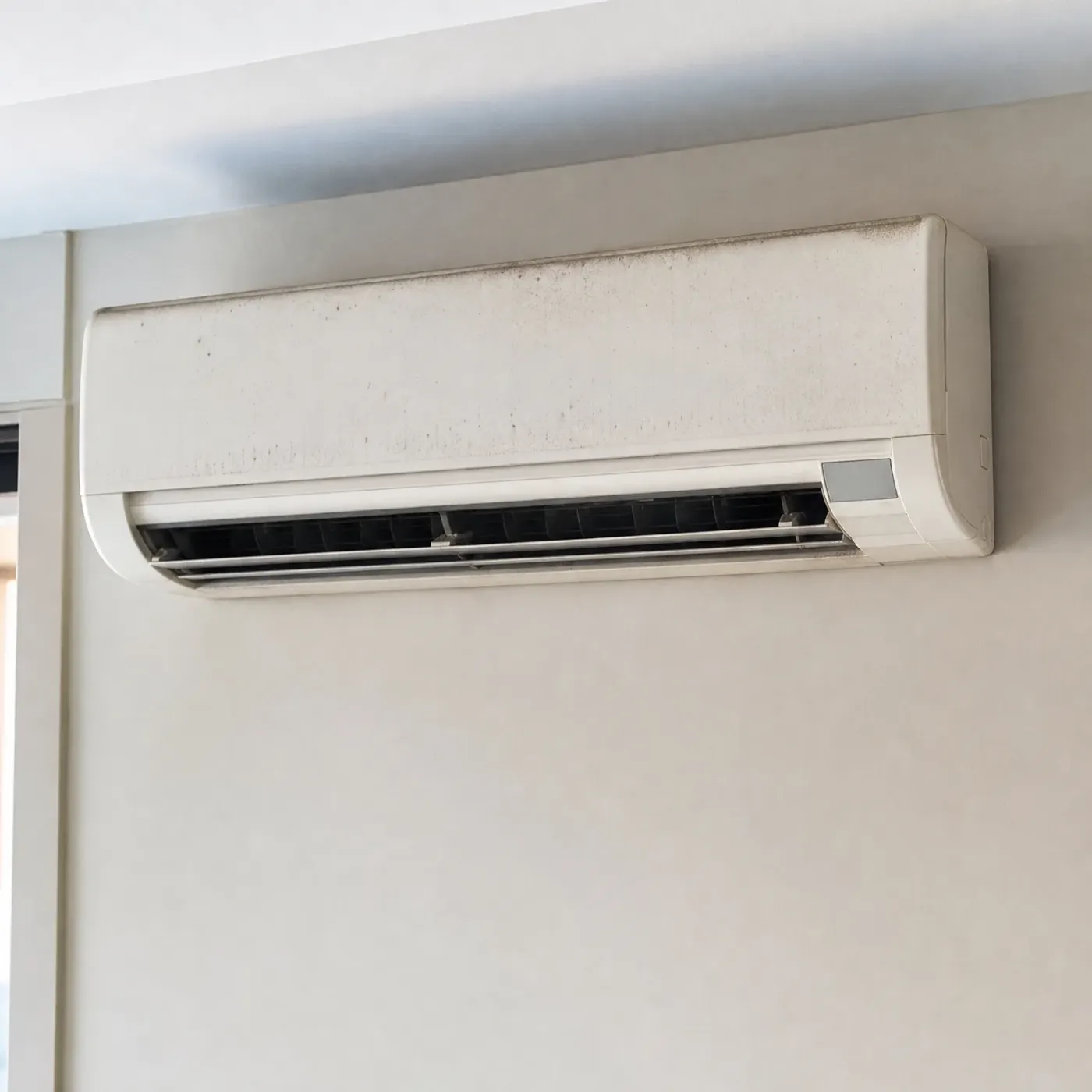
A dusty, stained white wall-mounted mini-split air conditioner indoor unit installed high on a plain off-white interior wall near the ceiling.
Before you get your mini split installation
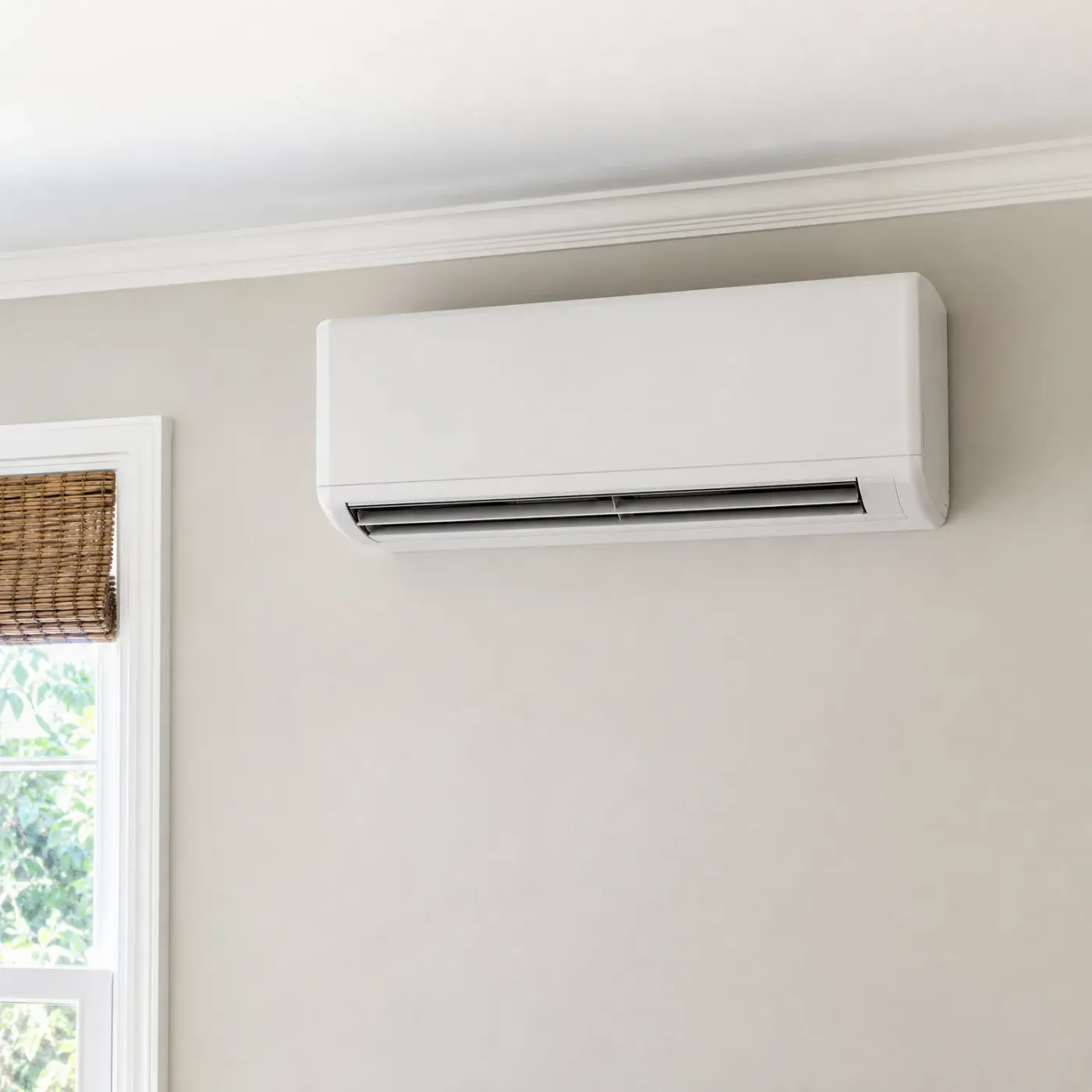
A white wall-mounted mini-split air conditioner unit installed high on a beige interior wall below white crown molding, with a window and woven shade at the left edge showing green foliage outside.
After you get your mini split installation
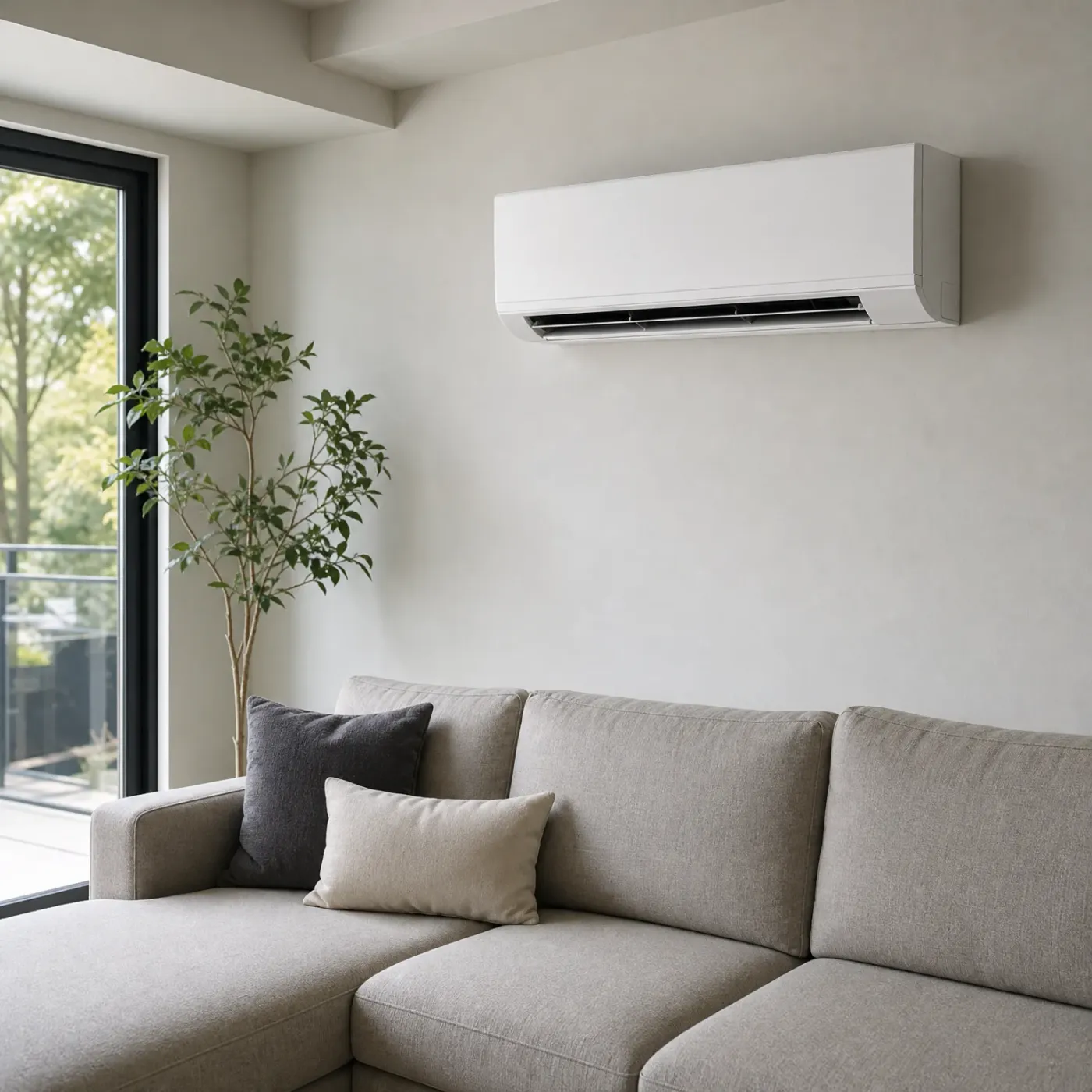
A white wall-mounted mini-split indoor unit on a pale interior wall above a gray sectional sofa with cushions, next to a potted leafy tree and a floor-to-ceiling window showing green trees outside.

Send one request and you're done looking

Skip collecting and comparing quotes for the new mini split.

After you send the request, you're done searching.

Hand off the search

It costs nothing to send, and you don't have to hire anyone.

A woman with dark hair in a bun reclines on a sofa with her eyes closed, wrapped in a cream fleece blanket, a closed blue hardcover book resting in front of her, with a lit lamp and a vase of dried flowers in the background.
A smiling bearded man in a navy sweater sits at a candlelit dinner table with a glass of red wine, a bowl of salad, and plates of food in the foreground.
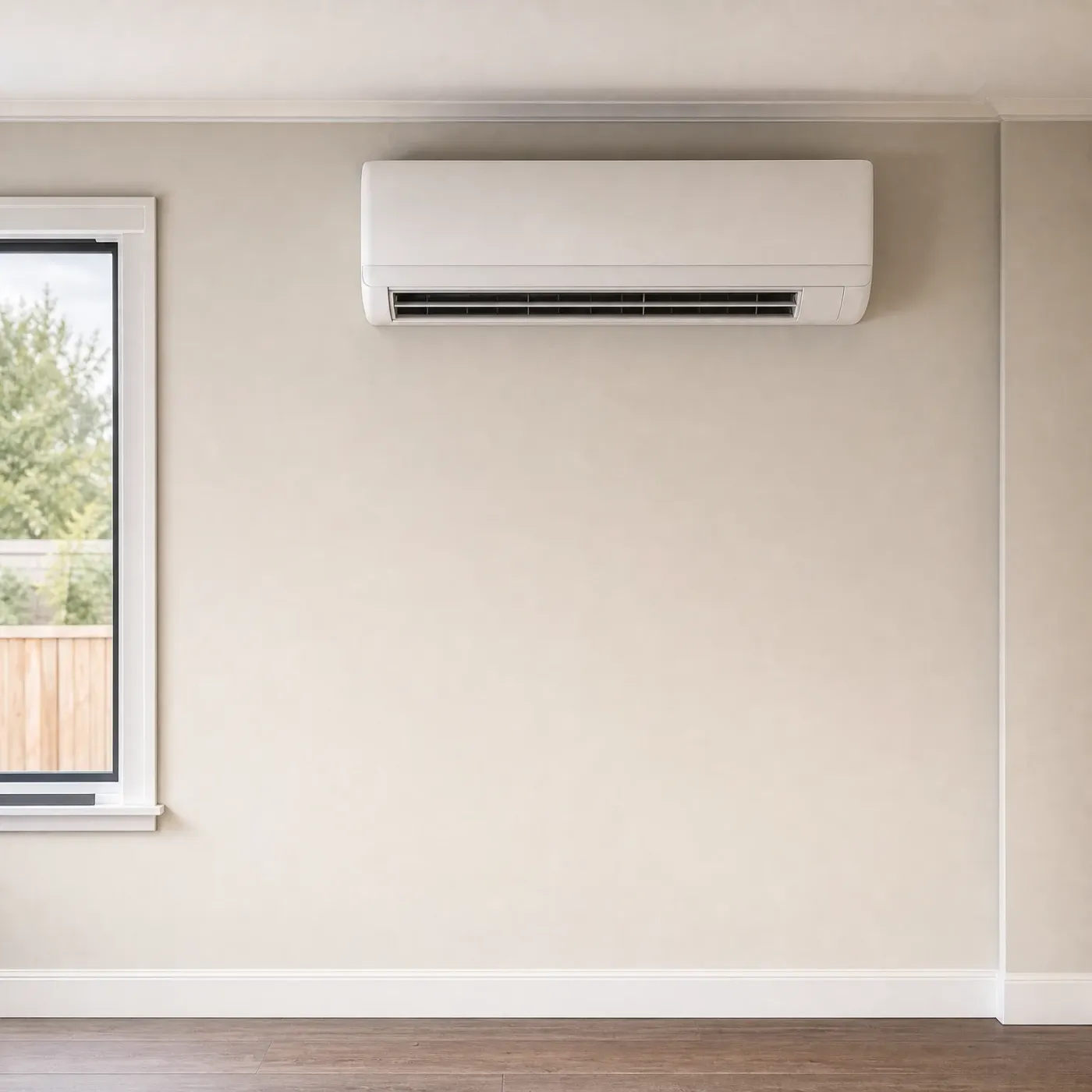
A white wall-mounted mini-split air conditioner on a beige interior wall, with a window at left showing trees and a wooden fence, and dark wood flooring below.

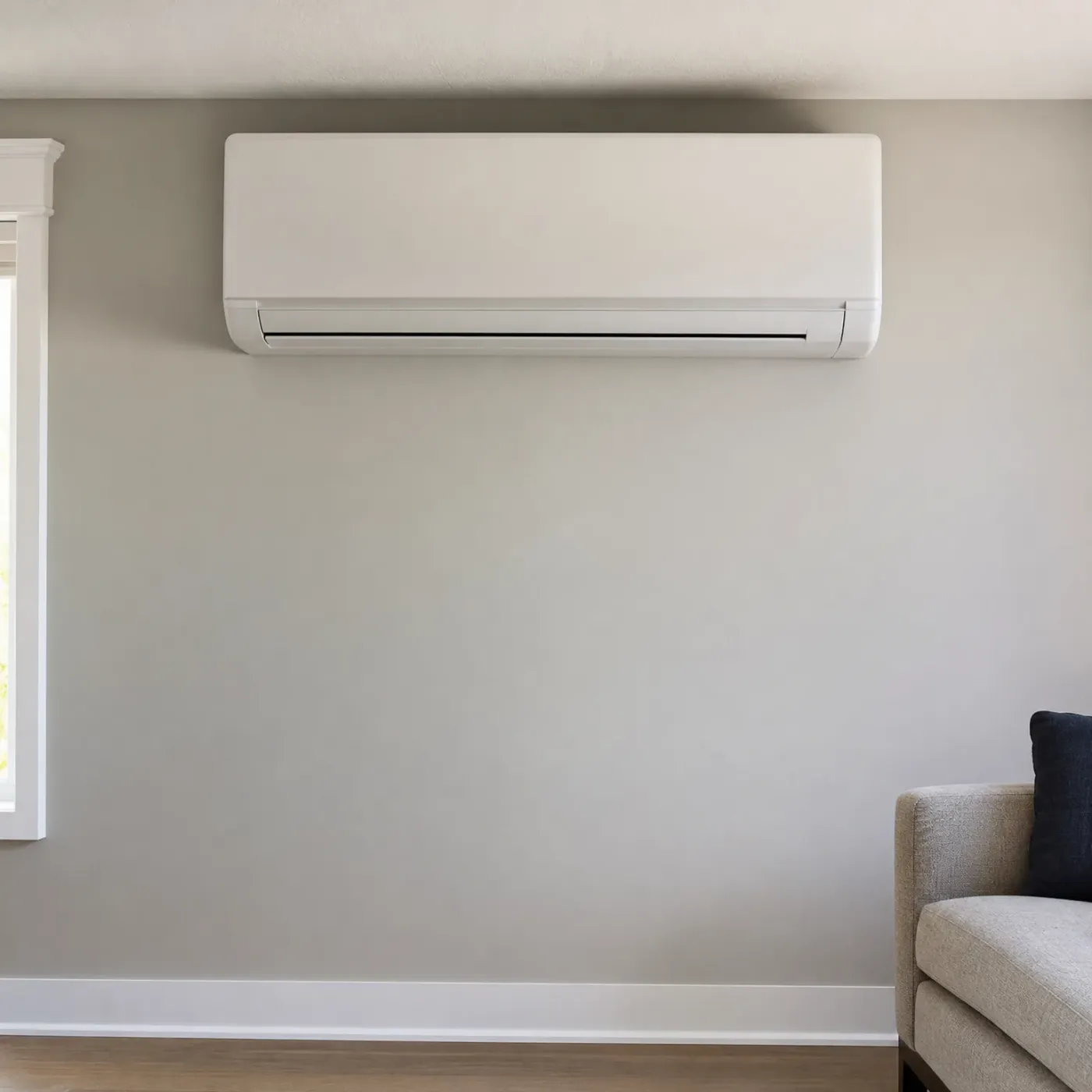
Mini split running clean

The coil stays clear and the fan moves full air across it. You feel cool, dry air at the vent within a few minutes of it kicking on, even with the afternoon dew point sitting near 70. The room holds that temperature without the unit short cycling.
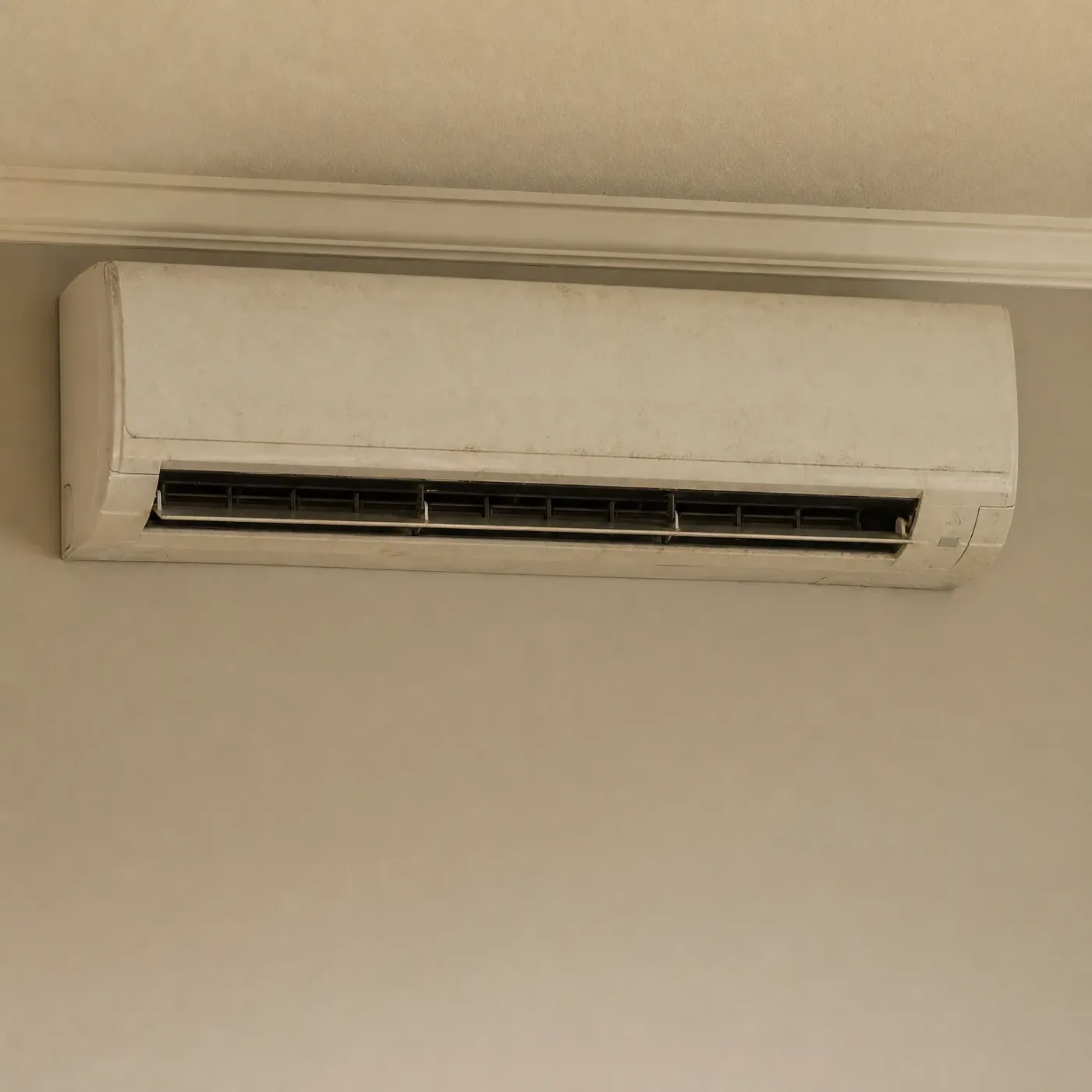
A white wall-mounted mini-split air conditioner indoor unit with dark louvered vents, installed near the ceiling on a beige wall below white crown molding.

Mini split losing ground

Dust builds up on the coil and the louvers until airflow across the coil drops. It still runs, but it cools less and pulls less moisture out with each cycle. The room feels cool near the unit and damp everywhere else, and the thermostat setting stops matching how the room feels.

How does the mini split know when to take over from the furnace?

You've got the mini split installed alongside your furnace, and you're wondering how the two actually divide the work. Nobody flips a switch to hand off from one to the other, so it's worth knowing what's really happening when the temperature drops on an October night and both systems are sitting there. The answer is less about smarts and more about where you set the thermostats.

They don't talk to each other. You set the split points yourself.

A mini split and a furnace don't coordinate. Each one runs off its own thermostat, and it switches on whenever the room drops below whatever you've set. If you want the mini split carrying the load in October and April, set its thermostat a degree or two above where you'd normally keep the furnace, and leave the furnace's thermostat lower. The mini split fires first because the room reaches its setpoint sooner. Once outdoor temperatures drop far enough that the mini split can't keep the room at that setpoint on its own, the room keeps cooling past it, hits the furnace's lower setpoint, and the furnace takes over. Nothing hands off a signal. It's just two thermostats watching the same room at different numbers.

A white wall-mounted mini-split indoor unit installed high on a gray interior wall, with a window at left and part of a light gray sofa with a dark cushion at lower right.

The mini split holding its own

Look at the vents and the wall below them. Clean, no staining, no film on the louvers. Air comes off that coil cold and dry, and the chair a few feet away stays comfortable even when the afternoon outside is thick with moisture.

A white wall-mounted mini-split air conditioner indoor unit with visible dust and staining along its lower vent, installed on a plain pale wall.

The mini split losing ground

The grime along the vents and across the lower casing is airflow that never got where it was going. A coil caked like that can't pull moisture out of the room the way it did when it was new, and the room starts to feel the difference before you do.

A closed laptop and a cream mug of coffee on a coaster sit on a dark wooden table, with a potted plant at left and a kitchen counter, tiled backsplash and shelf of ceramics in the background.

What a mismatched system means for your house

If the mini split is undersized for the room it's covering, your furnace won't bail it out. The furnace handles heat in winter, not humidity in July, so a muggy room in August stays muggy no matter how often it cycles. You'll see it in small ways first: windows that fog at the edges, a closet that smells faintly musty, wood floors that feel tacky underfoot. Left alone, that moisture works into places you can't easily check, behind baseboards and inside closets that don't get much airflow.

Getting the sizing and installation right the first time matters more here than in a lot of other states, because Alabama summers don't give a weak system much of a break. Instead of pulling contractor names off review sites, calling each one to ask if they handle mini splits alongside an existing furnace, and sitting with a stack of quotes trying to tell them apart, you send one form. From there, finding someone who can size and install it correctly stops being on your plate.

A living room corner with a beige upholstered armchair holding navy and striped cushions, a small round wooden side table with a carved bowl and a potted green plant, a framed landscape picture on a pale wall, built-in shelving, and a curtained window.
A smiling man in a dark navy sweater sits on a light sofa in a living room, with a glass bowl of popcorn on a wooden coffee table and bookshelves behind him.
A smiling man in a dark green sweater sits on a tan leather sofa in a dimly lit living room, with a bowl of popcorn in the foreground and a kitchen area blurred behind him.
A smiling middle-aged man in a dark shirt sits on a gray sofa in a living room, with a bowl of popcorn on a side table and shelves, a window and kitchen area behind him.
A smiling bearded man in a dark gray t-shirt sits on a gray couch in a living room, with a large glass bowl of popcorn on a wooden table in the foreground.

Power costs 16.09 cents per kilowatt-hour statewide

At 16.09 cents a kilowatt-hour, every hour your mini split carries the load in place of a full furnace cycle shows up smaller on the bill. Running it through those mild fall and spring stretches instead of firing the furnace is where that rate actually works in your favor.

EIA-861 2025 statewide residential average

Where that leaves you

  • A mini split added alongside your furnace handles the mild months and the humidity, while the furnace still covers the coldest nights.
  • Sizing the mini split to the room it serves is what keeps it pulling moisture out of the air instead of just moving cool air around.
  • A clean coil and full airflow across it are what separate a mini split that keeps a room dry from one that leaves it feeling damp.
  • At 16.09 cents a kilowatt-hour, letting the mini split carry fall and spring instead of the furnace is where that setup actually pays off.
  • Getting the installation right the first time matters more here than it would in a drier, cheaper-power state.

Your furnace isn't going anywhere, and it shouldn't. Adding a mini split gives you a second system built for what Alabama summers actually demand, which is pulling thick, humid air down to something that feels dry, not just cooler. The two machines split the year by what each does well. Furnace on the coldest nights, mini split through the muggy months and the mild shoulder seasons in between, when a full furnace cycle would be more than the house needs anyway. None of that works if the unit is sized wrong for the room or if the coil sits caked in dust. An undersized or dirty mini split loses its grip on humidity first, then on temperature, and your furnace can't step in to fix that because a furnace only handles heat. Installed right, the setup also does something to your power bill, since every hour the mini split covers instead of the furnace firing up is an hour billed at 16.09 cents a kilowatt-hour for a smaller load. Getting that installation right the first time carries more weight here than it would somewhere with cheaper power or a drier summer, because a mistake shows up both in comfort and in cost. Instead of spending evenings searching for a contractor, calling around for quotes, and explaining the same situation to each one, you send one form and let someone else sort out who's qualified to do this correctly.

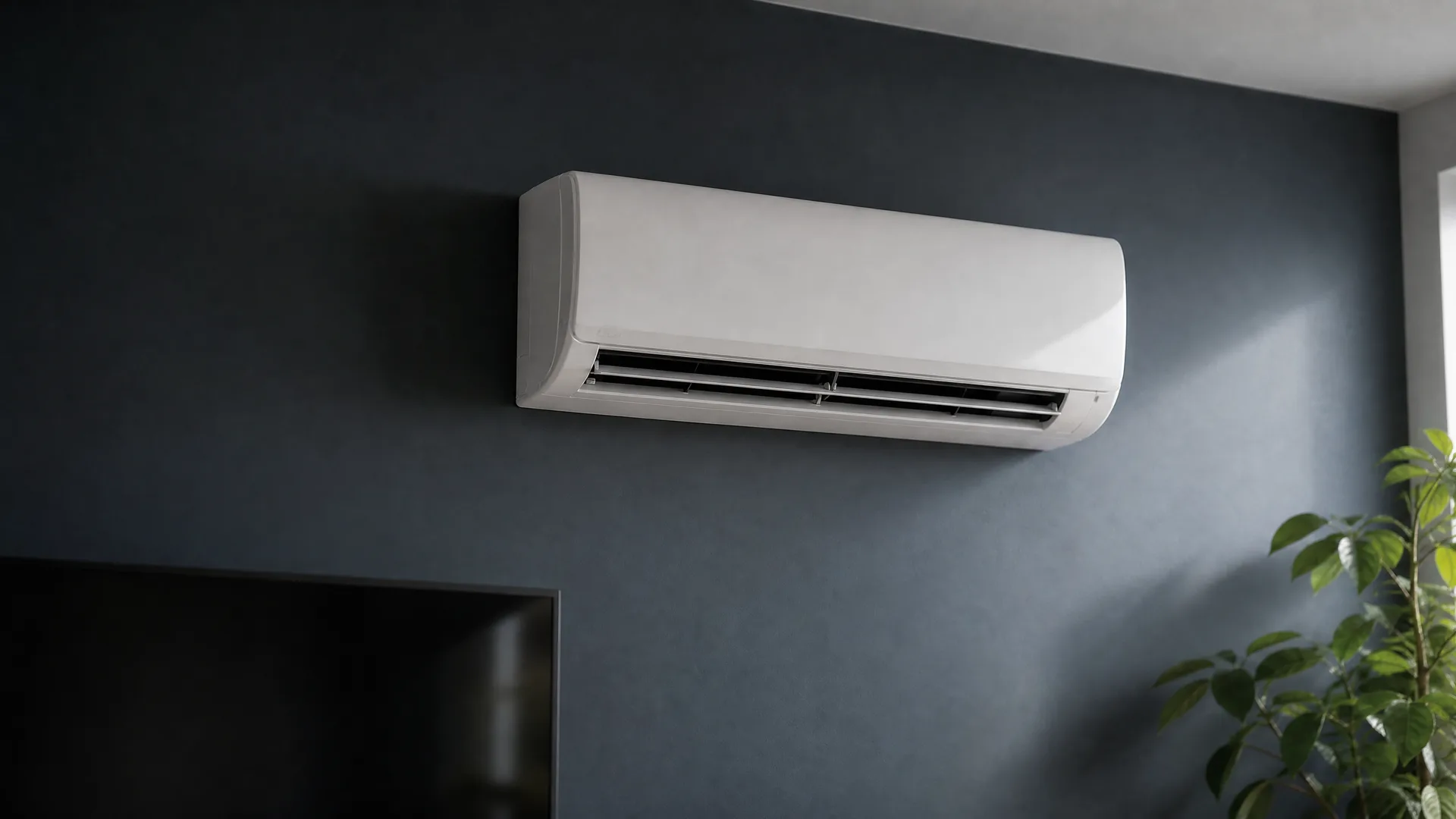
A white wall-mounted mini-split air conditioner on a dark gray interior wall, with a flat screen at lower left and a green leafy plant at lower right.

Finding a pro stops being your job

Step 1 of 3: Equipment